
“Autumn is like that final concentrated burst at a fireworks display; it’s like the forest has been saving up for that one spectacular grand finale.” – Ed Lehming
It’s hard to believe that a mere two weeks has passed since I made this image. It was the second week of ‘fall’ proper. The prior week still had lots of greens and yellows and the canopy was still quite dense. On this day, the greens were largely gone and the soft autumn light fully penetrated the forest, filtered and reflected from the wonderful orange and golden leaves. The low sun also cast glorious shadows.
This was just one of many wonderful moments when I paused along the trail, breathed in the scent of fallen leaves and fresh soil, basked in the diffused light, and listened intently to the sounds of falling leaves. For me, there are few things more refreshing and enjoyable.
The image was made in effort to preserve this memory and it turned out beautifully. It fully captures my experience, without the sounds and scents.
Phone 7 back camera @ 4.0mm
f/1.8; ISO 20
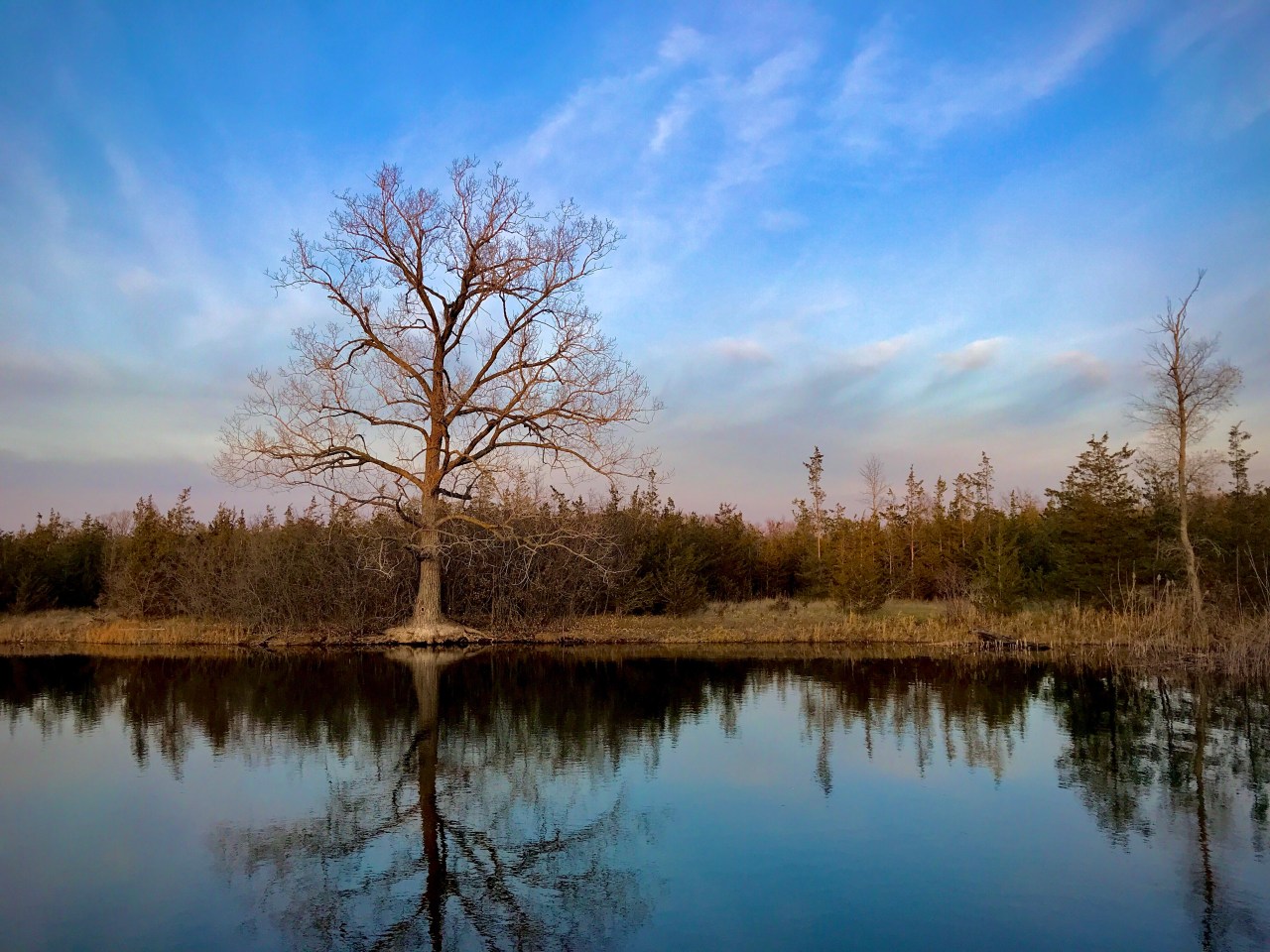
“There are times in our lives where we simply need to stop and enjoy what is placed before us.” – Ed Lehming
I have “noticed” this scene many times over the past year, but I have never stopped to enjoy it. It’s one of those things we notice from the periphery of our “busyness”. It captures our attention, only momentarily and then we carry on.
Today, I was determined that I would spend some time here, enjoying the serenity of the location, along a fairly busy highway in Ontario’s Prince Edward County, a popular tourist destination. As cars wizzed by I stood and simply revelled in the place.
I had imagined what it might ‘realize’ into as a photo. Again, just on the edge of my imagination. It has left a lasting impression of what “might” be. I was hoping for good light, a few clouds to keep the composition interesting and engaging, and that I could frame it effectively from my roadside vantage point.
As the photo above can attest, I was not disappointed. Most of the desired elements aligned. The late afternoon light was soft and warm, a gentle breeze added texture to the pond. There was even a beaver in the pond, who quickly exited the frame before I was ready to snap the shutter. All that was missing was the bright yellow leaves that adorned the tree a few weeks ago. I will have to revisit this place a few more time to fully enjoy what might be.
For now, I am very content with what had, up to today, simply been a vision in my imagination. That is perhaps the greatest joy of photography for me; to communicate my own imagination and perception for others to enjoy, all because I took a few minutes to stop and enjoy a moment that I had passed by on previous occasions.
I would encourage everyone to take the time to enjoy absolutely every beautiful moment placed before us.
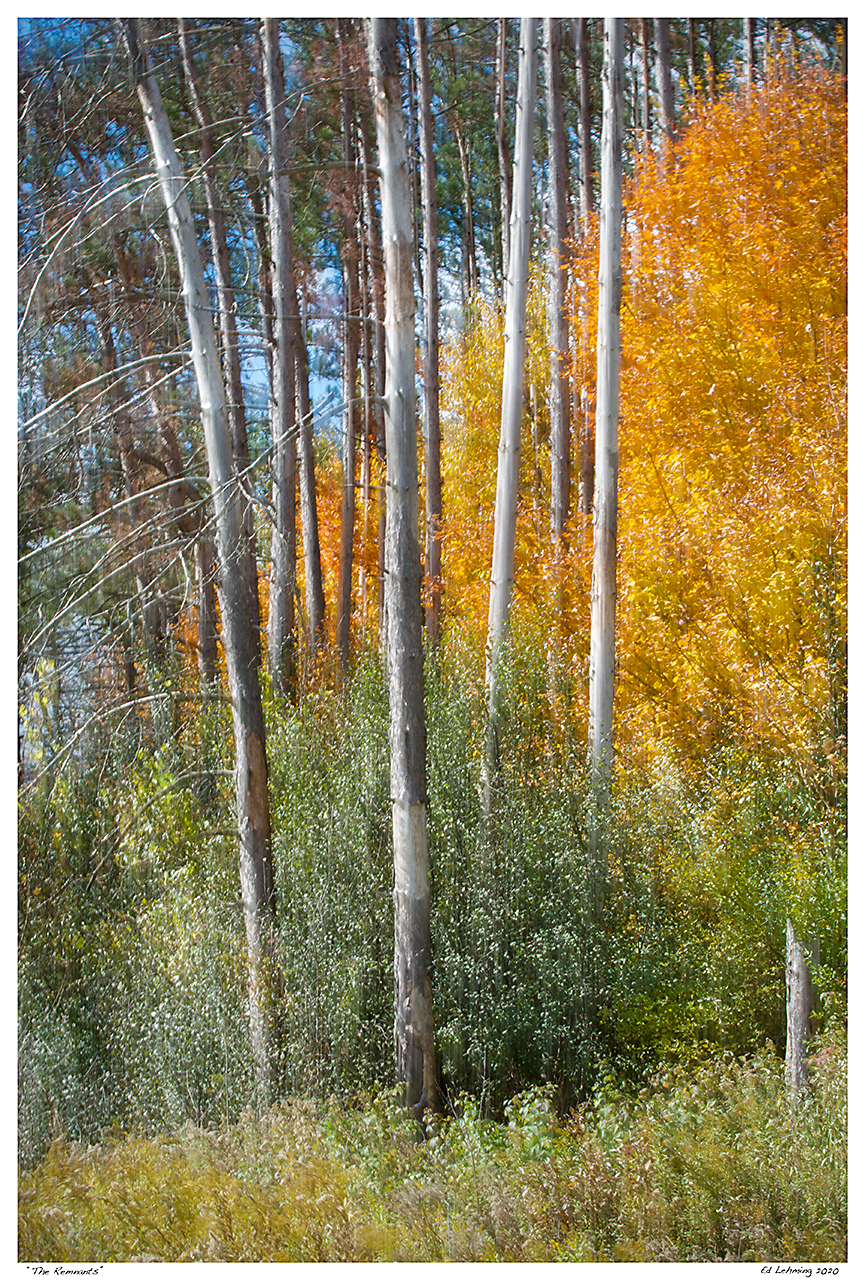
“On revisiting places and memories, we are reminded of what was. We should not dwell on these things, but recall fondly the place these things had in forming the present” – Ed Lehming
I have shared images of these dead pine trees a few times in the past. I came across them several years ago and they stood out to me because they are such a stark contrast to the living forest that surrounds them. They appear to have died many years ago but the nature of their composition and lack of branches for the wind to catch has kept them standing for years.
Every year, they decay a bit more and there is often one less. I imagine they will all be gone in the next few years.
I always make a point in stopping in front of them, thinking about what must have happened to kill them off and fascinated by how they have remained vertical. They have provided me with some wonderful photo opportunities. Given the number of photos I have made here, no two are ever the same. Some element is always changed, be it the light, the colour of the foliage, or even the slight change in my position when composing the image.
On the day I made this image, a mere week ago, autumn was in full swing, the surrounding forest filled with soft light and brilliant gold, orange, and rusty colours, and a cluster of shrubs, which have only recently taken hold among the skeletal trucks, added a beautify sparkle of light that I had not noticed before.
It’s become a place of quiet reverence and reflection to me and one I will sorely miss once they are all gone. I will miss them once their time has passed but be grateful for the inspiration they have provided me.
Nikon D800
Tamron SP 70-200mm f/2.8 Di VC USD @ 70 mm
1/4 sec, f/32, ISO 200
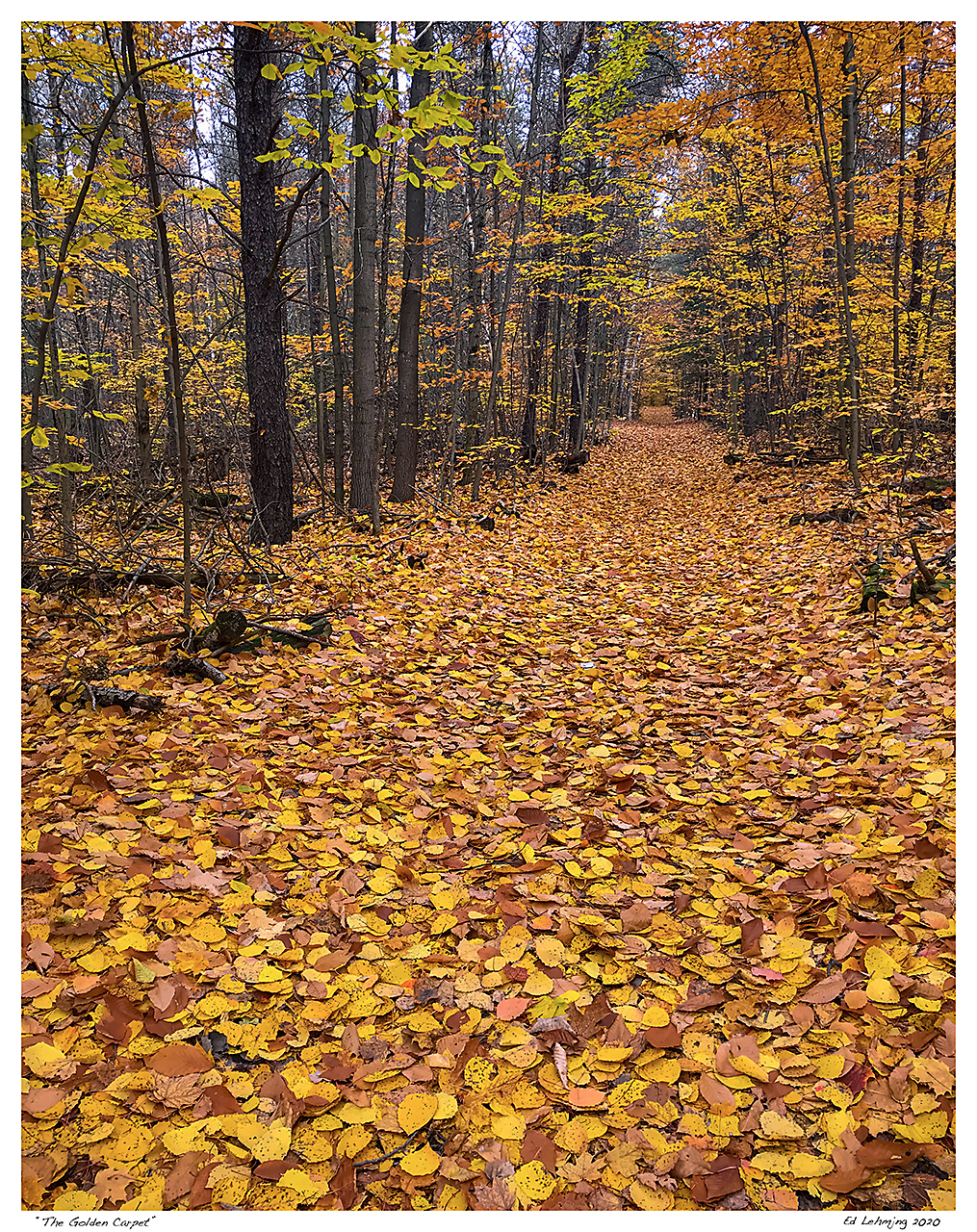
“Before me spread a carpet of freshly fallen leaves, pristine and undisturbed, like a ribbon of gold, drawing me forward into the serenity of the autumn forest.” – Ed Lehming
This past weekend was a magical time, on several levels; frost had settled into the forests, causing leaves to fall rapidly as the sun warmed the trees, creating a thick and aromatic carpet of colour, and it was also the first time since I was in my teens that I found myself without a job.
The walk in the forest gave me time to consider this point in time in terms of similarities. The forest was transitioning rapidly from early fall, with it’s beautiful and colourful canopy and the reality I have been living, working full time at the same employer for the past 34 years was also changed.
It was all changing before my eyes. As I walked through the bright forest, the leaves crunching underfoot I thought to myself, “this is not so bad, I have all this to enjoy more often”, at least for the near future, as I heal my body and spirit after years of stress. There was no real worry about the future, simply an enjoyment of the moment. The beautiful golden carpet before me spoke to my future, and it’s not one filled with gloom and dread; it’s bright, cheerful and filled with promises of more beauty.
I am truly blessed to have this beauty so close at hand; a place to unwind and be with my thoughts, surrounded by wonderful sights, sounds, and aromas. That day was also filled with the most wonderful light and yielded many photos that I will be sharing over the next few weeks. My personal ‘transition’ is also offering me more time to write and spend time with my thoughts and emotions.
iPhone 7 back camera @ 4.0mm
1/767 sec; f/1.8; ISO 20
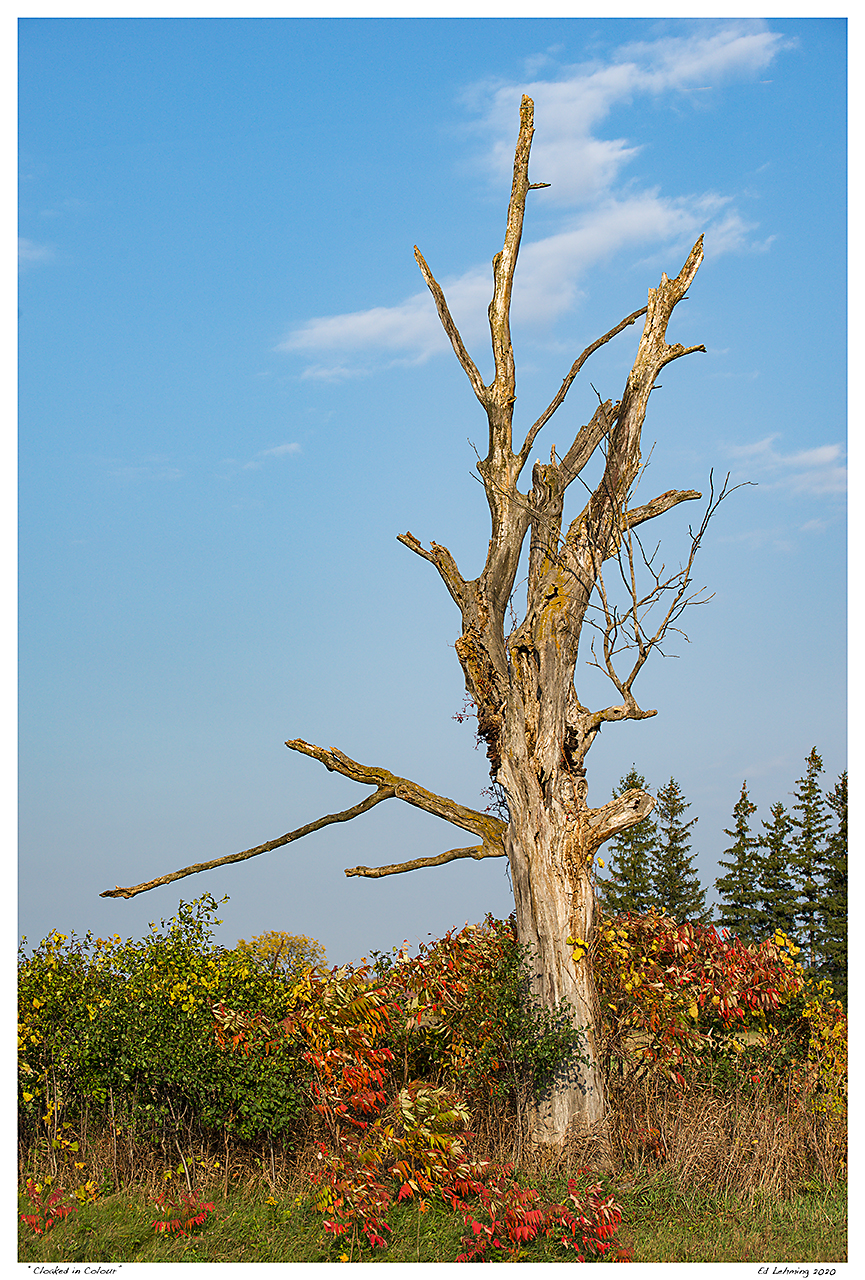
“Autumn’s bright colour makes everything bright” – Ed Lehming
This long-dead tree sits along the roadside leading to my daughter’s house. In most seasons it stands as a stark memorial of a once wonderful maple tree. Every year it deteriorates a bit, dropping limbs and shedding bark. There is not much left other than the trunk and a handful of branches.
I do notice every time I drive by it because it stands alone, a dry piece of wood among roadside weeds. There are no other trees or stumps remaining, just this one.
Last week, as I walked down the laneway, bright post-rain light shone on the weeds and undergrowth around the base. The fall reds and yellows seem to warp the base of the tree like a colourful blanket or cloak. It changes the entire look of the scene, for the moment anyway.
As a side note, this tree was toppled by strong winds a few weeks after I made the image. Everything is temporary.
Nikon D800
Tamron SP 70-200mm f/2.8 Di VC USD @ 82 mm
1/250 sec, f/8.0, ISO 250

“I stand, transfixed, surrounded by a sea of fall colours so beautiful that it’s hard to describe. And through it all, red beams from the forest. Bold and bright. It’s not even a competition, it has my full attention.” – Ed Lehming
Just yesterday, though it seems like days, my wife and daughter and I went for a walk along Prince Edward County’s Millenium Trail. Fall was in full show and the trail took us through some wonderfully wooded areas.
The entire landscape was filled with bright colours and leaves blowing in the gentle breeze. To be honest, autumn often overwhelms me as a photographer; to be surrounded by so much colour and beauty makes it difficult to focus on just one thing, as they all compete for my attention. And then, this stunning red vine had me transfixed. It stood out so dramatically from the surrounding colours that I could not take my eyes off it. As a simple photo it did look nice but I added my deliberate camera motion to it to make it even more stunning.
It’s also a bit of a milestone for me. I have felt completely uninspired artistically for the past few months, relying only on images I made with my iPhone, so It’s nice to get back into it with my real camera
Nikon D800
Tamron SP 70-200mm f/2.8 Di VC USD @ 185 mm
1/4 sec, f/32, ISO 400

“Water craft of all sizes float on the bay on a hazy summer afternoon” – Ed Lehming
The photo above was made while travelling across Picton Bay on the Glenora Ferry. The ferry transports vehicles and people from a dock at the eastern end of Prince Edward County to the mainland to the north.
It’s a very short trip of about five minutes but saves a long trip around the bay itself. For modern travellers, it’s a bit of a novelty and I always enjoy seeing the expressions on children’s faces when the ferry departs the dock and the cars are now transported across open water. It’s something not many would have experienced.
I also like the feeling for floating across the water in my vehicle and the trip offers a different perspective of the bay. In this case, there is a sailboat a few hundred meters away from the ferry and just behind it a large ‘laker’ transport ship heading to the local cement plant for a load. These ‘lakers’ are massive ships that transport goods from port to port in Ontario’s Great Lakes, thus the name. Many are also ocean going and make the long trek east on the St. Lawrence River, eventually entering the Atlantic Ocean.
For this image, I just liked the calm mood it invokes for me.
iPhone 7 back camera @ 4.0mm
1/6000 sec; f/1.8; ISO 25

“Late August sunshine nourishes maturing plants. Fruiting vines, like grapes, hang heavy with their bounty.” – Ed Lehming
I’ve been spending more and more time at our home in Prince Edward County (PEC). One of the “county’s” claims to fame, and a major draw for urban tourists, are the numerous established and emerging wineries.
It’s a wonderful experience to visit the wineries and see all the ripening grapes in the fields, including these at Waupoos Winery at the south-east end of the county. It’s one of the oldest and most established wineries. It’s also quite unique in that the property extends right to the shores of Lake Ontario. I’m not sure the variety of these grapes but could not resist capturing an image of them. They look ready to burst.
Get ready for an ongoing theme of rural scenes and vineyards 🙂
iPhone 7 back camera @ 4.0mm
1/1800 sec; f/1.8; ISO 20

“A common sight in the right light suddenly becomes beautiful.” – Ed Lehming
I’ve passed this shed countless times and it barely registers. It’s just an old shed along the road near my home. It’s commonplace and a bit weather-worn.
A few evenings ago, as we walked to a local restaurant for diner with friends the early evening light changed the entire appearance of the shed. It glowed in the soft evening light, becoming the focus of my attention.
Fortunately, I had my phone with me and was able to capture another beautiful moment in time.

“In the heat of mid-Autumn, grapes hang thick and ripening in the sunshine. Harvest is not so far off now.” – Ed Lehming
Yesterday, we had the opportunity to visit few of the local wineries in Prince Edward County. Many are now offering food as an option. COVID-19 has made wine tastings ‘interesting’ and we experienced many variations on what was once a fairly standard practice. Depending on the winery, its size, and facilities, the owners have all done their best to devise a model that works for them. Some seem close to ‘normal’ while others are experimenting with alternatives.
Fortunately for us, we are already familiar with many of the local wineries and trust their product quality, sight unseen. However, it poses a problem when visiting wineries we are unfamiliar with. Despite the challenges, we did discover a few wineries with lovely wines and I’m happy for this; firstly because we have some very nice wines to enjoy and secondly, we are able to support local farmers.
One thing that was encouraging was seeing all the ripening fruit on the vines. Despite a significant drought and high temperatures, the grapes seem to be flourishing. Some recent rains will have helped the vines before they get too stressed. The image above was made at a local vineyard as we waited for our lunch, a fantastic wood-fired pizza under a trellis of grape vines; simply marvellous!
iPhone 7 back camera @ 4.0mm
1/529 sec; f/1.8; ISO 20
Edited with Prizma
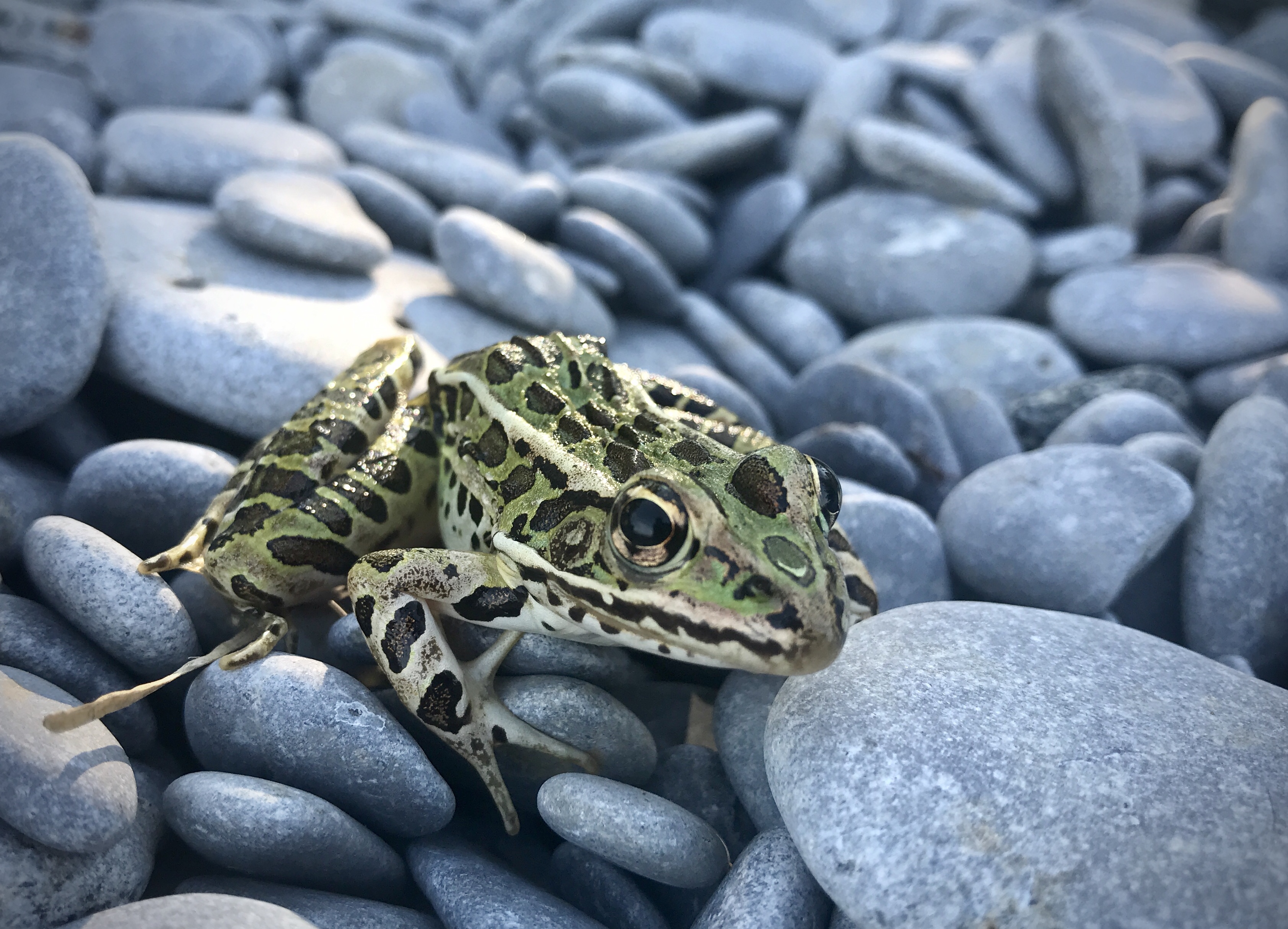
“Seemingly out of place, on a wide gravel beach, the frog makes its way over the polished stones to the refreshing waters of the lake.” – Ed Lehming
On a recent trip to Ontario’s Prince Edward County, we spent some time on a quiet gravel beach. The beach was made of heavily polished limestone pieces deposited by the churning waters of Lake Ontario. These stones where all flat and smooth and extended inland some ten meters from the shore. The beach ended an an elevated shoreline of course limestone, sand, grasses, and scrubby trees.
It’s been an extremely hot and dry summer in this region, so I was surprised as a leopard frog emerged from the dry grass behind where I was sitting and began making its way to the water’s edge. It made sense that the frog would want the water, but it’s a fairly long and highly exposed route to take.
This particular frog did not seem to mind me blocking his way for a few minutes to get a photo while others on the same journey were pretty skittish. A few moments after making this image I started along the lakeshore and noticed many other frogs in the water and along the beach, also refreshing themselves. As I continued on my way, I saw a stick laying on the gravel. As I stepped towards it the ‘stick’ moved, as it turned out to be a rather large Garter Snake. This snake was not alone and there were many other snakes doing the same thing; hoping to intercept a frog on it’s way to or from the shore.
While I did not see any snakes who had successfully caught a frog, I’m sure it’s not an uncommon occurrence and there is absolutely no shelter for the frogs to escape from, they would have to rely completely on speed and stealth to survive the journey to and from the water.

“Stone and wood; along the lake shore, bear witness to the tireless motion of water.” – Ed Lehming
This past week, as I stood on the stone covered shores of Lake Ontario, at Prince Edward Point, I had to consider how long these stones had been smoothed by the ceaseless action of waves crashing on the shores. Among the stones, pieces of driftwood, recent additions to the shoreline dance, also participate in the endless erosion.
The waves continue to roll in and the stones chatter, as if speaking, as the water rolls over them, pulls them back to the lake and then pushes them back again. The ancient language of the lakeshore, etched in the stones.
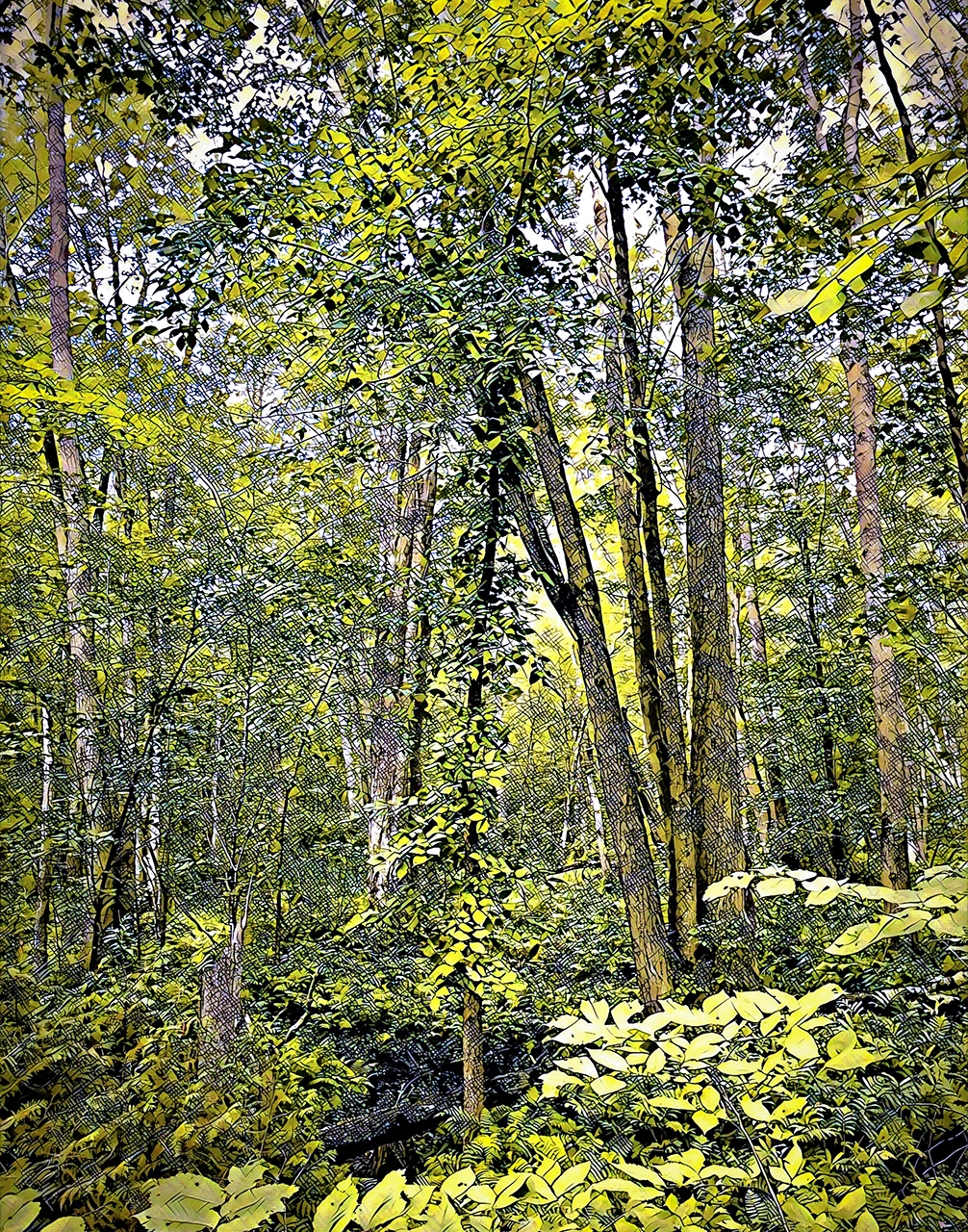
“Within the swamps of Prince Edward County, layers of green draw me deeper and deeper as the light shimmers with summer’s heat. Despite days of endless heat and sunshine, the forest remains lush.” – Ed Lehming
As I spend time exploring the landscapes of my second home, it’s the swamps that fascinate me. The swamps are not deep oozing bogs; they are filled with wonderful swamp maples which thrive in this unique environment.
I still recall these wetlands from my first trip into this unique part of Ontario. After driving through rolling hills and farmland, the road passed through a large patch of deep lush swampland. Seeing large trees living in a swamp was unexpected. At first I though the land had been recently flooded but research taught me that this species of maple is able to survive and thrive in the shallow swamps.
The contrast of the healthy trees and layers upon layer of deep green and healthy vegetation is wonderful. Even this summer, with days upon days of high temperatures and drought, the swamps are still lush, seemingly impervious to the conditions.
The canopy is thin enough that wonderful golden light is able to reach deep between the foliage making for an unusually bright swamp. The undergrowth seems to invite you to enter but I imagine you would not get far without getting bogged down. It’s like nothing else I have ever experienced and I was happy for the opportunity to capture it ad render it as yet another piece of digital art.
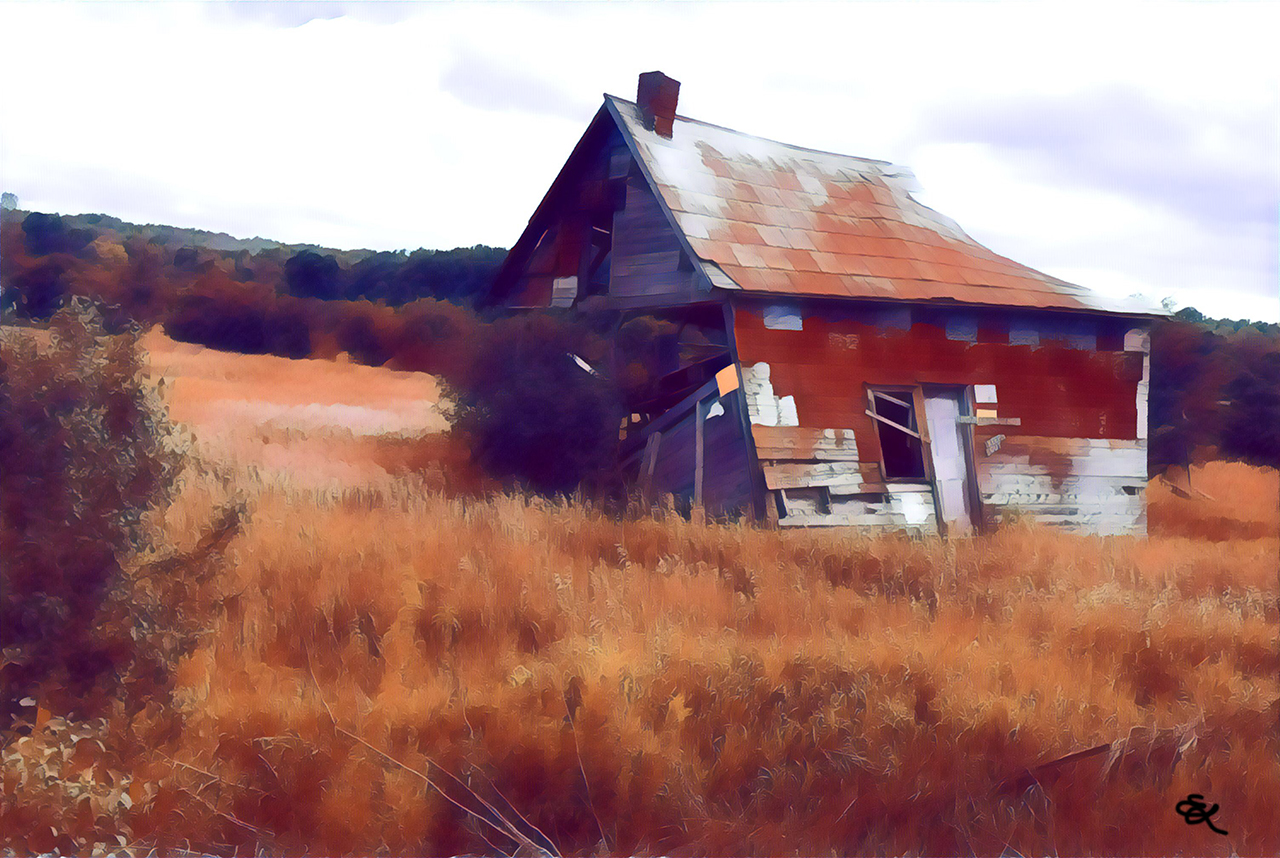
“Long, hot summer days and quiet country roads yield surprises and raise questions, to the curious.” – Ed Lehming
There are many times when a drive down a backroad offers interesting sights. Most frequently I see an old abandoned building and wonder how it came to be in the state it’s in. I try to picture it when it was first built, envision a family starting a home. As a new house, it must have held so much promise.
Yet here, along the roadside of Ontario’s Prince Edward County, many years after that time, the house has fallen into severe disrepair, a mere curiosity, barely standing, along the roadside and a photo opportunity for me.
I decided to render this image as digital art, to add some mood and interest to the image.

Sometimes houseplants grow to be sparce, or unstable, or a little strange looking. This can often be fixed with a repot. You can rearrange the …
How to Re-Pot for a Fuller Plant
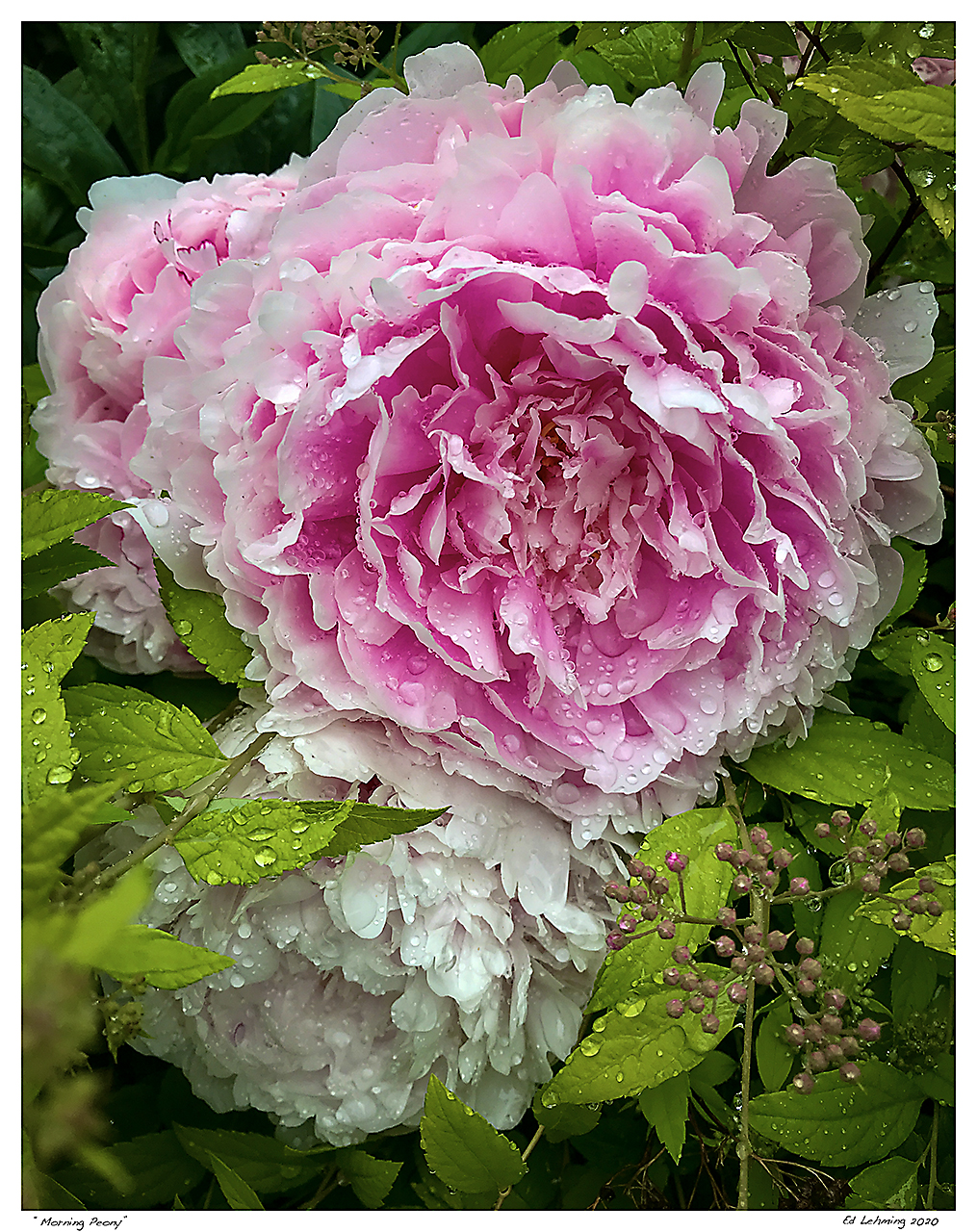
“Hanging heavy with morning dew, a peony blossom among the leaves beams joyfully from the supporting foliage.” – Ed Lehming
I couldn’t have asked for a nicer composition, already framed by the bright green leaves of my spiraea bush, these peony blossoms were a joy to behold. It had just rained and the already large and heavy blossoms would have been on the ground had it not been for the spiraea’s support.
Those who cherish peony know the story. It seems that just as the blooms fully open, a rain storm will pass through and knock them down. Even after shaking as much water as possible from the flowers, they never quite stand up straight again.
This particular specimen was planted along one of my backyard fences as I was seeking a place to put all the peonies that I had acquired from my mother-in-law a few years back. It was important to her that her cherished peonies, many of which her mother passed down to her, stay in the family. So, this one, which was quite small only a few years ago, ended up in an available space next to a spiraea bush. Well, the peony has since flourished and the spirea has been a helpful neighbour, holding the heavy flowers up in even the heaviest rains. At time it looks like the blossoms are part of the bush itself, as they emerge between the leaves.
As I was tending to the garden that morning, I happened to have my phone close by and created this quick and natural composition. Everything was just right and I’m happy to be able to preserve another nice memory.
iPhone 7 back camera @ 4.0mm
1/540 sec; f/1.8; ISO 20
For more images like this, please visit my website (images are available for purchase)
http://www.edlehming.com

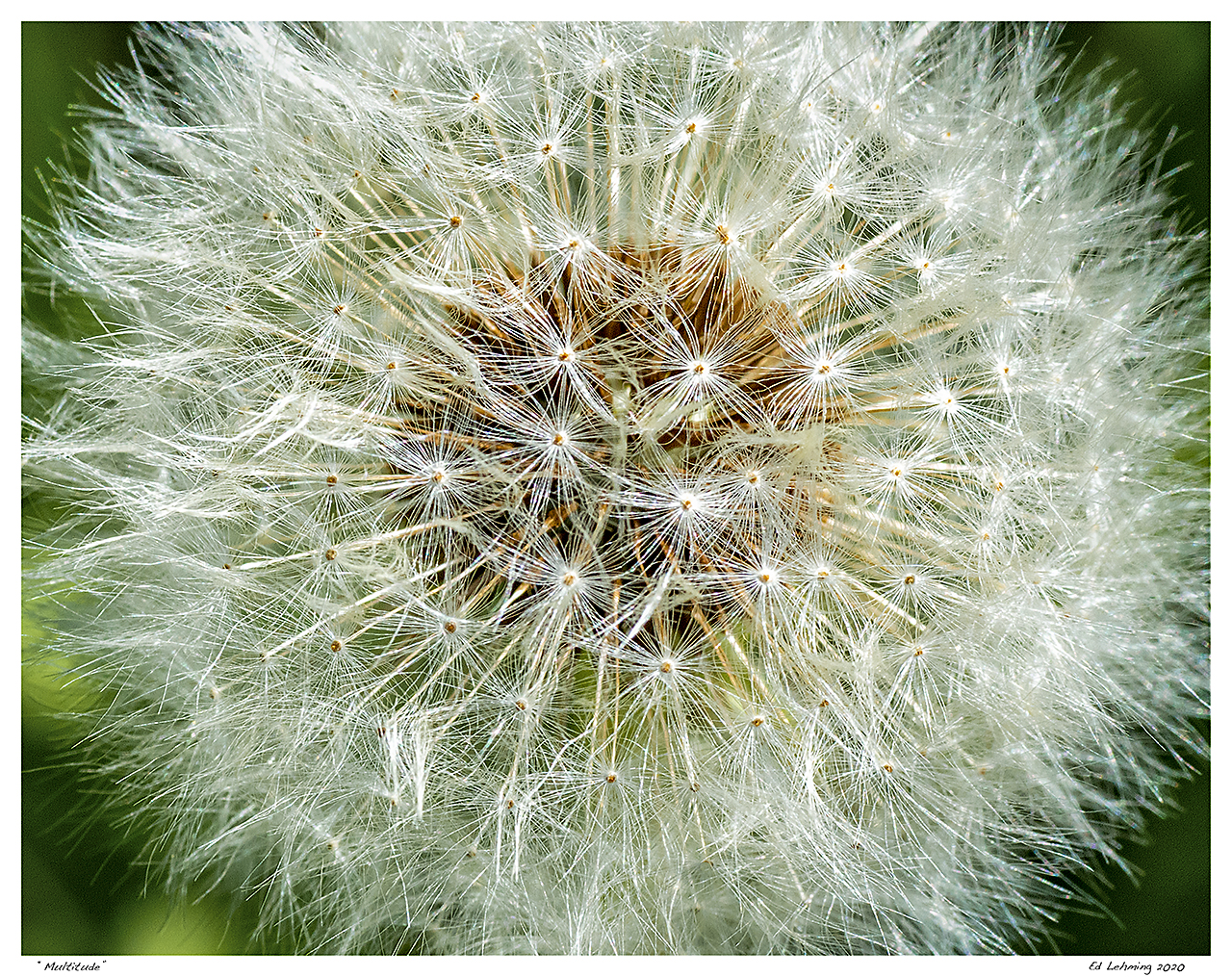
“Seemingly simple but infinitely complex, nature offers new details the closer you look.” – Ed Lehming
This week I decided to take a break from mainstream social media, especially Facebook. I’ve found myself overwhelmed by intense and polarized viewpoints. I think much has to do with the physiological effects of the COVID restrictions. It will be some time before the full effects are assessed and understood. I know it’s been challenging for me on more than a few occasions.
I’ve seen decades-long friendships erode and fall to pieces; not my personal friendships, but those of other acquaintances as each party tries to win the other over to their viewpoint. So, as the Facebook battle rages, I’ve decided to withdraw for a while and focus on the seeming simplicity of the natural world around me. Hopefully, some of my photos and thoughts will bring peace and pleasure to others as the human world rages on.
Though I’m withdrawing from Facebook my blog is set up to push content to my Facebook business page and that will continue because many of my customers and fans don’t do WordPress. I’m very happy that I do because the blogging community is so much more respectful and appreciative that mainstream sites.
Nikon D800
Tamron SP AF 90mm f/2.8 Di Macro 1:1 (272ENII)@90mm
1/500 sec, f/18.0, ISO 800
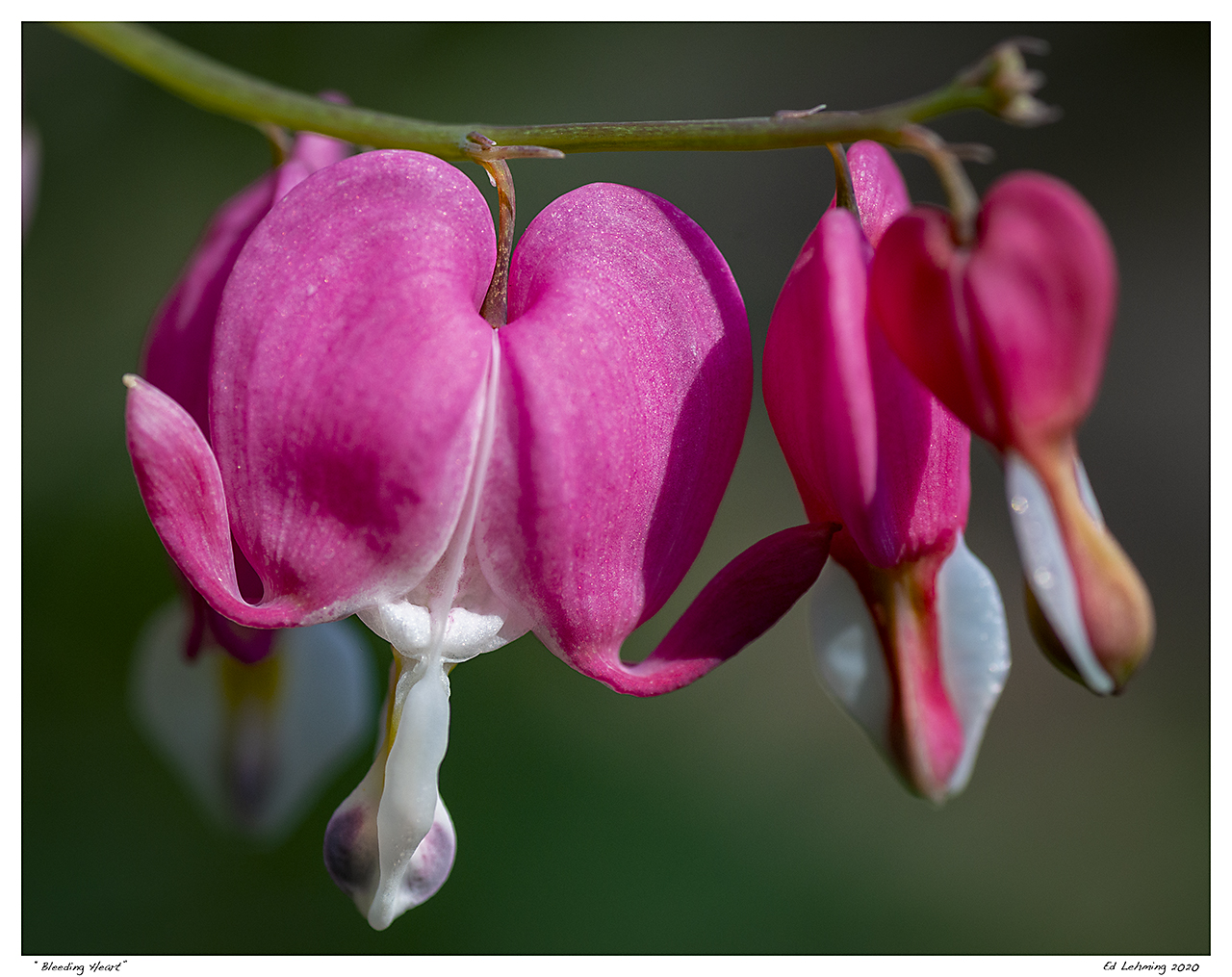
“A garden provides much needed respite in a world of uncertainty. Beauty and familiarity are a much needed commodity.” – Ed Lehming
A very brief post today. Simply a photo to bring some joy to our lives.
Nikon D800
Tamron SP AF 90mm f/2.8 Di Macro 1:1 (272ENII)@90mm
1/1000 sec, f/10.0, ISO 800
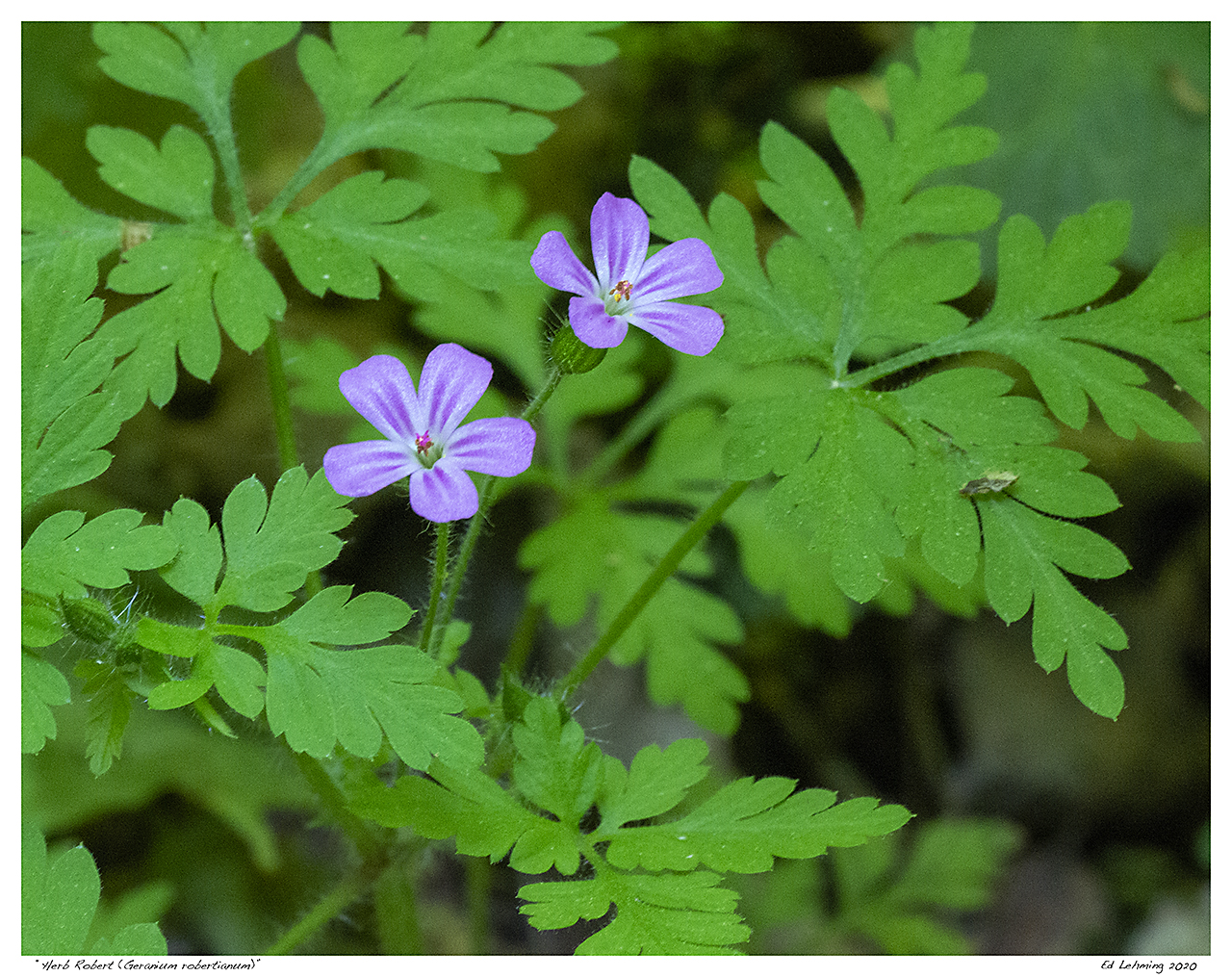
“Tiny hints of purple between the undergrowth draw me in. Wild geraniums are beginning to bloom as the forest darkens under a thickening canopy of leaves.” – Ed Lehming
I still recall vividly the first time I discovered these beautiful little blooms along a forest trail. At first, easy to overlook, but once you see them they seem to be in every nook and cranny. Not knowing what they were, I took a few photos and researched them when I got home.
It turns out that these are wild geraniums. They look nothing like their highly modified domestic and highly hybridized counterparts, but when you look at them side by side, some similarities start to show.
I’ve gotten to the point where I begin to note the foliage in late spring and make a point of going back to the denser patches around blossom time, which began last week. Once you notice them, like many of the other diminutive forest floor blossoms, it’s hard not see more. They do tend to like the shade, thus the unusually high aperture setting on my camera in order to facilitate the narrow aperture, and slightly moist soil but are quite adaptable and are a hint at the many forest wildflowers still to bloom.
Nikon D800
Tamron SP AF 90mm f/2.8 Di Macro 1:1 (272ENII)@90mm
1/80 sec, f/16, ISO 3200

“There can be wonder in even the simplest things. Sometimes it takes closer observation to see how amazing the mundane can be when you spend time considering it.” – Ed Lehming
One of the most satisfying aspects of photography is the ability to spend time with what I photograph, both during and after making the actual photograph.
The chive blossom pictured here is a prime example. I was out in the garden yesterday photographing some of the flowers when I noticed this single blossom highlighted by a single beam of sunlight. As I set the shot up and started composing the image and making sure it was focussed, some of the fine details of the flower itself revealed themselves. These details are not readily visible to the casual observer. They look like fluffy purple flowers. But when you look carefully and deliberately the fine yellow anthers are noticed as well as the complex layers of the sepals where the blossom joins to the plant stalk.
These details become even more noticeable as I process my image. The flower which is only about 3 centimeters in size shows every detail when viewed on a twentyone inch monitor, even more so when you zoom in.
I’ve really noticed this even more so with naturally occurring things, like plants, whereas man-made items don’t reveal any further complexity, which I find to be a very interesting and surprising phenomenon.
Nikon D800
Tamron SP AF 90mm f/2.8 Di Macro 1:1 (272ENII)@90mm
1/2500 sec, f/4.5, ISO 250
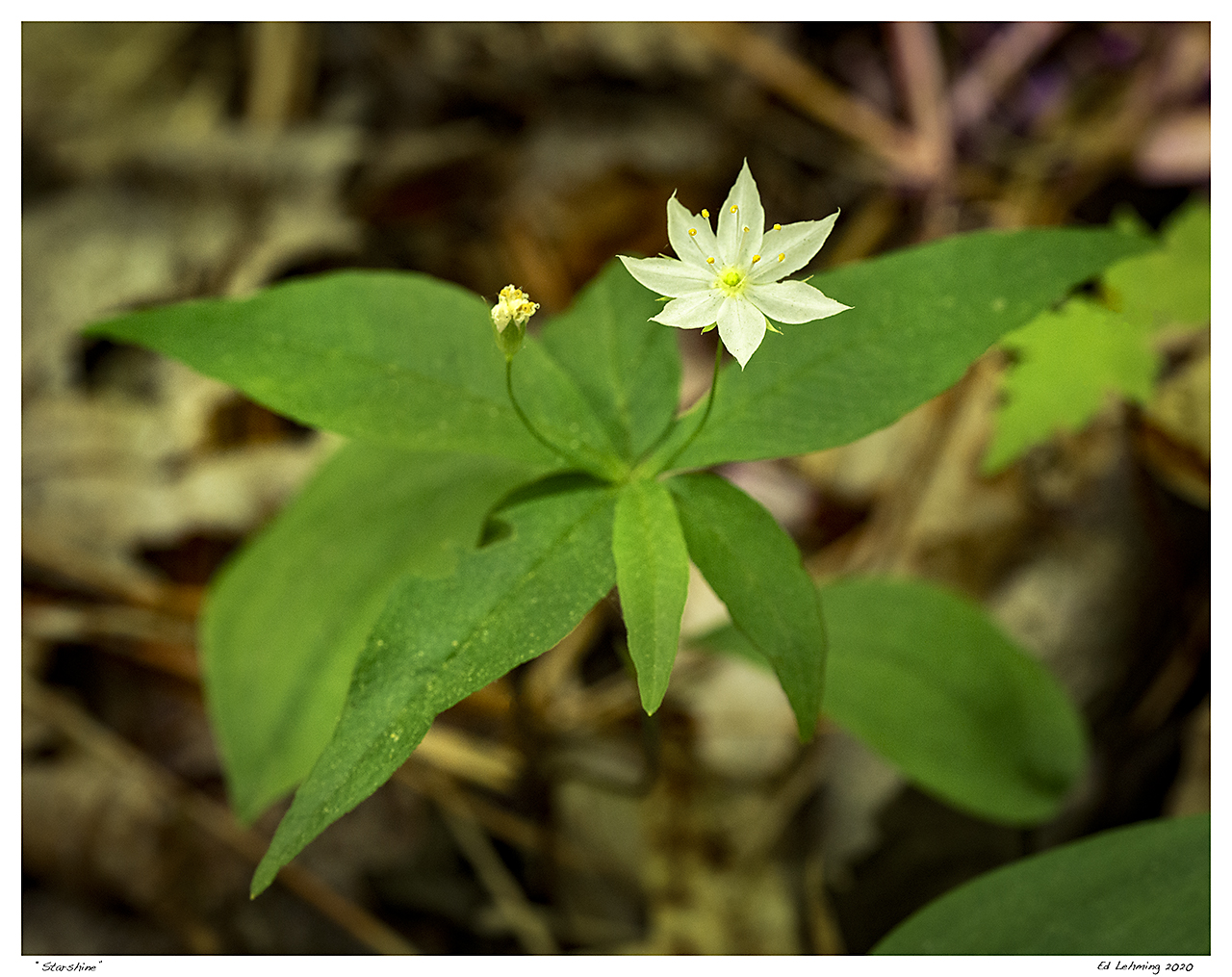
“Small white stars dot the deep green carpet of the forest floor, a private constellation of purity.” – Ed Lehming
Starflower (Lysimachia borealis) was what I set out to photograph earlier this week. To my dismay, the hot dry weather had accelerated their blooms and I only found a few still flowering. But it was not a total loss, the few that remained were still in good condition and I was able to make this image.
The more time I spend hiking the more keenly aware I become of my natural surroundings. I’ve seen starflower plants emerging from between dried leaves since early May, making note of where the larger colonies where, so i could return at a later date. I’ve gotten better at identifying plants as tiny sprouts and flowerless greenery.
Part of my routine now is to seek out plants that I am not as familiar with, photograph them, and study them once I get home. That was the case with starflowers only a few years ago. They seemed quite rare at the time but as I became familiar with them, I find them to be quite abundant, which I a good thing, since they are such beautiful flowers, if every so briefly.
They can be a challenge to photograph since the bright white contrasts strongly with the deep green foliage. I tend to underexpose my images and correct in post-processing.
Nikon D800
Tamron SP AF 90mm f/2.8 Di Macro 1:1 (272ENII)@90mm
1/125 sec, f/16.0, ISO 1600
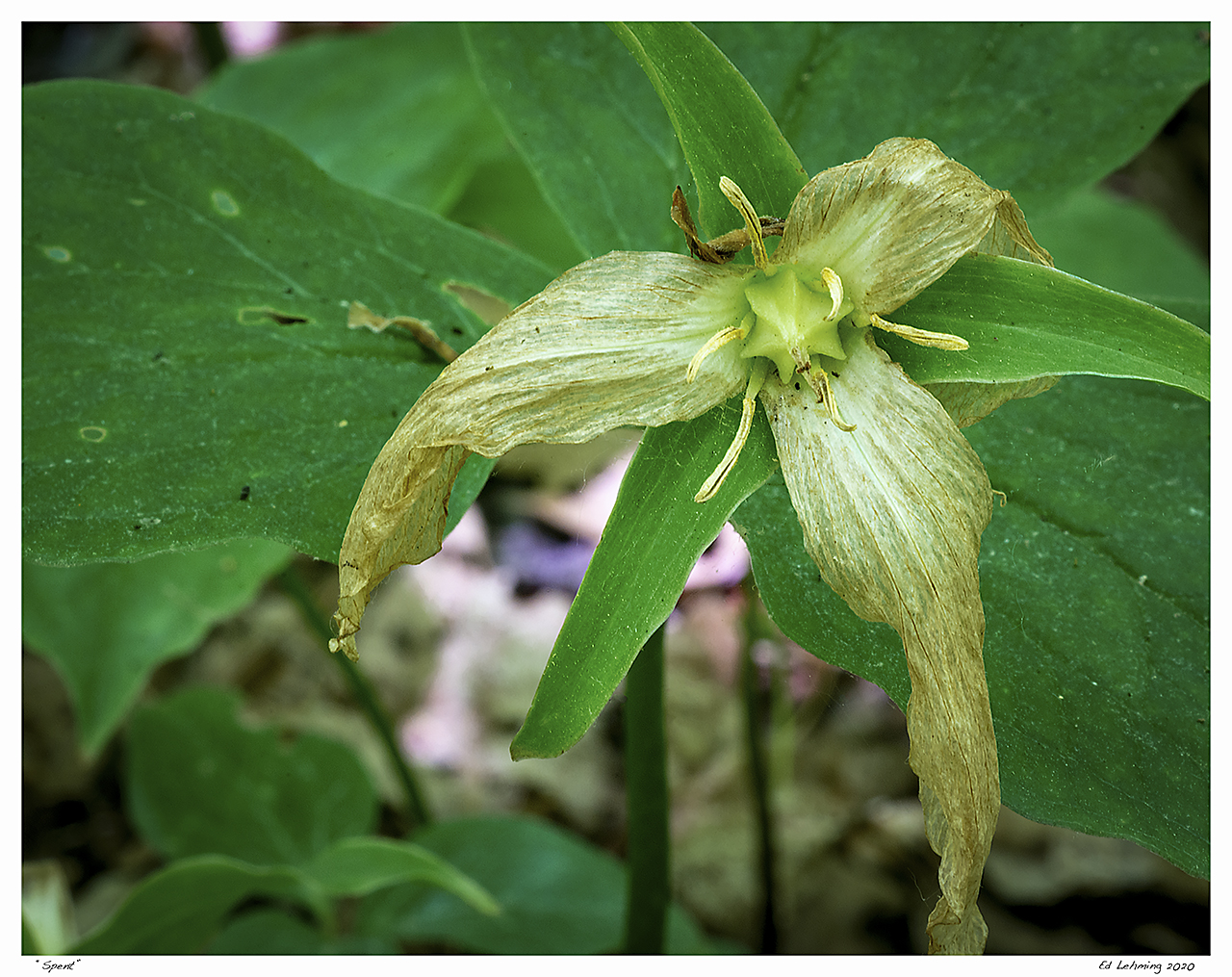
“Nature is impermanent and cyclical. Where once beauty and freshness abounded, desiccated petals remain and leaves begin to lose their freshness. This too will change, following a set pattern, and a new cycle will begin, in its time.” – Ed Lehming
I can’t say that I have ever witnessed this before. Two weeks ago the forest was alight with the pristine blossoms of white trillium (three weeks ago it snowed). Generally, my observation has been that within about a week, the white fades to a pale and mottled pink, causing some observers to think the trilliums are a pink variety. Once the pink fades, the petals fall off, leaving a bright green plant and a seed pod.
This year, the summer heat came quickly and since it been hot and dry at the same time, the petals simply dried in place. The whole forest is filled with these dry petal trilliums. They are actually quite pretty, but unexpected. It’s been a strange year all around so far. I’m wondering what new surprise is around the next corner?
For my photography community, you will see some ‘unorthodox’ settings. I had just entered the forest when I found these and had my ISO set to 400. Because I wanted to get the majority of the image in focus, I set the aperture to f/10.0 and the camera did the rest. Fortunately, I was using a tripod and the slight breeze I experienced the rest of the hike was not present at the time.
Nikon D800
Tamron SP AF 90mm f/2.8 Di Macro 1:1 (272ENII)@90mm
1/6 sec, f/10.0, ISO 400
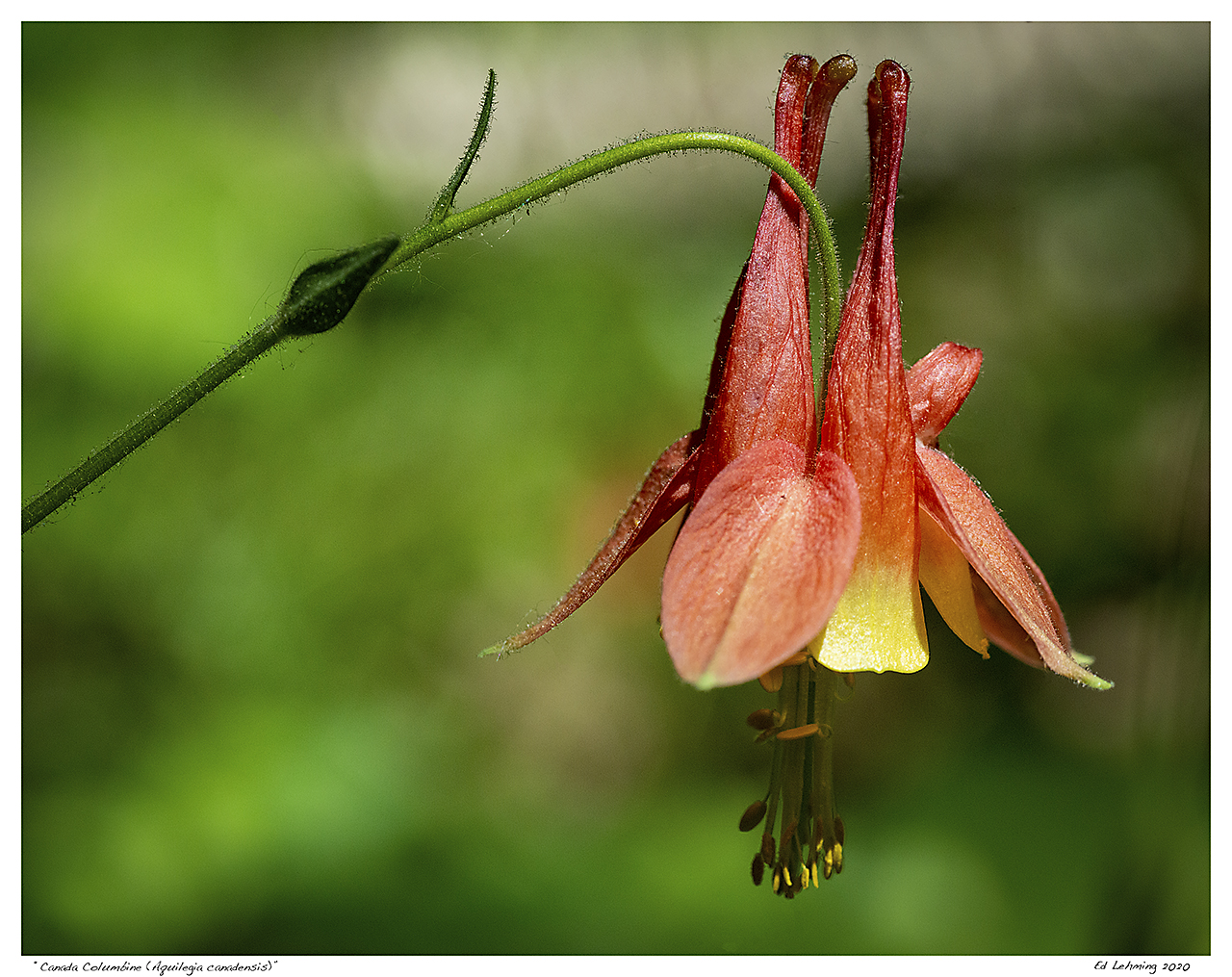
“Columbines in the lush green forest is a sure sign that summer is on our doorstep.” – Ed Lehming
As I set out for a hike recently, to photograph Starflowers, I was surprised to find an early patch of wild columbines. Most were in the shadow of the forest but a few dangled like faery bells in the sunshine.
These perennial flowers are always a delight and are so different in structure than most of the low-lying wildflowers usually associated with Southern Ontario woodlands. Their colour alone makes them stand out dramatically against the deep greens of the forest.
Of course, with late spring heat, the mosquitoes were also out to welcome me to their home. I was more concerned with blackflies, which are usually still quite active this time of year, but they seem to have burned off early. The abundance of mosquitoes surprised me, since the spring has been cool and dry, limiting their ability to breed, but they seem quite adept at overcoming such adversities and there were still enough to be an annoyance as I crouched low for this shot. Next time, I will bring bug spray, but for now, I’m just happy to have captured a few pleasing images.
For my fellow photographers, I was not particularly challenged by the light, but there was a slight breeze, which forced me to increase my shutter speed to limit the effects of the motion for this tight macro shot, but had to bump the ISO quite a bit to properly expose the image.
Nikon D800
Tamron SP AF 90mm f/2.8 Di Macro 1:1 (272ENII)@90mm
1/1250 sec, f/15.0, ISO 1600

“For about a week in June, my world is filled with wonderful seas of purple.” – Ed Lehming
Dames Rocket (Hesperis matronalis) has always been a late spring favourite of mine, even before I knew what it was called. I fondly recall drives into the country with my parents and seeing fields of purple, pink, and white along the roadside.
“Rockets” form dense patches in fields and meadows for about a week in early June. They seem to appear out of nowhere and then they are gone. It may be that fleeting nature that makes them so appealing, especially at a time where there are not a lot of wildflowers blooming yet. It’s even nicer when the occasional daisy blends in. They have a beautiful fragrance which is more pronounced in early evening leading it to also be known as night-scented gilliflower.
I like them so much that for a few years I tried to get them established in my garden. That exercise finally worked out, but they cannot be contained and seed out wherever they want. So a nicely placed patch will soon move to a different part of the garden the next season. They are also not particularly attractive plants when not blooming, so I have since removed them and simply enjoy them in the fields where I first found them.
Like so many of the wonderful wildflowers we have, it was imported from Europe and Asia in the 17th century as a decorative plant and then escaped. In many locations it’s considered an ‘invasive species’ and cultivation is discouraged. Despite that moniker, I like like it and would hate to see it dissappear.
Nikon D800
Tamron SP AF 90mm f/2.8 Di Macro 1:1 (272ENII)@90mm
1/100 sec, f/10.0, ISO 800
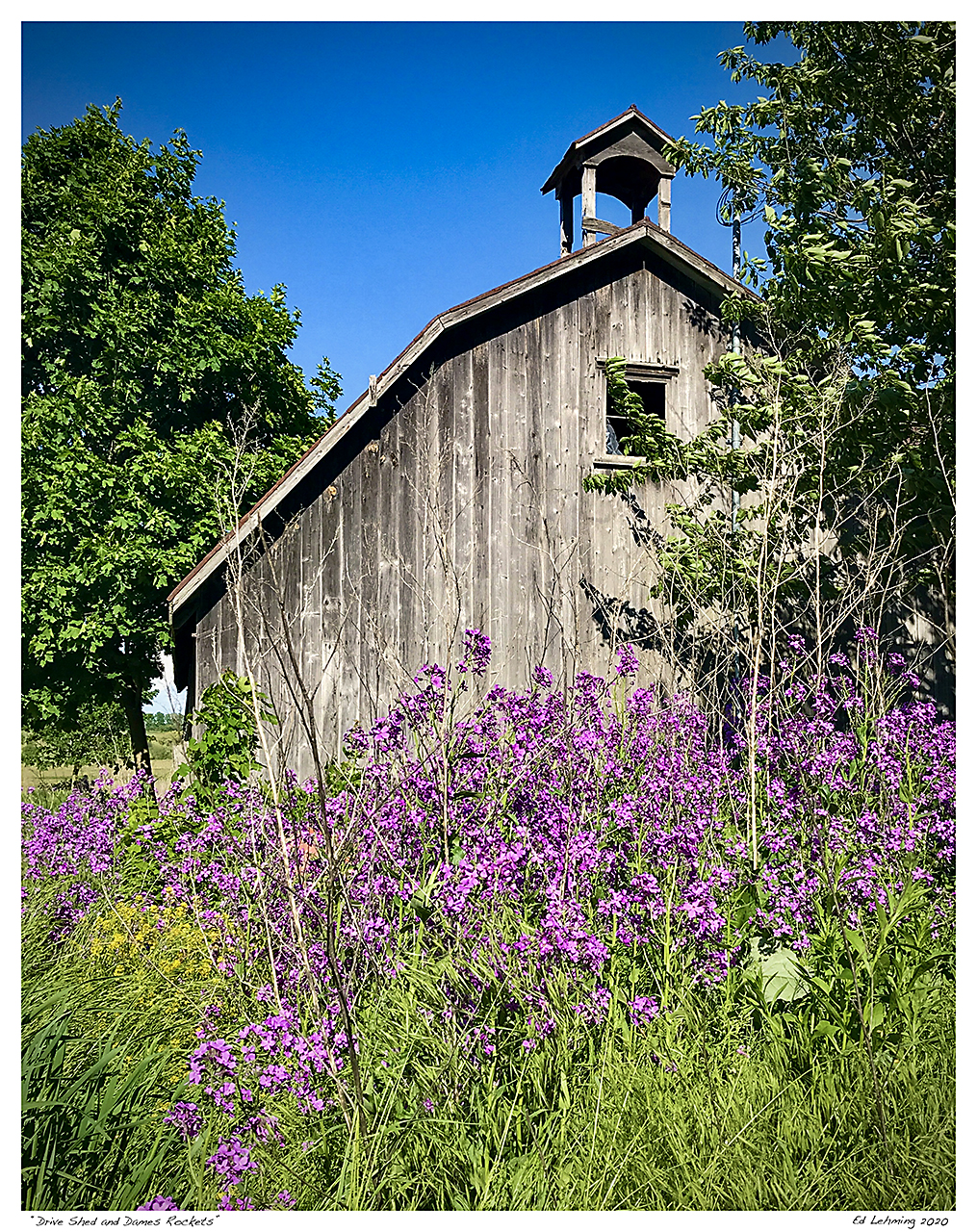
“The whites, yellows, and pale purples of early spring begin to fade, yet purple holds on, larger and more brilliant than before.” – Ed Lehming
We have spent the past two weekends starting a fairly significant garden.
As we worked, tilled, and planted a scene that we simply could not ignore was the profusion of deep purple Dame’s Rockets. The literally surround the one-acre garden plot (we did not plant the whole acre). The Rockets a tall and lush and remind us that spring is soon to end, and the summer plants will take over.
The building I chose for the background is a drive shed, used to store tools and implements. It’s a wonderful, weatherworn structure with a tin roof. I have no idea what the little belfry is about. I don’t think it ever held a bell but was attached as a decoration. It does add interest.
I enjoyed the scene so much that I also rendered it as an impessionistic digital painting.
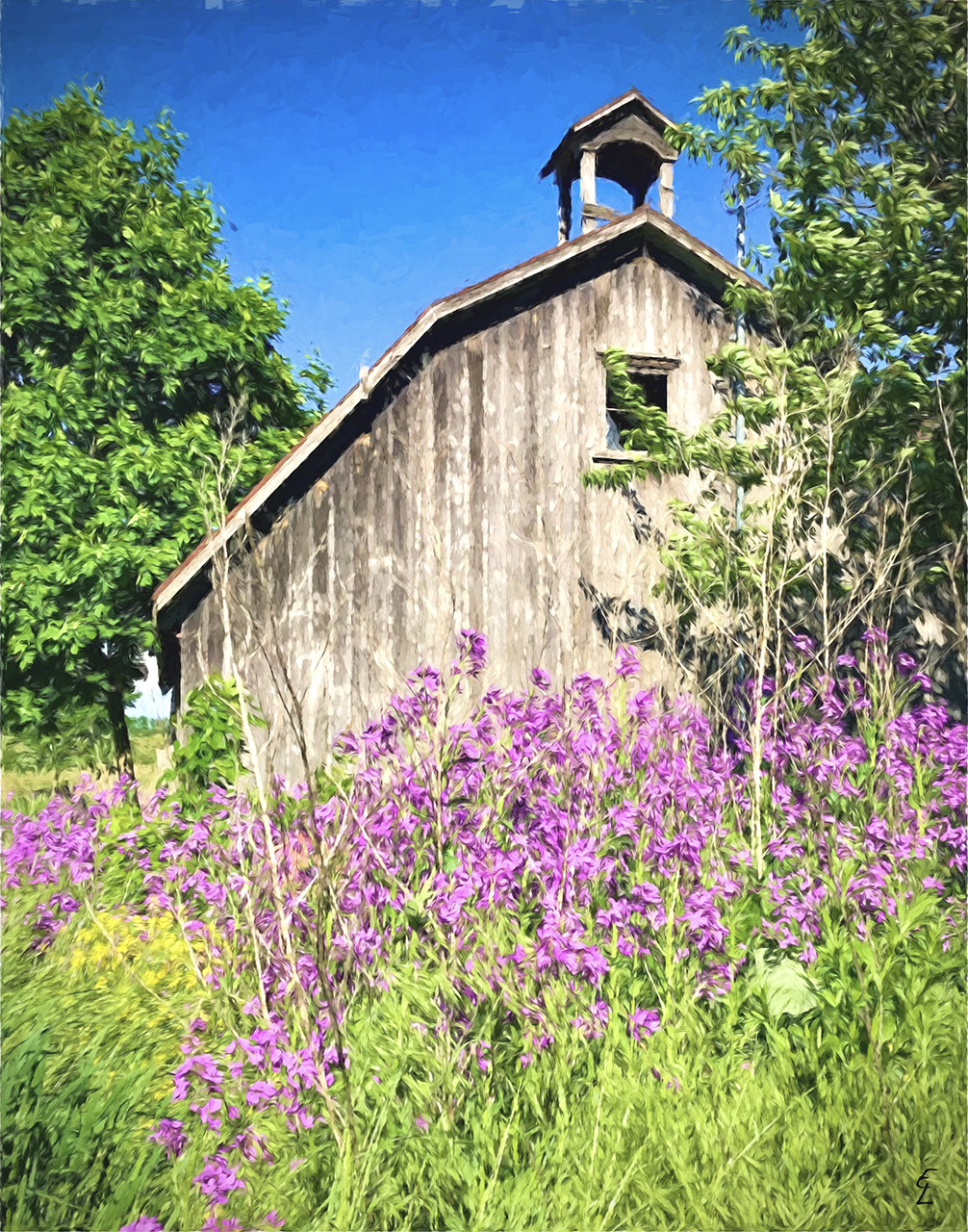
I find this is such a beautiful calming image. Though we were all tired from toiling in the field, scenes like this bring us joy and getting a garden going is very satisfying.
iPhone 7 back camera @ 4.0mm
1/1900 sec; f/1.8; ISO 20
For more images like this, please visit my website (images are available for purchase)
http://www.edlehming.com
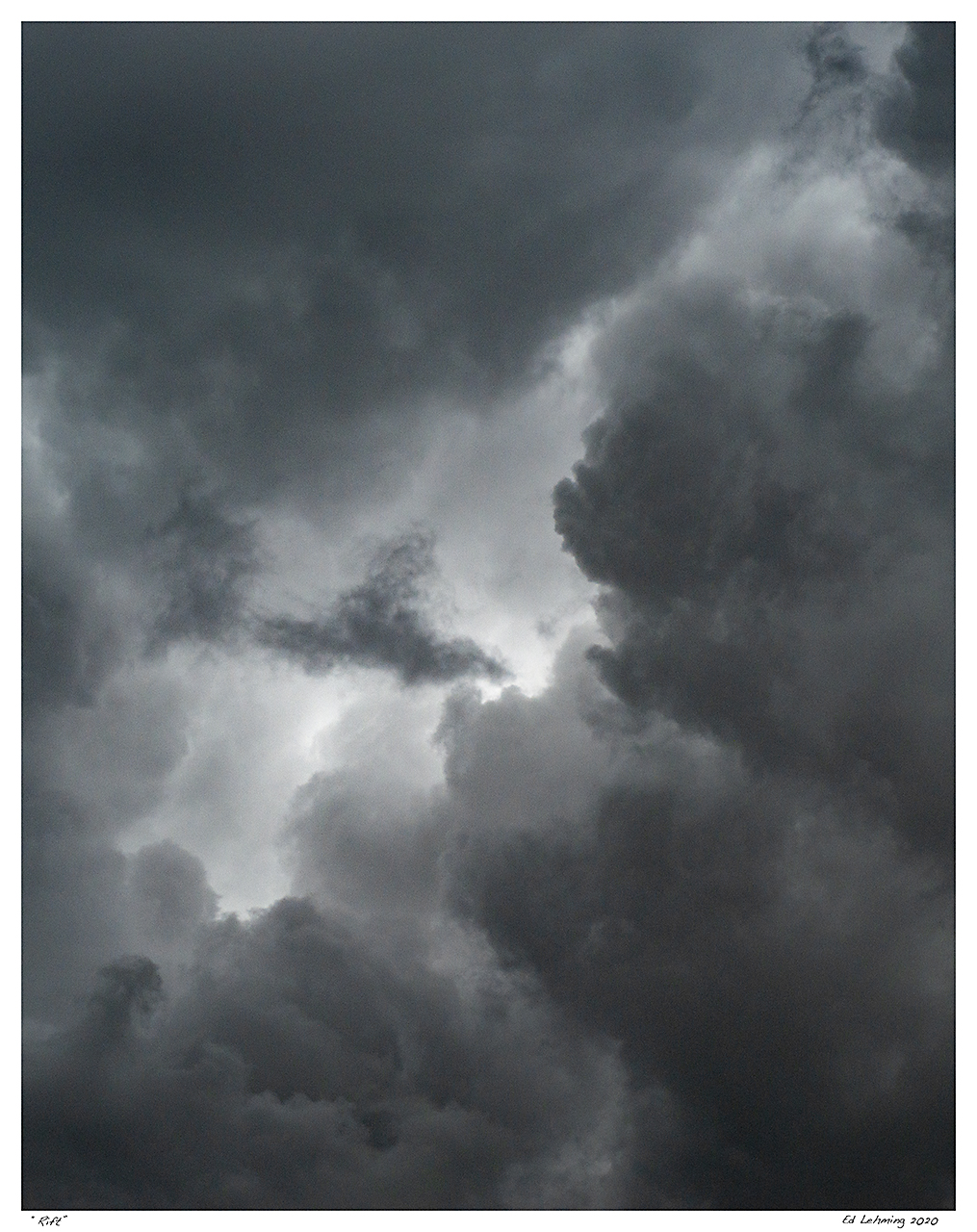
“There is a rift in our society that is deepening by the day. Within that rift there is light trying desperately to part the clouds we have created. Focus on the the light and let it shine to dispel our darkening clouds.” – Ed Lehming
These are indeed troubling times and I am constantly reminded by the natural world around me that nothing is permanent. Clouds roll in and clouds roll out, there are rainy days and sunny days. All these phenomenon are placed before us and we have a choice on which we focus on.
I could focus on the dark clouds that churn and roil above my head, but I choose the brightness beyond, knowing the storm will not stay. Without the storm, we would take the brightness for granted, as we so often do. The storm too has a purpose.
Nikon D800
Tamron SP AF 90mm f/2.8 Di Macro 1:1 (272ENII)@90mm
1/640 sec, f/10.0, ISO 800
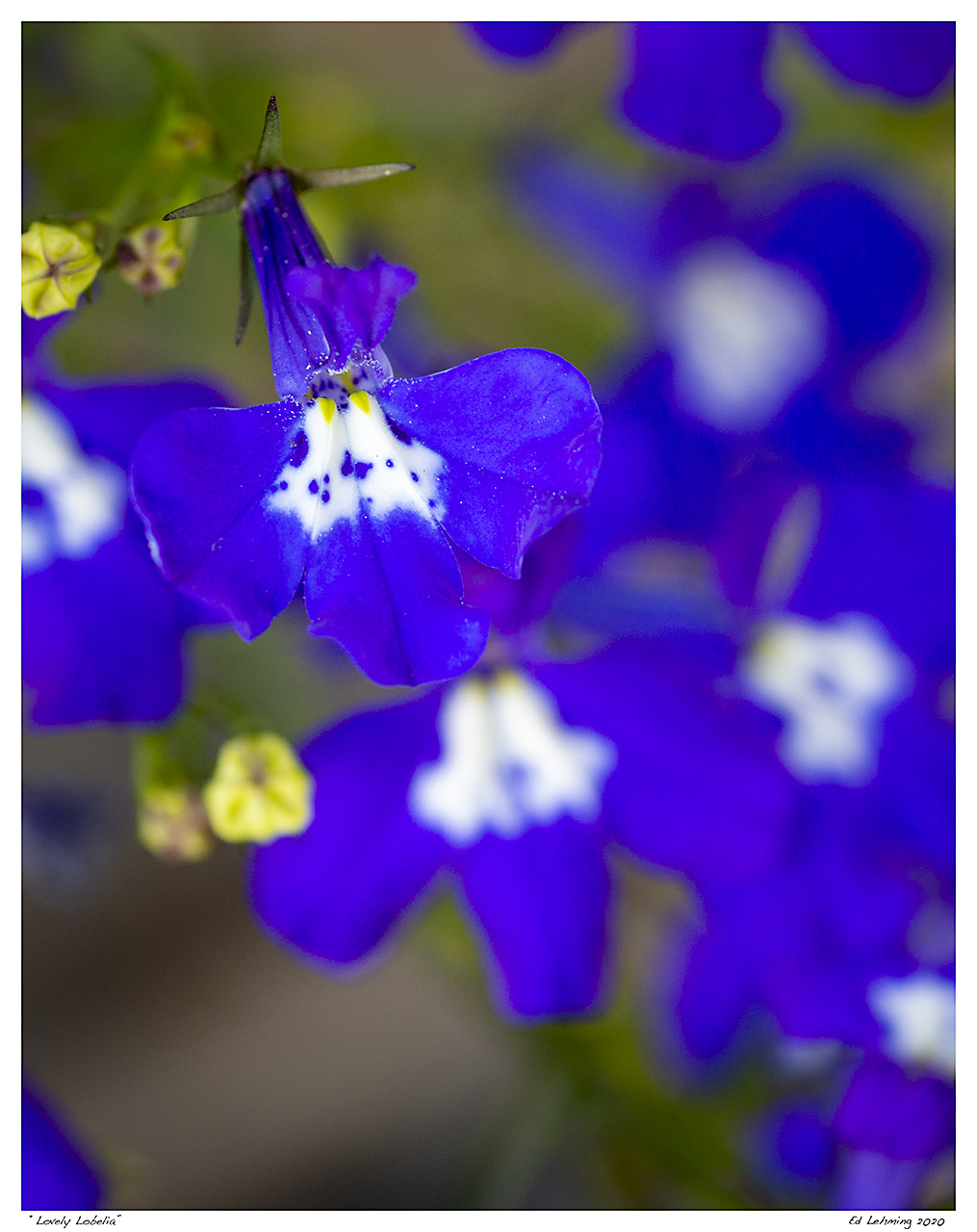
“It was such a pleasure to sink one’s hands into the warm earth, to feel at one’s fingertips the possibilities of the new season.”
― Kate Morton
Now that the garden is starting to fill in, I find myself spending more time enjoying some of the simple blossoms that I often take for granted. Some of these, like the tiny lobelia often go unnoticed because they are so tiny, yet they add some beautiful splashes of colour.
Photographing them and reviewing the images also gives me the opportunity more closely observe the flowers themselves and I find myself researching them more than I would if I just glance at them from a distance.
Lobelia erinus, or trailing lobelia, is the full name of this particular variety and was was surprised to find it is native to South Africa/ Though I really should not be that surprised as most of the garden plants we take for granted have come for overseas at some point in time and have been imported for a particular trait. In lobelia’s case, it’s the beautiful shape of the flowers and the fact that it naturally trails, making it ideal for hanging baskets and planters, which is exactly where this one resides.
Nikon D800
Tamron SP AF 90mm f/2.8 Di Macro 1:1 (272ENII)@90mm
1/50 sec, f/10.0, ISO 800

“Before my eyes was a sea of white stars, bright yellow anthers, and deep green foliage. With the warming air, summer can’t be far off now” – Ed Lehming
The image that I selected today was made in my garden this afternoon. The subject: Star of Bethlehem, a beautiful perennial that I acquired a few years ago from my mother-in-law’s garden. When she downsized and moved to a condo I offered to provide a new home to many of her garden treasures.
This plant was a surprise for me, as she moved in the summer and I simply transplanted what looked like a thick grass, having no idea what variety of plant it actually was, till the next spring, when two of these plants filled my front garden with wonderful white stars.
It does not bloom for long and only blossoms in sunlight, aften waiting till near noon before the flowers open; when they do it’s simply beautiful. They bring a bit of purity to the garden, which is just transitioning to late spring blossoms. They are a splash of freshness among the currently flowerless foliage and ferns and have become one of my garden favourites.
To get a nice composition is a challenge since there are so many near-perfect blossoms to chose from.
Nikon D800
Tamron SP AF 90mm f/2.8 Di Macro 1:1 (272ENII)@90mm
1/500 sec, f/10.0, ISO 800

“Words often fail to describe the feelings that our environment brings. How do I adequately share the joy of a spring forest? Art provides a medium to share my world.” – Ed Lehming
There are many time where I see a scene before me that is absolutely raw and emotionally beautiful. I try to share these scenes these scenes through my photographs, but there are times where even this is inadequate. In these cases, what I see and feel is best presented as more traditional art, in the form of a painting. Using software to create this ‘feel’ is generally a last resort as I struggle to pull life from a photo but the resulting image does not suffice. This is the primary reason I often create images with deliberate movement in them. The slight movement brings the scene to life and makes the eye spend more time considering what is being seen.
I really enjoy impressionist painting because of its ability to communicate a feeling through brush strokes, colour, and composition. My photos already offer the colour and composition but there is something in the brush strokes, a sense of depth, movement, and energy that a flat image just can’t do. Because impressionism resonates with me, I often find that converting my images into digital art gives me the satisfaction of elevating some of my images to a place a photograph sometimes can’t achieve. That was the case with this spring scene in Ontario’s North Walker Woods, a conservation area close to my home.
Here the spring forest is just starting to leaf out and the ground is filled with the white purity of trilliums. Presenting it as a digital painting brings out the soft serenity of the scene very nicely, in my opinion, and leaves me with something that was created by me, with a little bit of help.
Nikon D800
Tamron SP AF 90mm f/2.8 Di Macro 1:1 (272ENII)@90mm
1/200 sec, f/20.0, ISO 640
(Rendered with Topaz Impressions plug-in)


Recent Comments