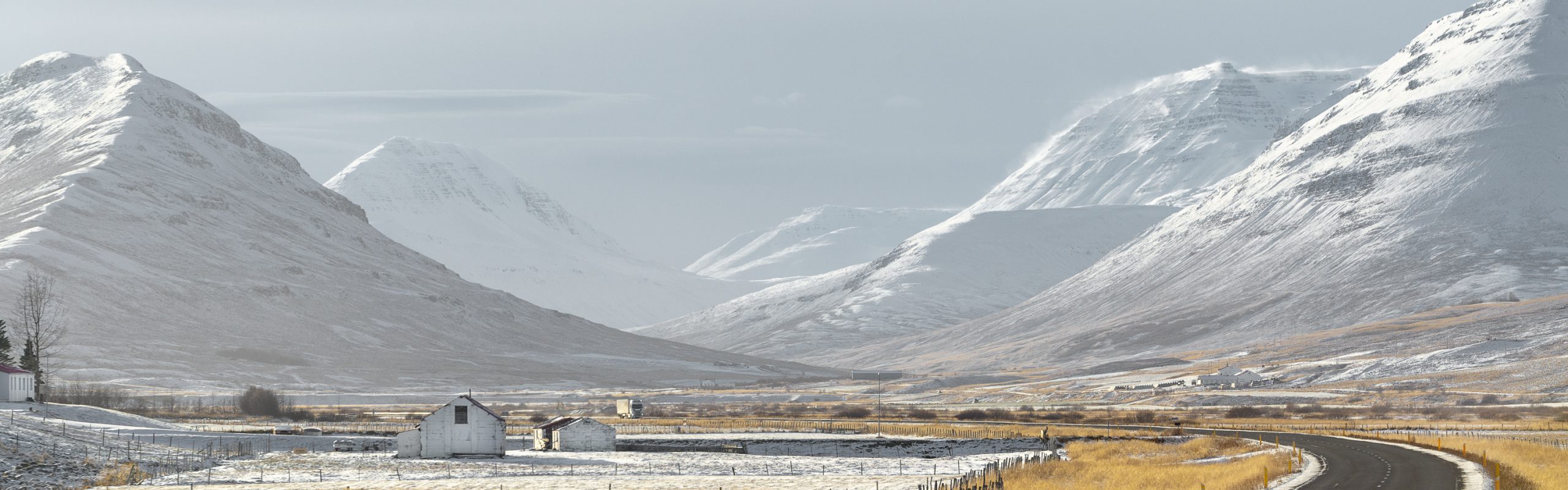
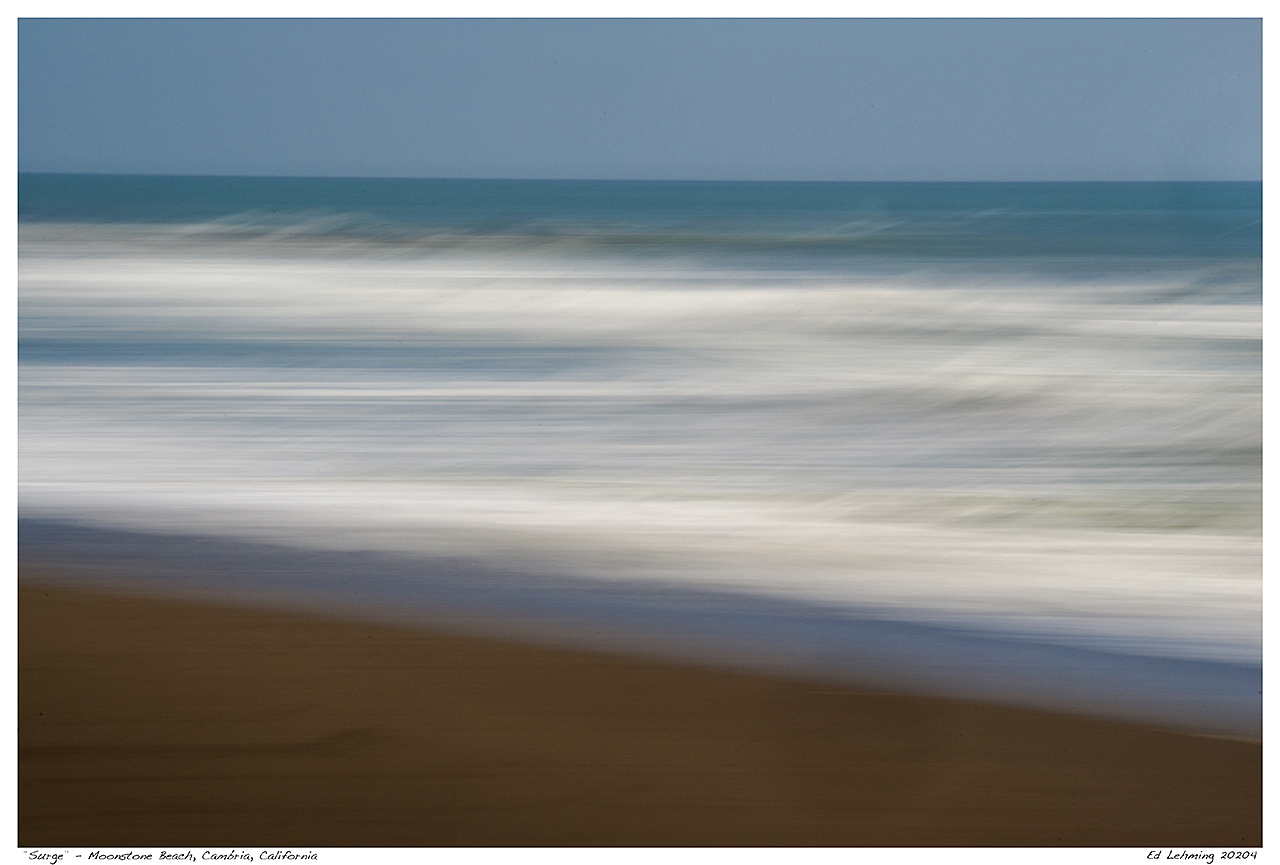
“Motion within motion. It is amazing what a difference a slightly different perspective makes. By looking at things differently, new wonders emerge.” – Ed Lehming
I almost named this image “Motion within Motion”, but what struck me first, and how I generally name my images, is the impression I first get from the image, and that impression was “surge”.
It was not till I spent a bit more time with the image, something I tend to do a lot; simple self-indulgence in a memory captured as an image, that I saw the impact of moving my camera horizontally as the waves crashed to shore. There was a compounding of the motion that transformed it into something more.
The technique I used is called Intentional Camera Movement (ICM); something I have tended to do a lot of in forest scenes with strong vertical lines, and only occasionally, horizontally, to get something a bit more “artsy”. I always have my camera set to 1/4 exposure for this, as that I where I find I get my best images and it’s the speed I can comfortably tilt my camera up and down constantly and relatively straight. My next decision, is the aperture and ISO. Forgive me non-photographers for getting a bit technical here. ISO is the sensor sensitivity to light and aperture is how narrow the camera aperture is. The narrower the aperture, the less light gets to the sensor and the more in-focus the overall image is (depth of field).
Now that I’ve covered that aside, a crucial factor is that I can correctly expose the image. At a 1/4 sec shutter speed, a LOT of light enters the camera, a big problem on sunny days where I can’t compensate for the exposure through ISO and aperture settings. At some point, there is no way of lowering my exposure enough through camera settings to prevent a blown-out image and I have to resort to a neutral density (ND) filter, which is a filter of varying shades of grey that acts like sun glasses for my camera
At one point, I carried a series of ND filters in my kit, till I discovered a Circular Variable Density ND filter that I could darken and brighten just by twisting it (one filter rather than 3 or 4). On the day I made this image, I had it with me in my camera bag and simply began to experiment with different levels of filtering. I did that by adjusting the filter darker and darker and reviewing my images on my camera display. Once I have what I want, I begin to shoot another series of images to get the motion right. In the end, this image took about 20 attempts to get everything to fall in place and produce the image I was after, that and a touch of post-editing. This was not a point and shoot day where I could take out my iPhone and get the shot in one go. Which is a limitation I noted on my previous post, yesterday. This was technical moment to get the image I envisioned. One final point on this technique is that you never get the same thing twice and each image is a surprise.
There you have it, a far more technical post than I had intended, but I think it was important to describe the process so that you know what you are looking at and how I got it..
Nikon D800
Tamron SP 70-200mm f/2.8 Di VC USD @ 200mm
1/4 sec, f/25, ISO 400
K&F Concept Variable ND8-2000 @ 1200
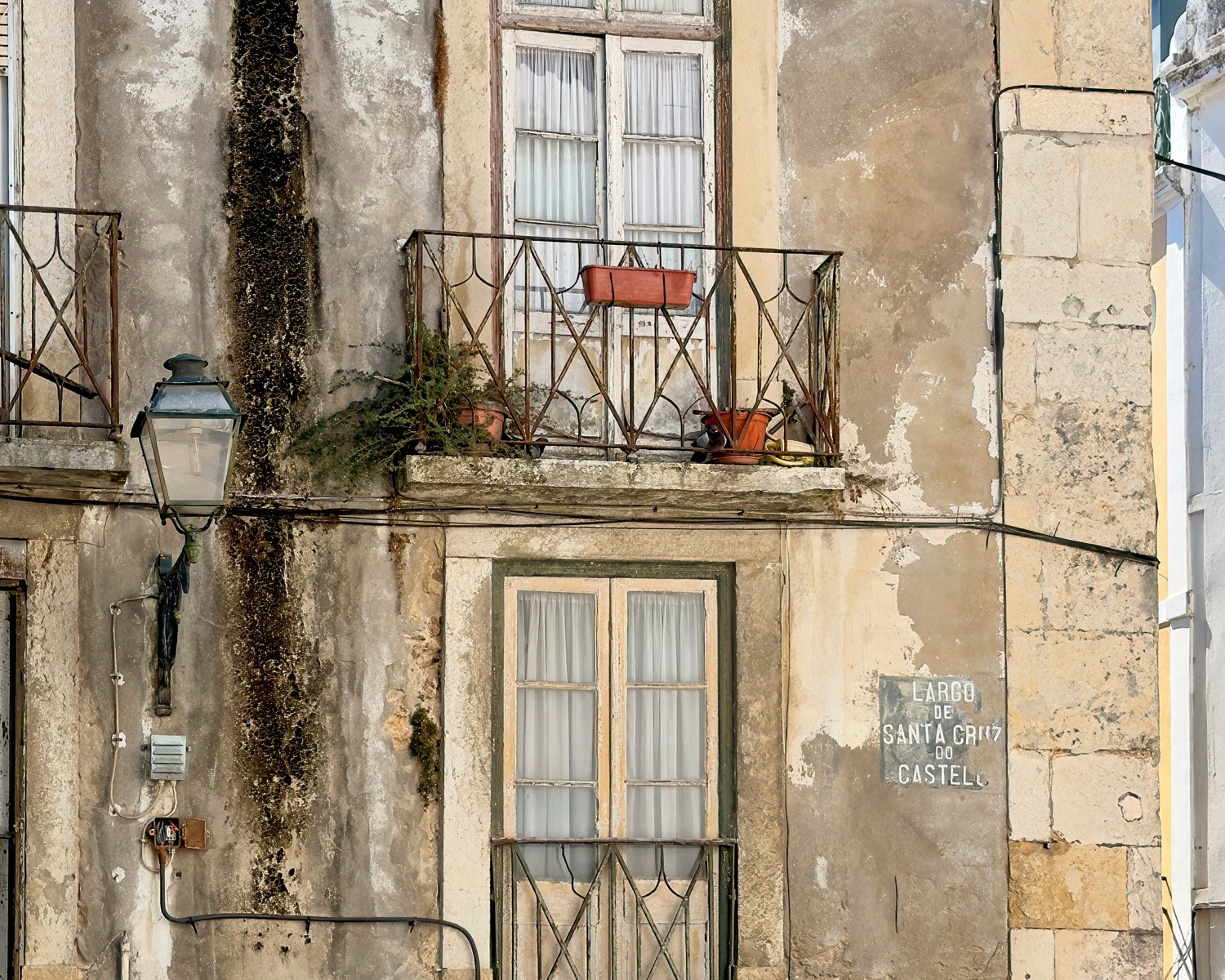
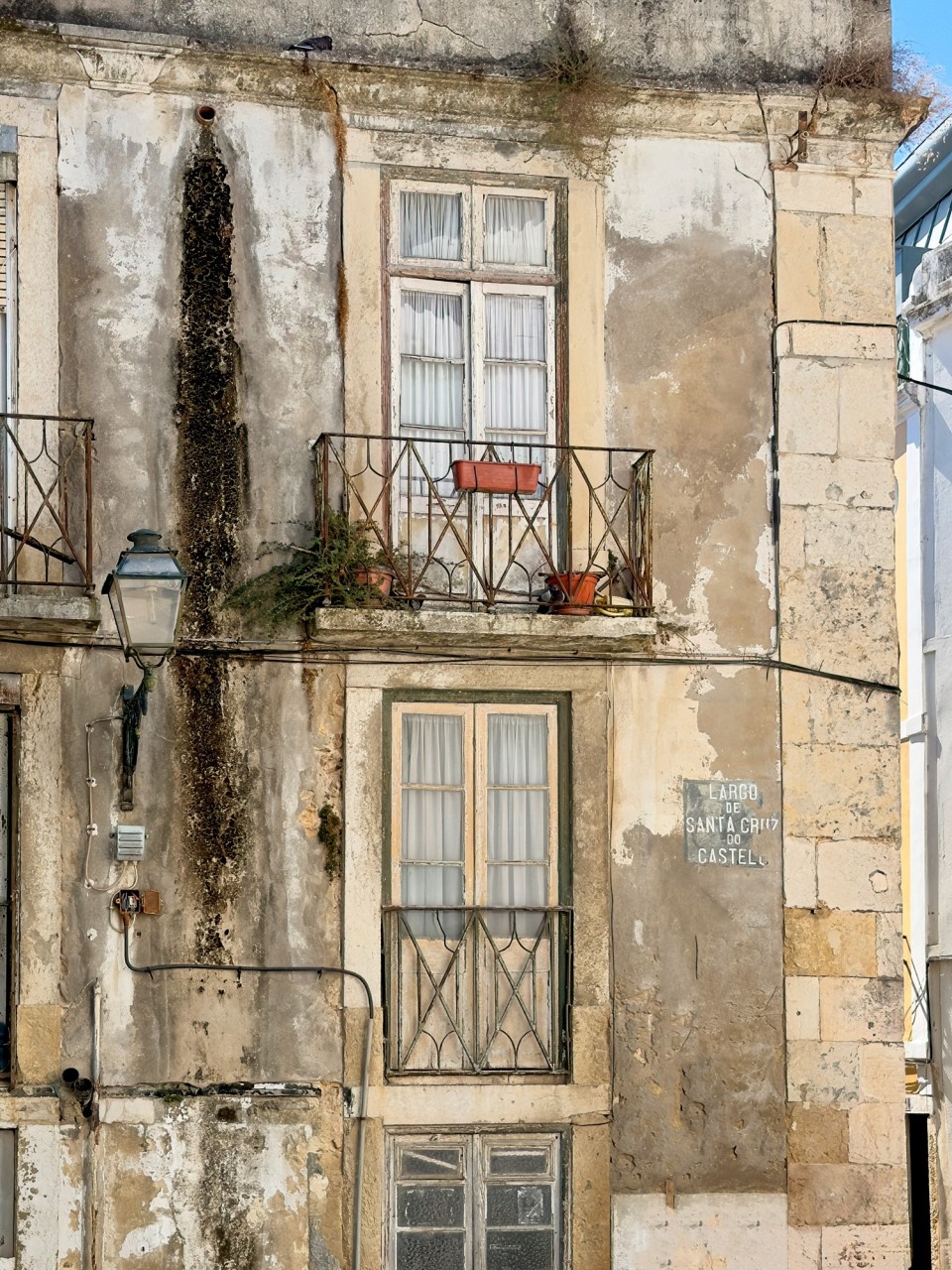
On a corner of, Largo de Santa Cruz do Castelo, as the sign says, just below the Castelo de São Jorge, sits this weathered building that caught my eye. I love these weathered buildings. The longer I sit and observe, the more details emerge.
At first glance, it’s a weathered façade. On closer inspection, it’s a story revealed in layers: a rust-stained drainpipe traces decades of rain, wild plants root themselves in cracked cornices, empty flower pots wait on a fragile balcony, and three pigeons, not immediately visible, survey it all from above. Faded street signage, exposed wiring, peeling plaster, and mismatched repairs reveal a building quietly recording time, one detail at a time. It’s one of hundreds like this in Lisbon, and each one has its own story.
I also consider that this square is extremely busy with large crowds of people arriving at and leaving the historic castle just steps away. I wonder how many others ponder these old façades and how many just pass them by without a second thought?
iPhone 17 Pro Max
Main Camera — 58 mm
1/2865 sec, ƒ/1.78 ISO 64
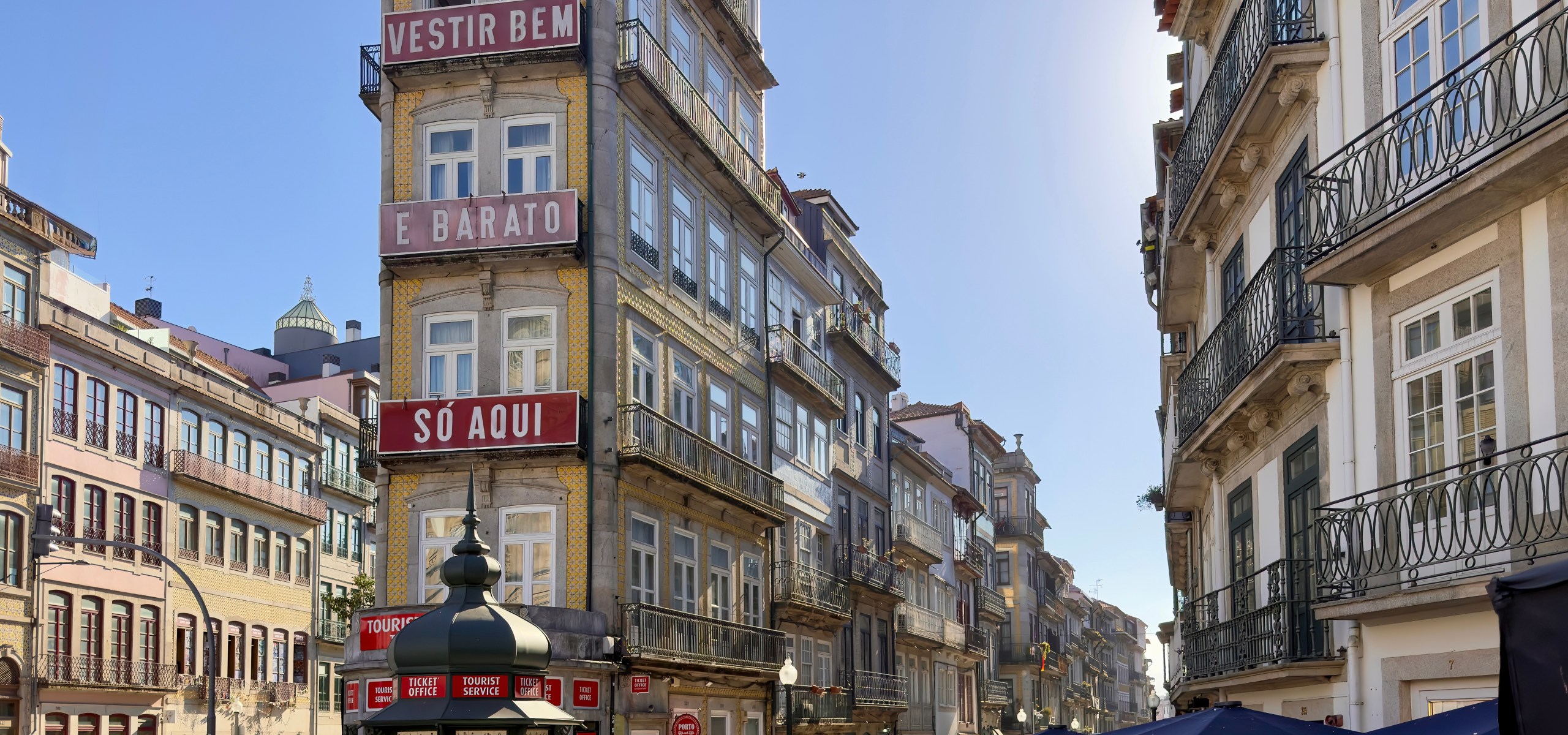
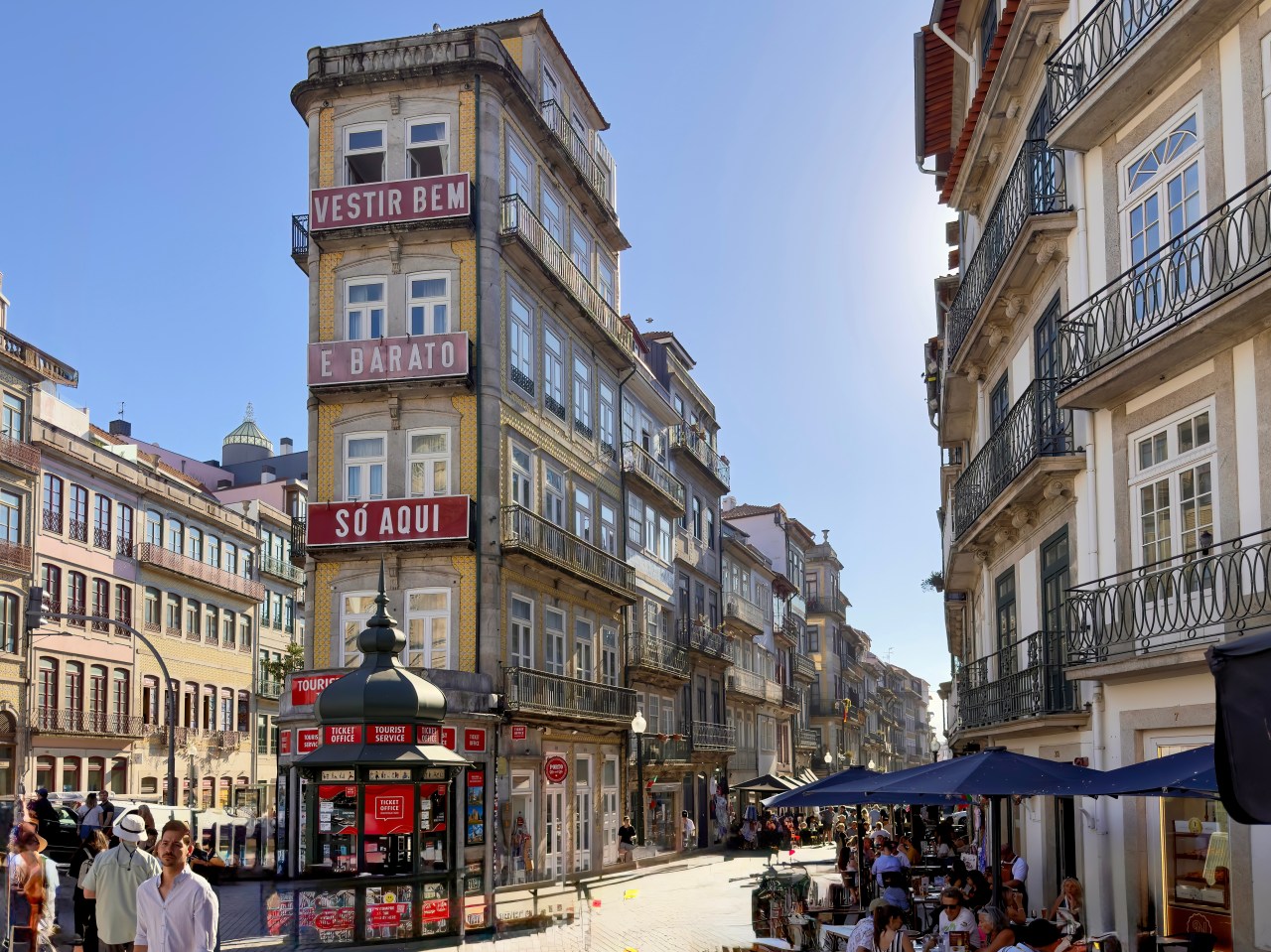
Porto is filled with intersections like this one on Rua das Flores, directly across from São Bento Station. It is one of the first sights that greets visitors as they step out of the station and is so typical of the many angular intersections that define the city.
It is a classic late afternoon scene. Cafés and restaurants are filled with locals and tourists taking a break, sharing a light meal, and enjoying conversations. While they sit, others wander from shop to shop, discovering what Porto has to offer. Although the streets are busy, they never feel chaotic. Life moves at a different pace here, and I am grateful for it.
That slower rhythm is something I especially appreciate during my time in Portugal. There is a calmness beneath the activity, and people always seem to have time to sit and talk. Nobody appears to be in a hurry, and conversations simply continue as long as they need to. I love that. Talking with shopkeepers is never a brief exchange. Everyone we meet is eager to chat, tell us about themselves, their families, and life in Portugal. It is a refreshing contrast to the brevity of many conversations in North America, where people often seem more guarded and reserved.
With my modest command of Spanish, I find that I can understand many of the signs and words I encounter in Portugal, so this one catches my attention. I never do discover the store offering “good clothes at low prices,” but there is certainly no shortage of shopping along Rua das Flores to the right and Rua de Mouzinho da Silveira to the left. Our apartment is on the latter street, and I still struggle to pronounce its name. The road runs from the train station all the way down to the Douro River, creating one of Porto’s most beautiful walks. Every block offers something interesting to see.
What is not immediately obvious in this photograph is that the street drops away sharply just beyond this corner. Porto’s steep streets are part of its character and charm. They reveal new views around every bend and ensure that even a simple walk through the city never feels ordinary.
iPhone 17 Pro Max
Main Camera — 24 mm
1/4926 sec, ƒ/1.78 ISO 80
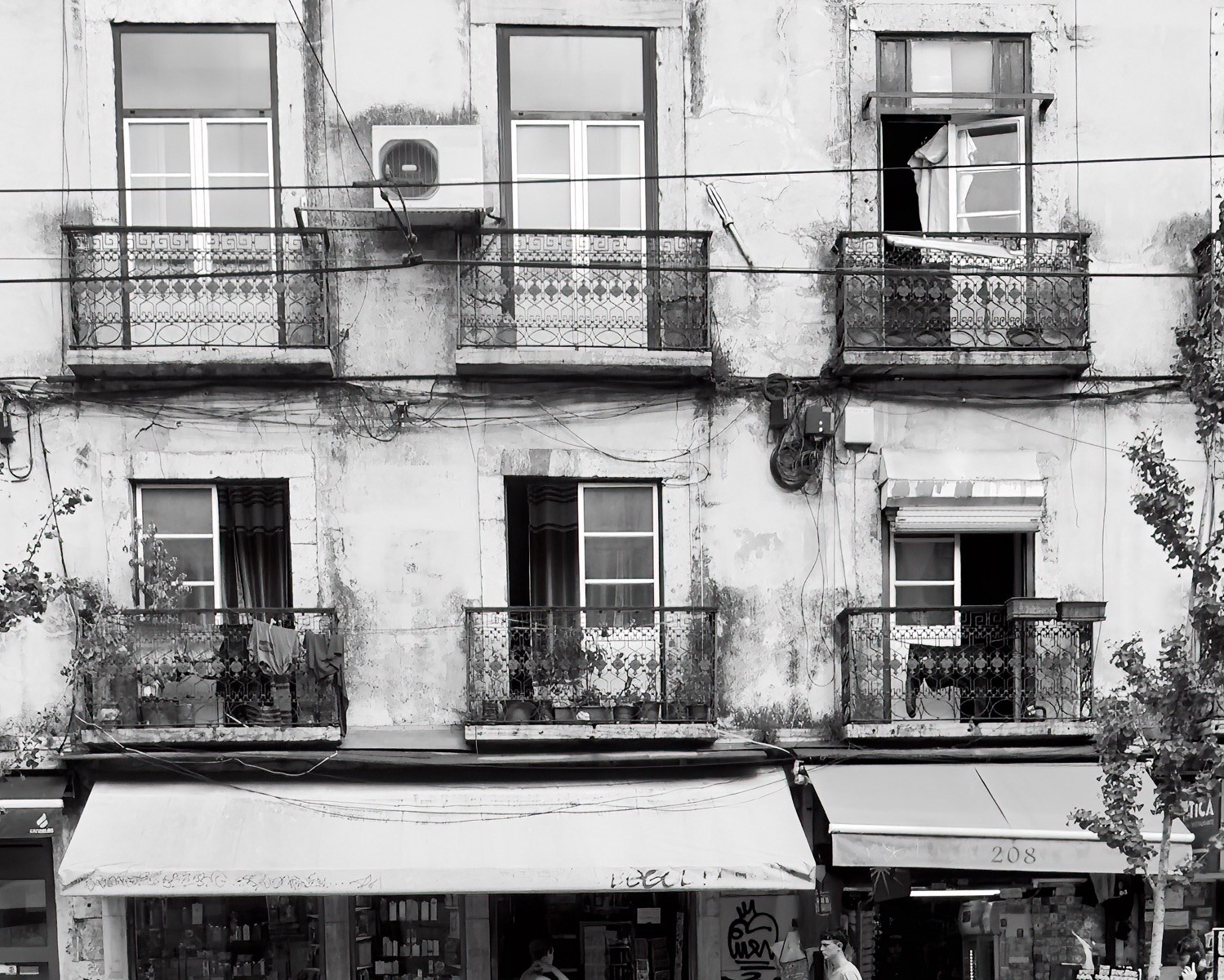
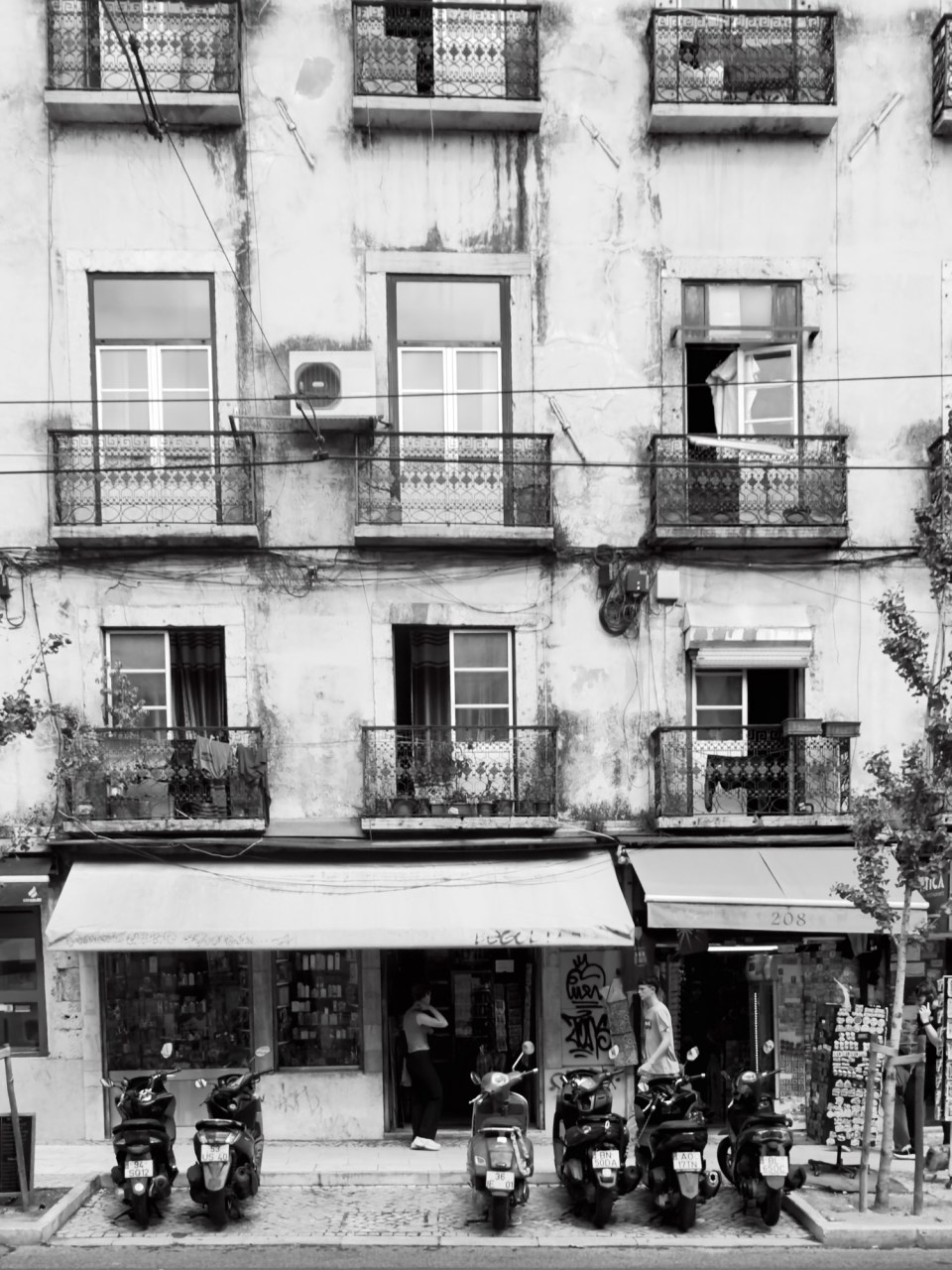
One of the most fascinating things about Lisbon is how each neighbourhood has its own distinct character. Cais do Sodré had a gritty yet vibrant energy. The streets were lined with shops and cafés, but never felt crowded. The area moved at its own pace and, to me, felt more authentic than the more tourist-focused districts of Baixa and Chiado nearby.
Here, you’re slightly off the beaten path, though not by much. It was the perfect place for us to slow down and enjoy a more relaxed side of the city. The inevitable souvenir shops were still present, but they were interspersed with local businesses that gave the neighbourhood its character.
We discovered a wonderful restaurant called Tosca, where beautifully plated dishes were served in a warm and playfully elegant atmosphere.
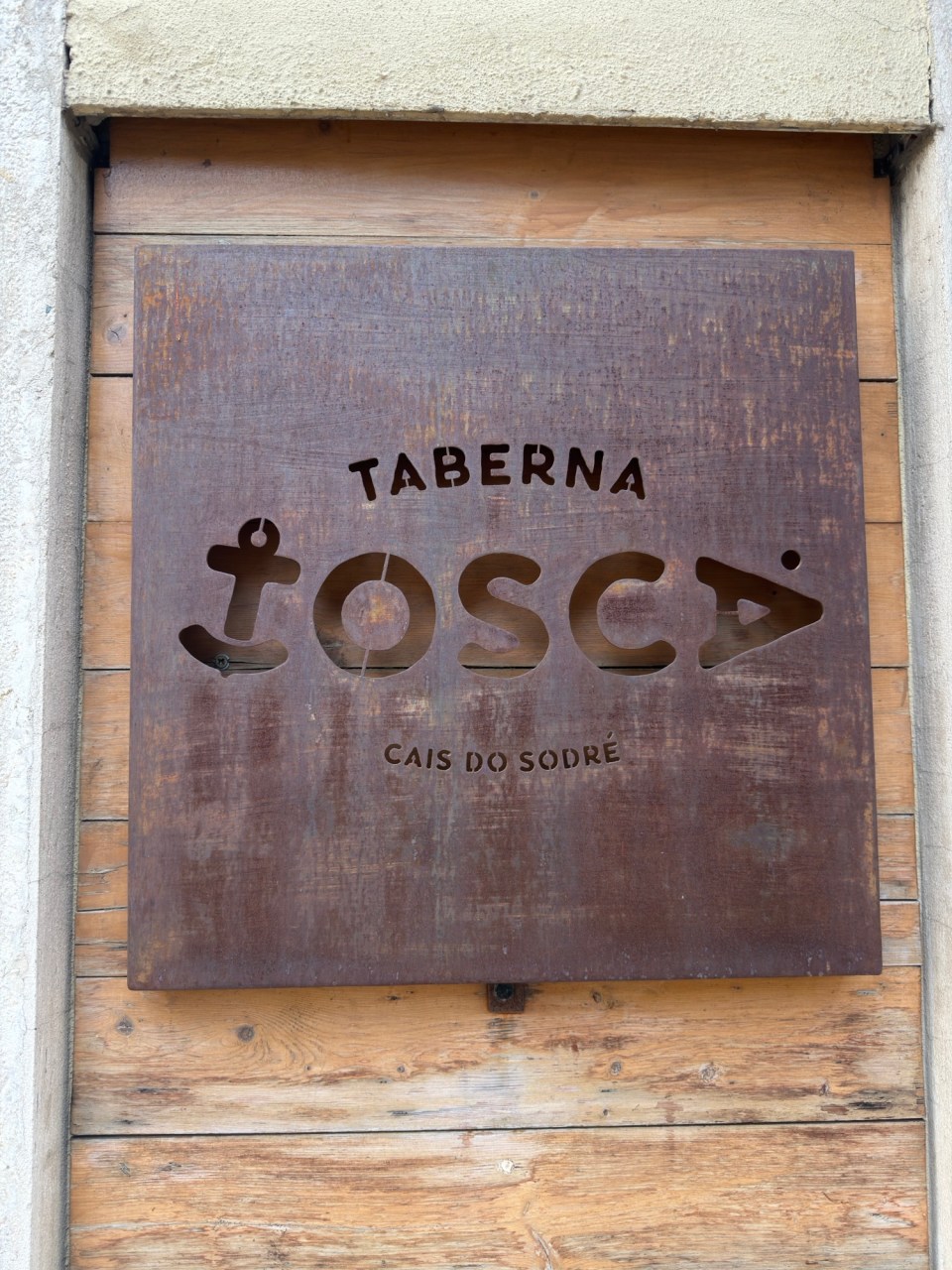
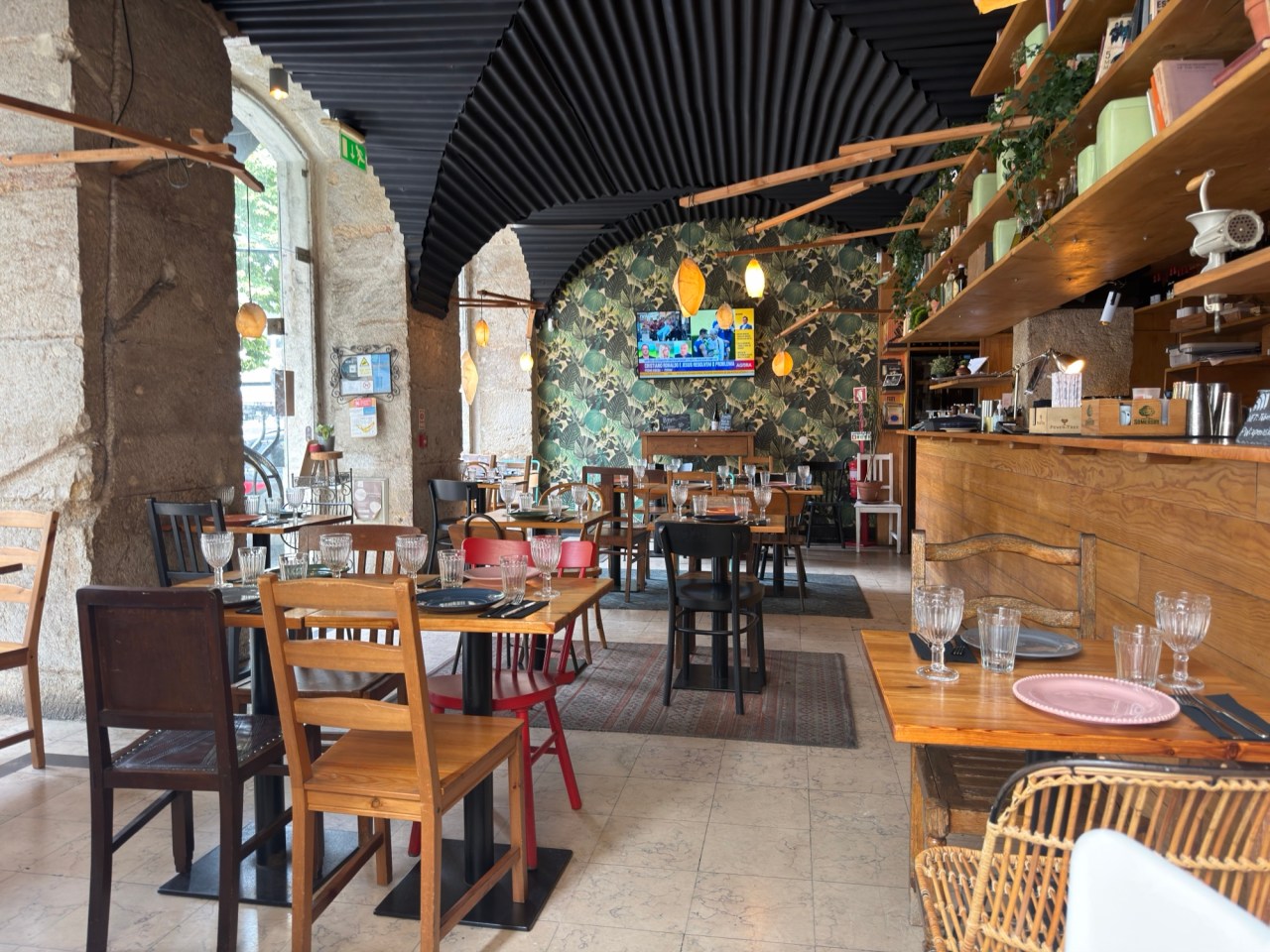
Our hostess told us that this area was once Lisbon’s red-light district, a common destination for sailors on shore leave. As I looked around the street, I could easily imagine what it might have been like during those days.
Directly across from the restaurant is Praça do Sodré, a lovely square and an ideal place to sit, take in the neighbourhood, and watch the Prazeres 25 tram glide by without the usual hustle and bustle.
Yet only steps away lies the famous Pink Street, lined with bars and restaurants, while in the opposite direction you’ll find the Time Out Market, with its seemingly endless collection of gourmet food stalls. A quieter, more local atmosphere was never far from some of Lisbon’s most popular attractions.
iPhone 17 Pro Max
Main Camera — 21 mm
1/700 sec, ƒ/2.2 ISO 20
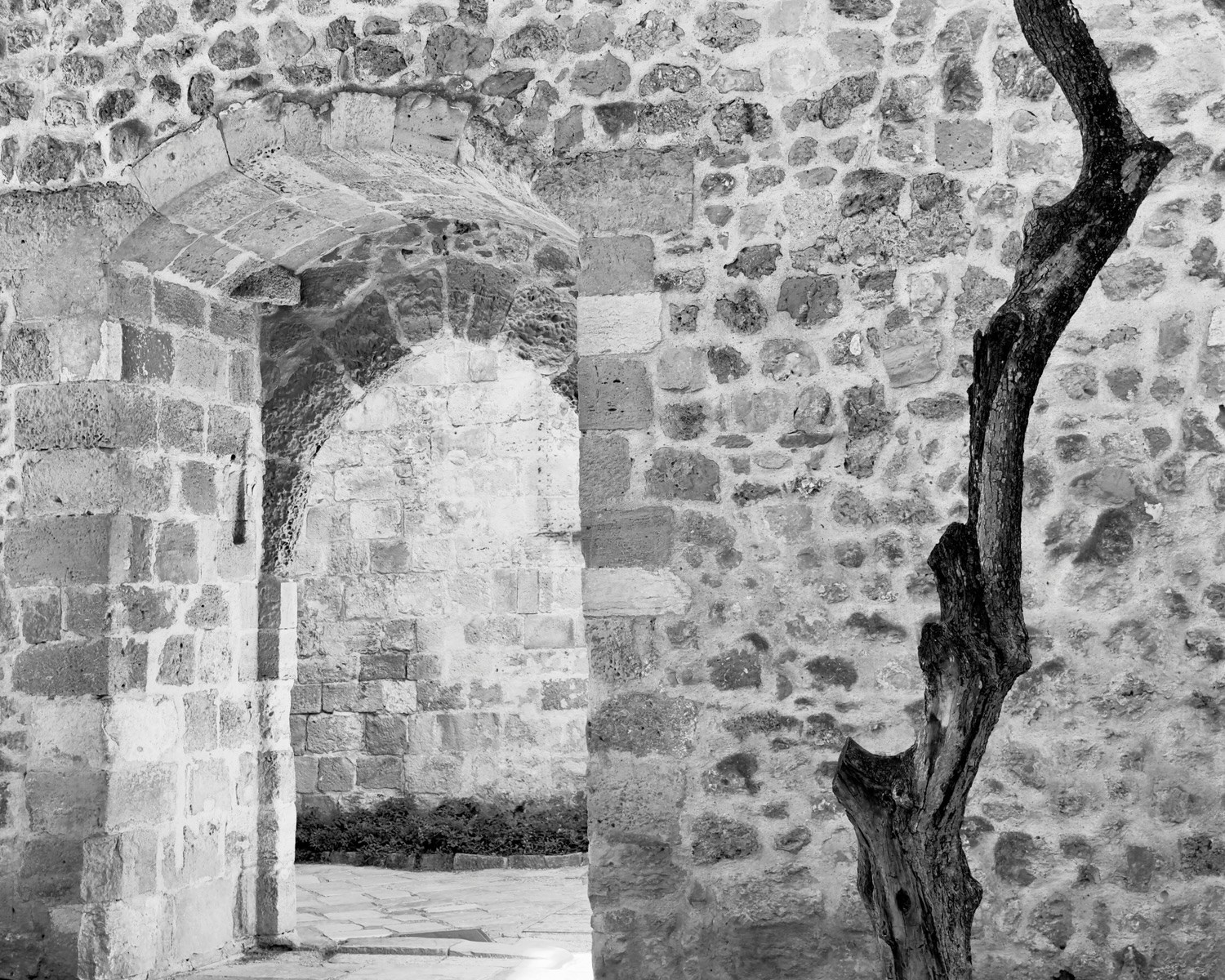
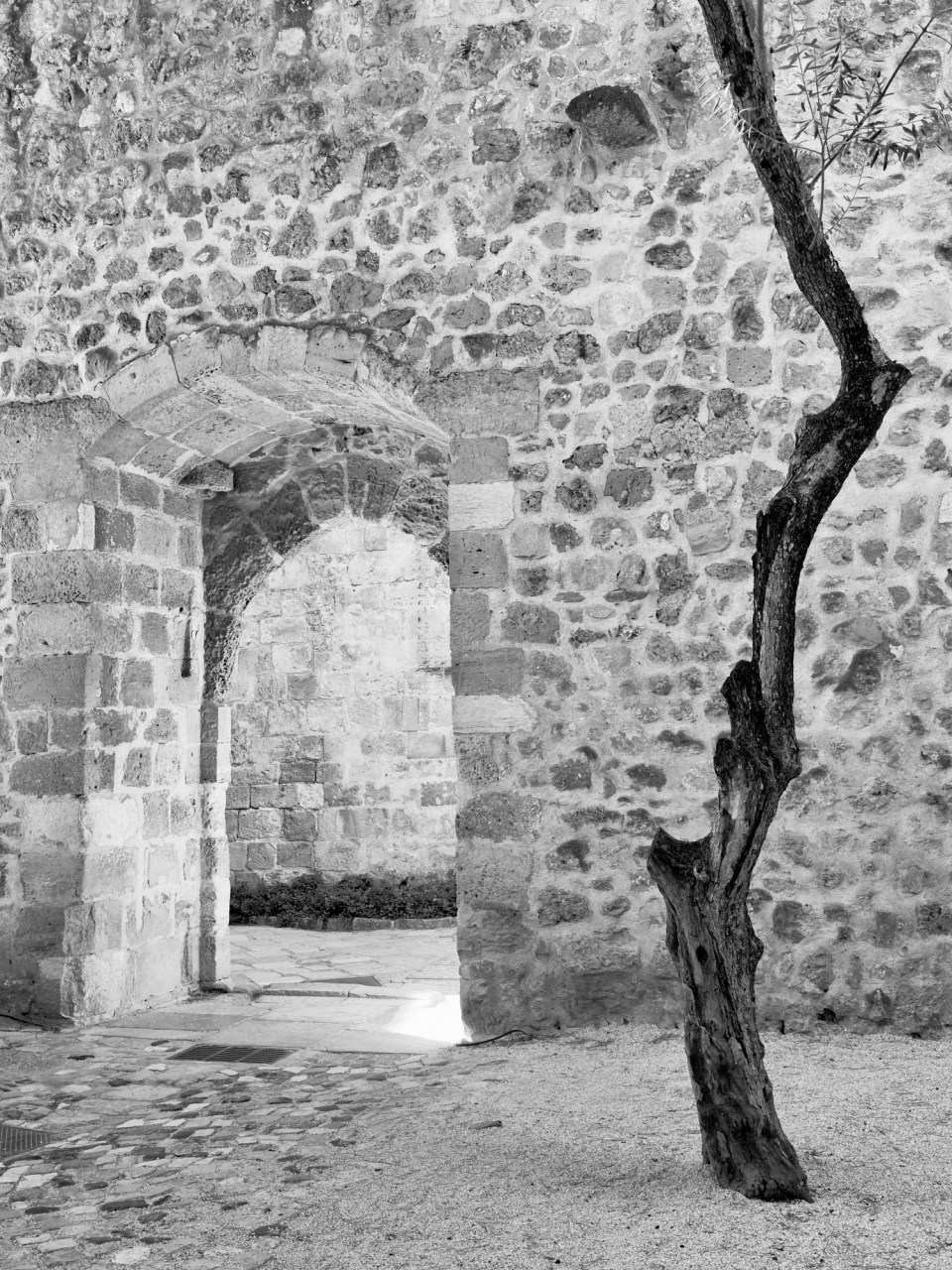
This image was created while I sat for a while in Castelo de São Jorge, perched high above Lisbon on a hilltop overlooking the city.
Reaching the castle requires a bit of a climb through the winding streets of the Alfama district, but the effort is well rewarded with interesting street scenes. We arrived early in the day to avoid both the crowds and the heat, which later climbed above 35°C. We discovered, as we exited the castle, that there is a bus that carries you from Baixa, below nearly to the gate. The bus route is appropriately named “Castelo”.
Once inside the castle walls, time seems to slow down. There are countless places to sit quietly and absorb the ancient architecture, while taking in spectacular views of Lisbon spread out far below.
This archway and the gnarled olive tree immediately caught my attention. As I watched, a steady stream of people moved back and forth through the opening. Capturing the image took some patience because the flow never seemed to stop. Then, for one brief moment, the scene cleared and presented itself exactly as I had hoped.
After taking the photograph, I spent some time studying it and ultimately decided to render it in monochrome. As I worked through that process, I found myself wondering about the countless people who must have passed through this arch over the last 750 years, since the castle assumed much of its current form. And like many hilltop fortifications, its origins stretch back even further, to the Iron Age.
Living in a country that is only 159 years old, I find this level of historical continuity and ancient civilization both humbling and astonishing.
iPhone 17 Pro Max
Main Camera — 37 mm
1/557 sec, ƒ/1.78 ISO 80
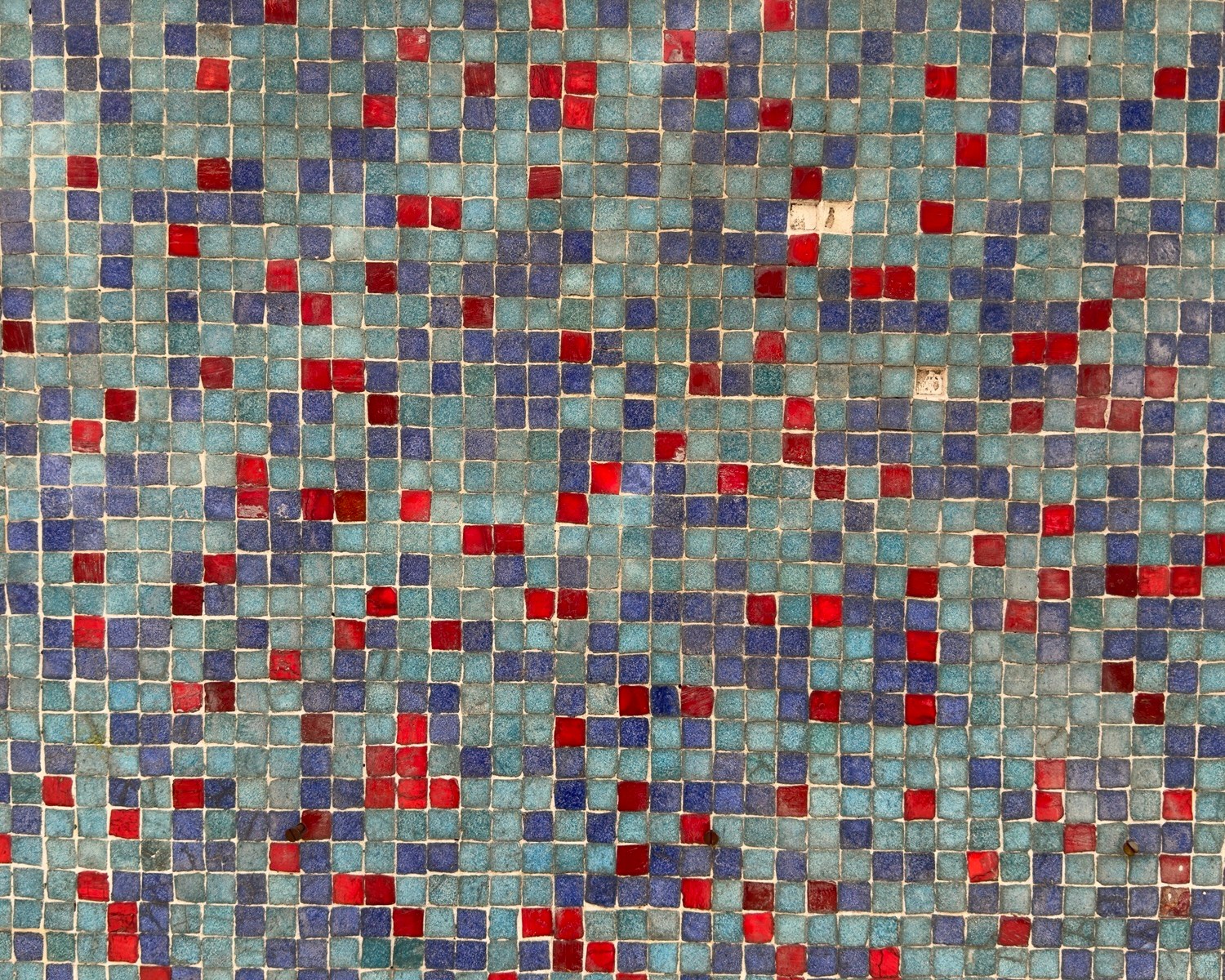
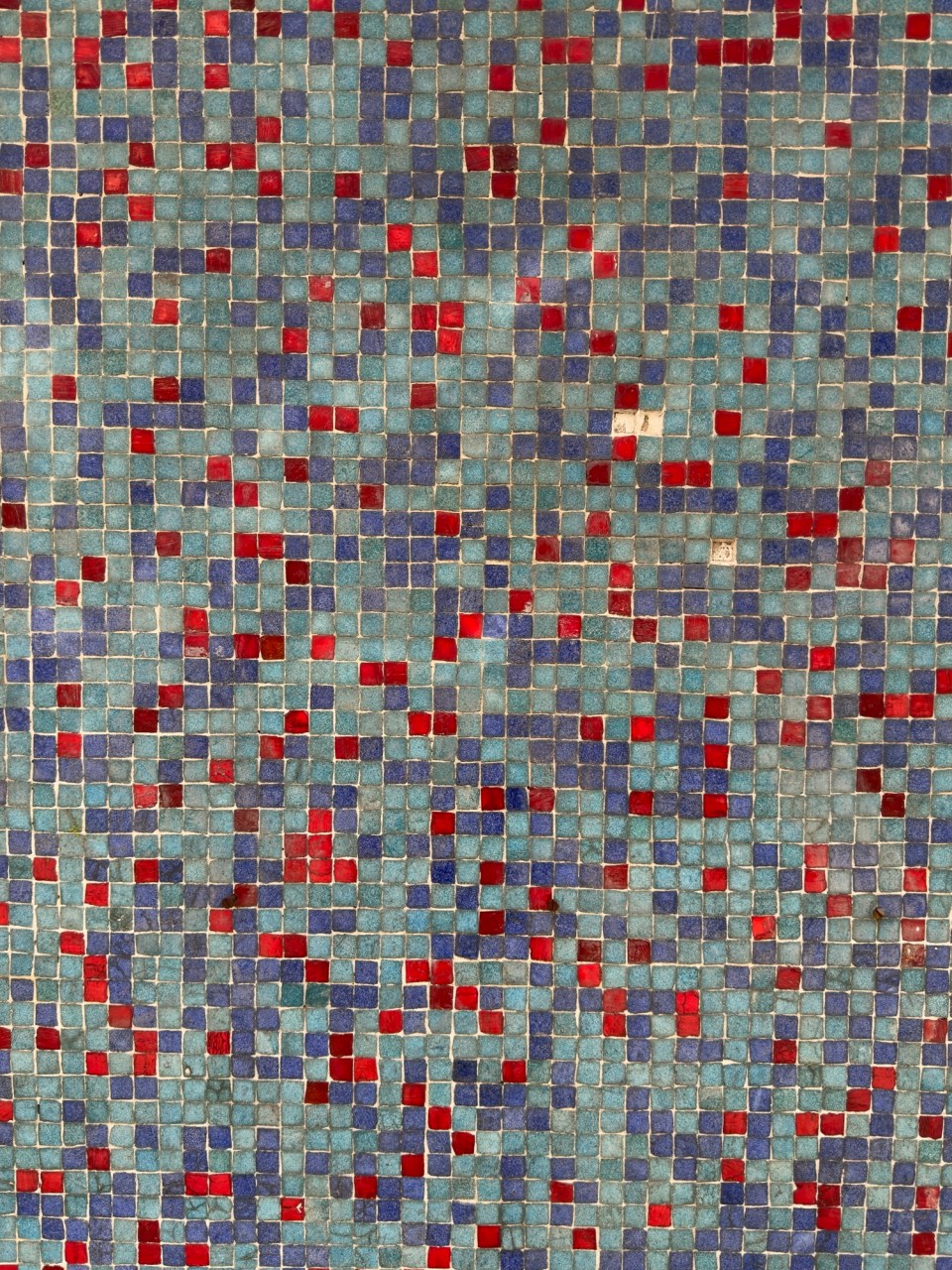
I’m always seeing patterns. I’m wired that way. Physical patterns, data patterns, sequences in time. I notice them and appreciate them. Patterns were a big part of my working career.
So, when I saw this wall in Bairro Alto, I had to pause and capture the moment. I stood there, fascinated by the pattern. Then, just about to click the shutter, I notice the missing tiles.
It actually bothered me. Who had the audacity to damage this lovely, yet random sequence. Then the practical side of my brain kicked in and I decided that the flaw created that bit of mystery that enhances the photo, rather than detract from it.
So, there it is, as it was, missing pieces and all.
iPhone 17 Pro Max
Main Camera — 24 mm
1/320 sec, ƒ/1.78 ISO 64
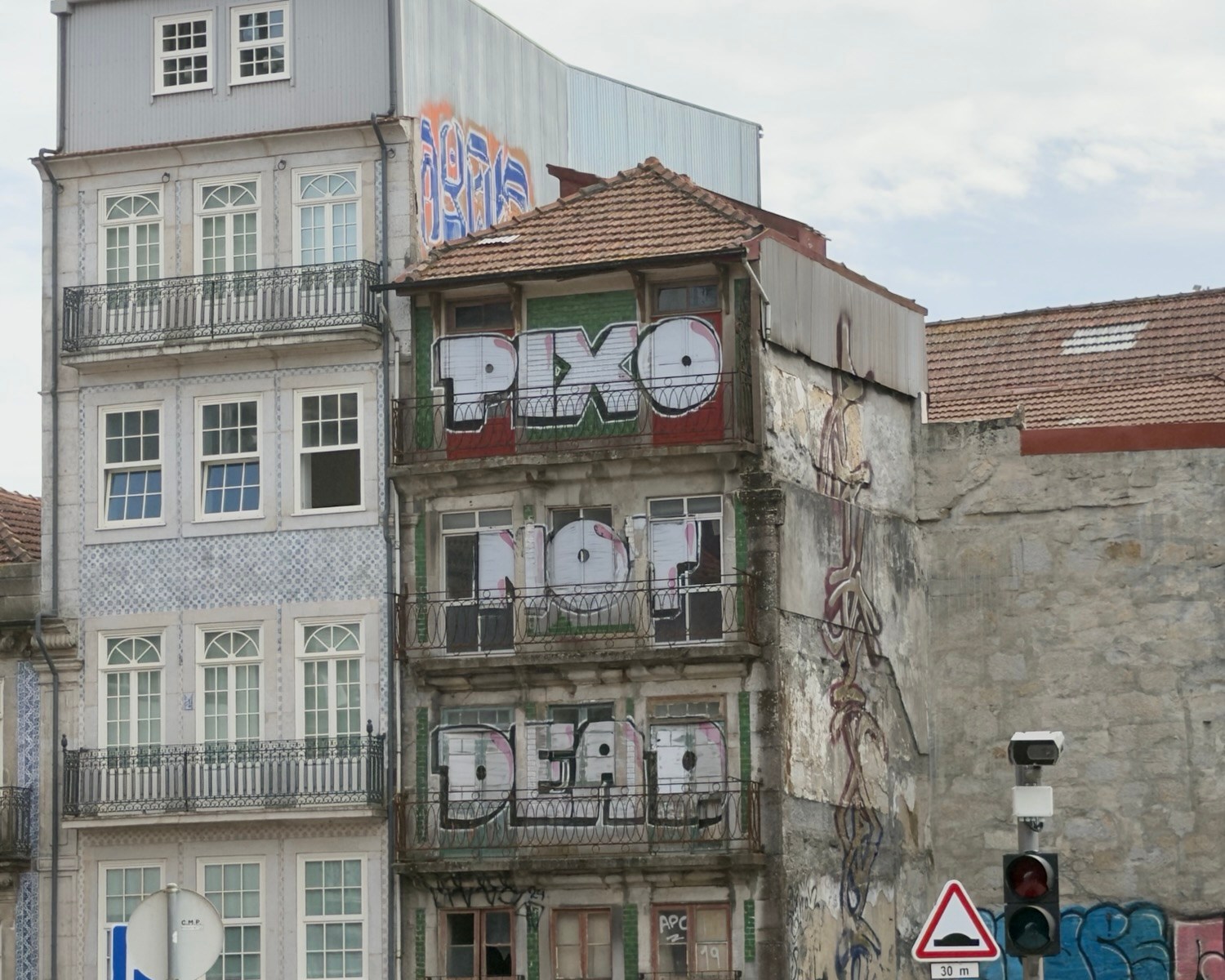
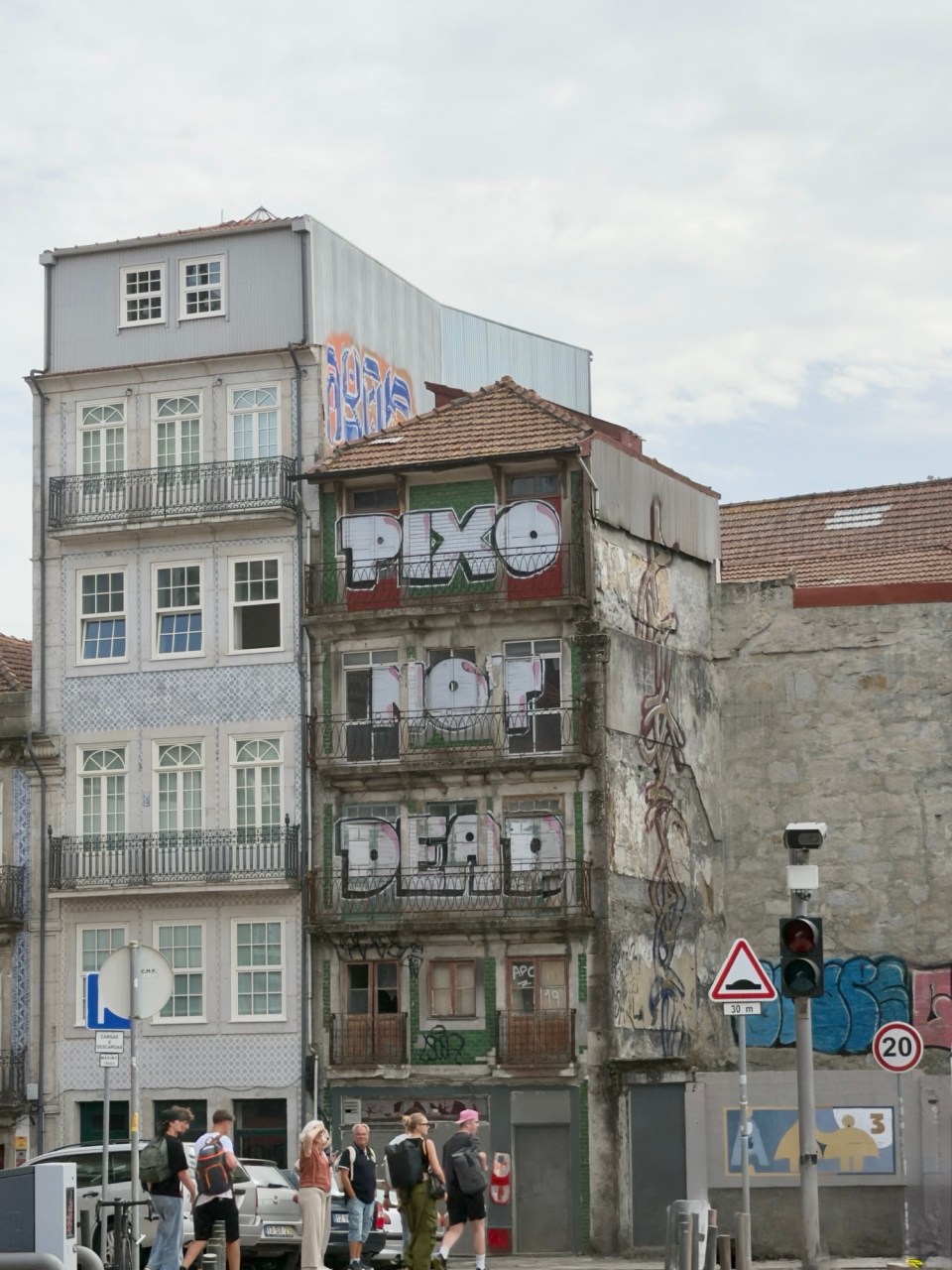
I made this image simply because I thought it was interesting. The graffiti, which covers the entire building does not seem haphazard, there is a structure to it, not random “tagging”.
At the time, I did not know that this building is fairly famous here in Porto, due to the grafitti. Apparently, it is an homage to a form of Brazilian street art called pixação, an aggressive form of street art that began in São Paulo, Brazil, in the 1980s and has transferred to urban centres in Portugal.
Since coming to Europe several years ago, I have noticed that graffiti/street art is everywhere. Some is dark and aggressive while other times it’s quite beautiful.
iPhone 17 Pro Max
Main Camera — 83 mm
1/6024 sec, ƒ/1.78 ISO 80
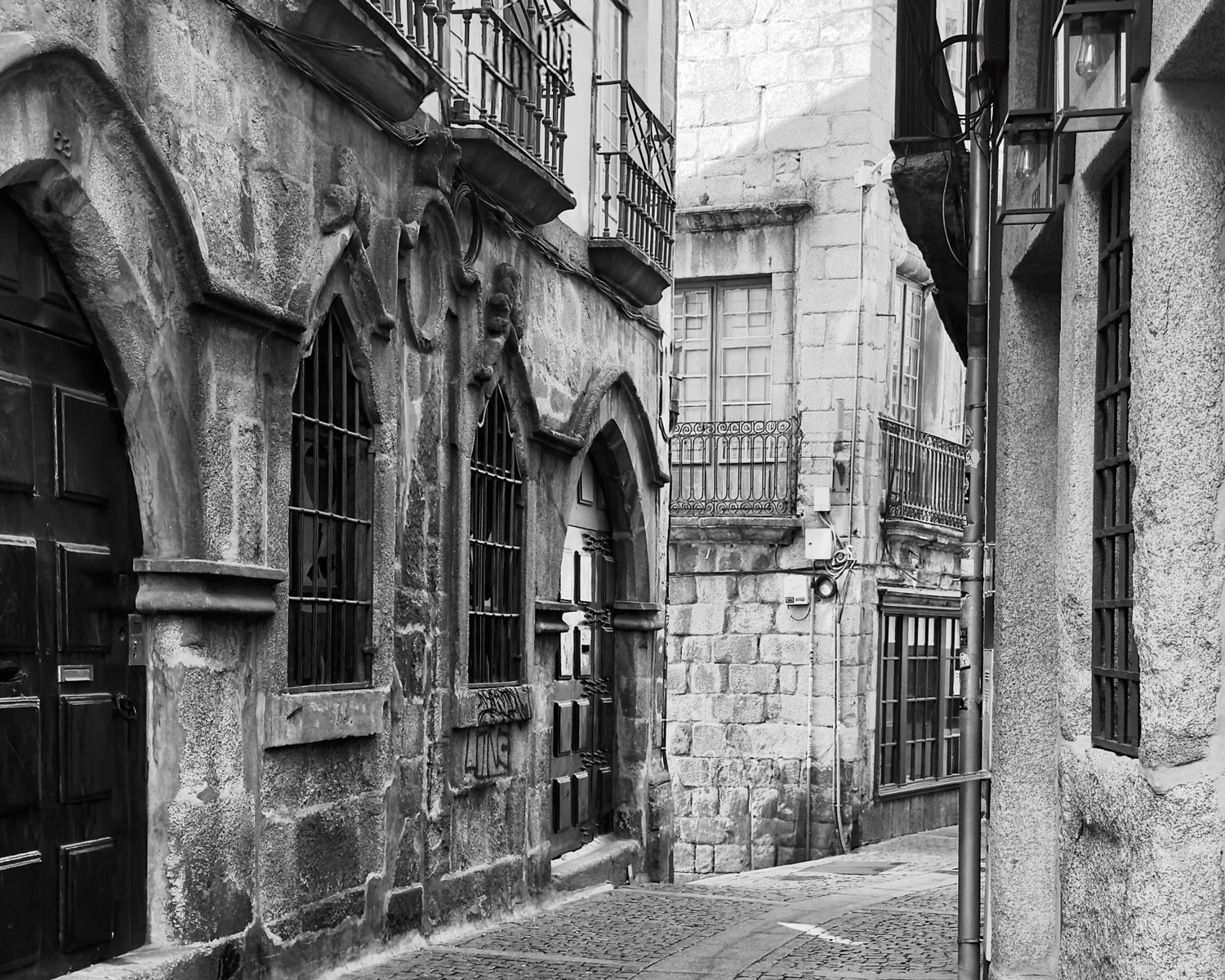
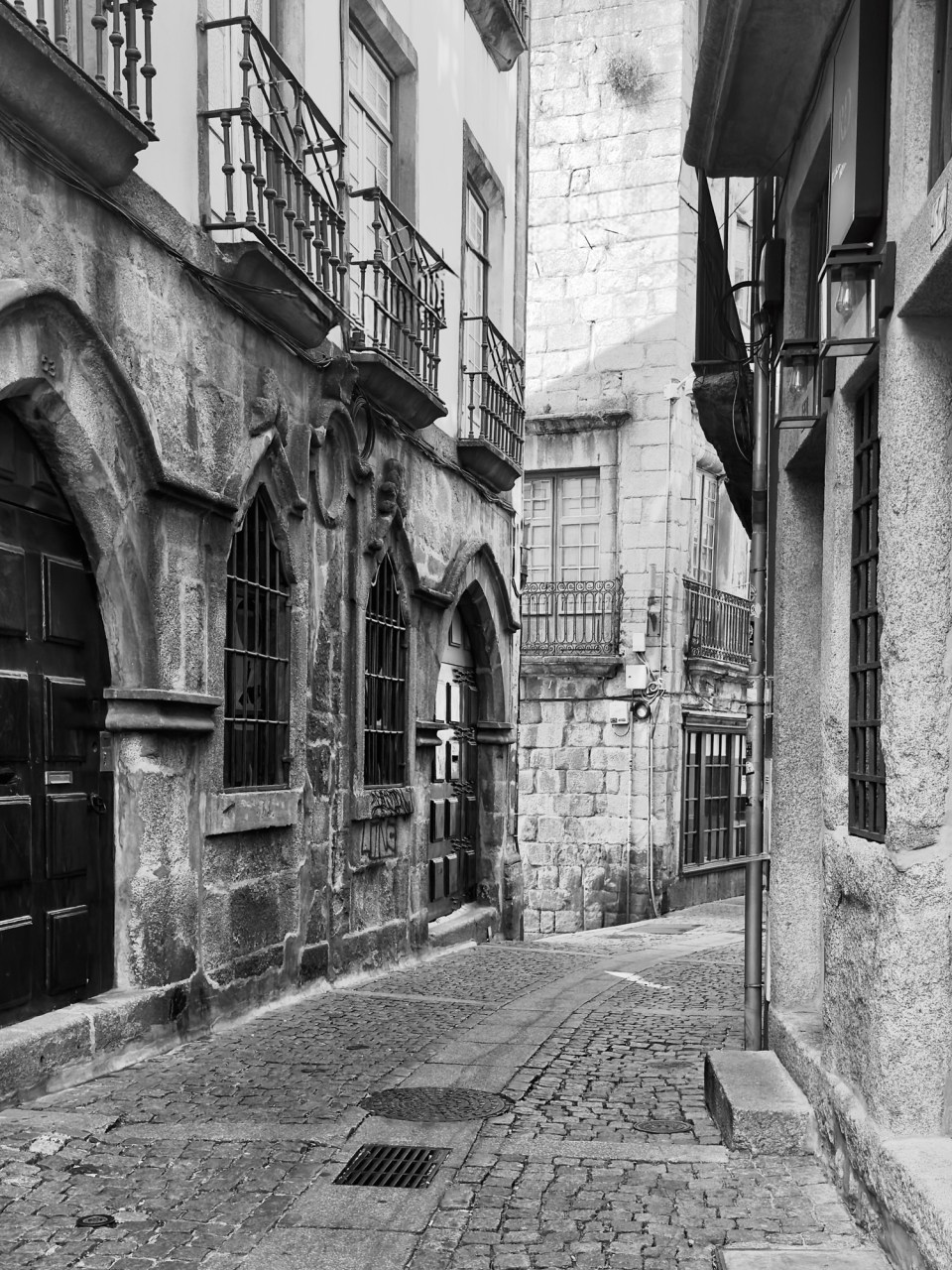
Back to Porto and wandering the 10th-century streets near the river, Medieval houses and gothic doorways interspersed with restaurants and souvenir shops make for quite the contrast.
But, then again, ancient businesses and homes lined these very streets long ago, so not much has changed in that aspect.
As I’ve said before, I like going off the beaten path, finding interesting side streets. This was no exception; just above the busy riverfront, filled with restaurants, tour operators, and street vendors, this side street is still busy enough but offered the opportunity for a few “people free” shots.
Both the building to the immediate left and just beyond, are representative of old Porto. There is such diverse architecture here and the many construction cranes are updating the old structures as well as building new, as the city continues to thrive and reimagine itself. It a beautiful place to visit and explore.
iPhone 17 Pro Max
Main Camera — 35 mm
1/636 sec, ƒ/1.78 ISO 100
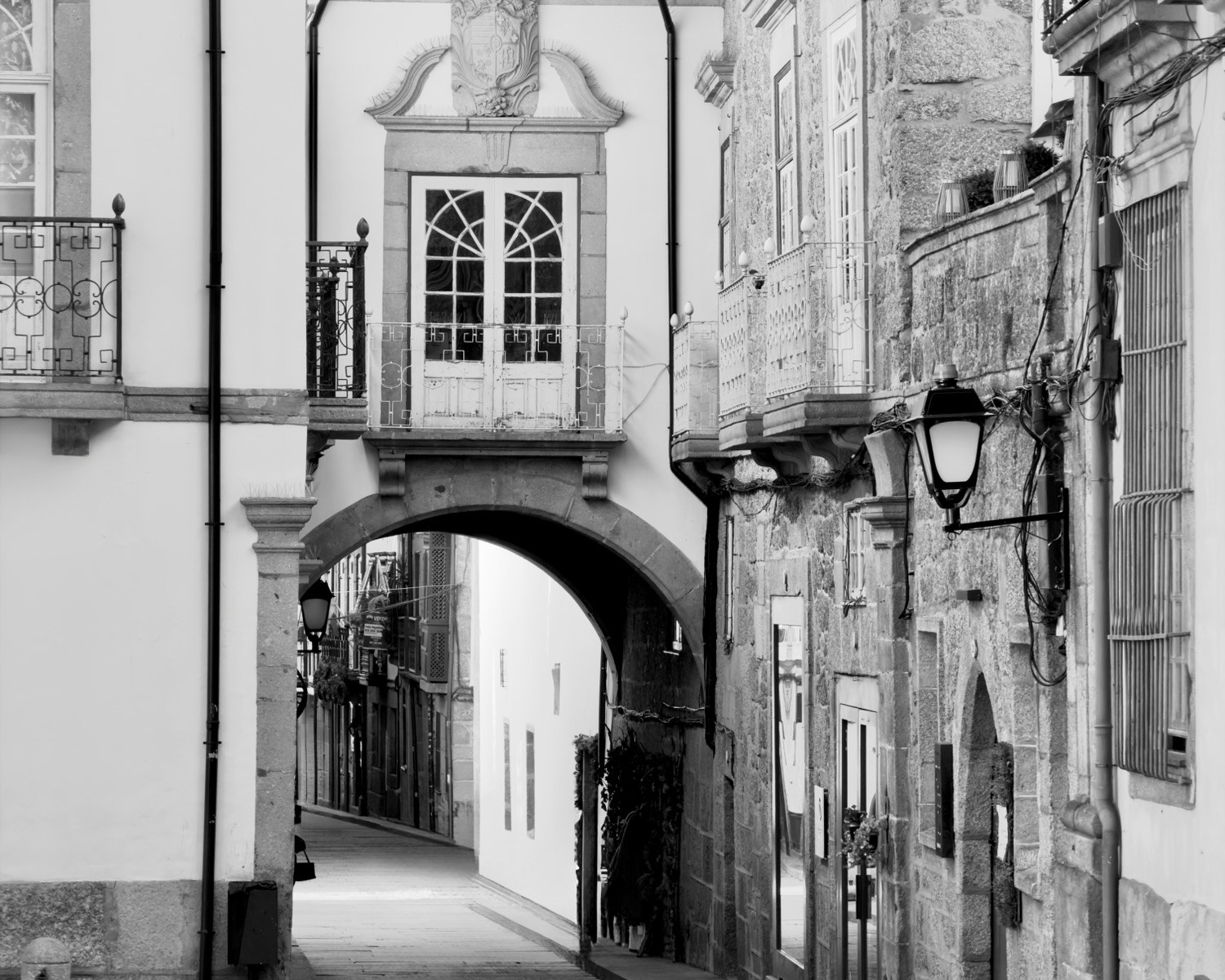
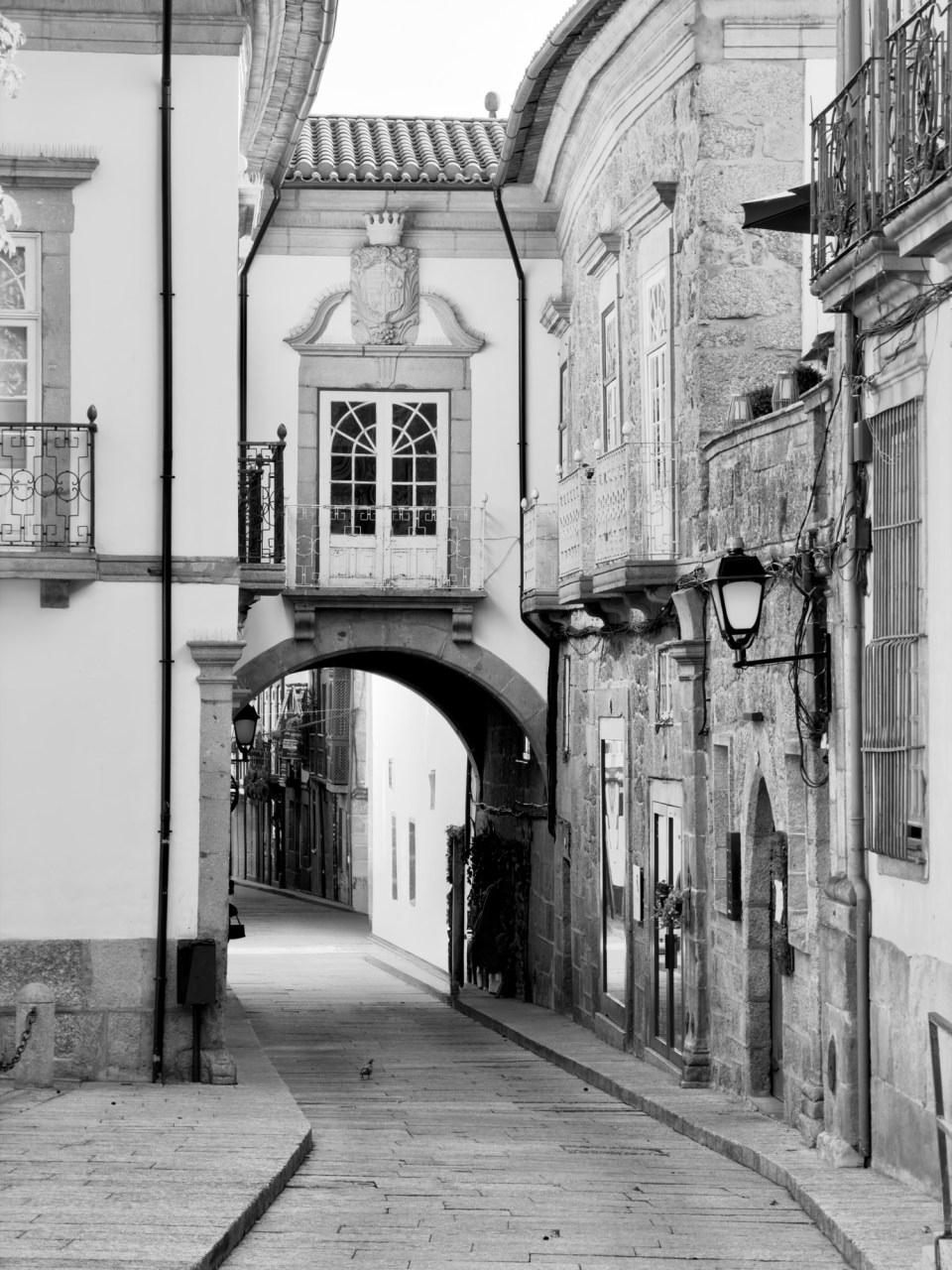
I seem to be on a wave of mono images lately, primarily because the photos I’m making are more historic and architectural in nature and I find that black and white communicates that better, without the distraction of colour.
This passageway is on one of the many winding roads in Guimarães (pronounced Gimaresh), Portugal. It’s a 10th century town known primarily for the birth of Portugal’s first king, Alfonso Henriques in the 12 century.
There is a castle that dominates the hill above Guimarães that was ordered constructed in the 10th century by the Countess Mumadona to offer protection from the Moors and Vikings. It still stands, well preserved and open for visits.
The town is also famous for the Battle of São Mamade, which was fought close to the city . The battle was between King Alfonso against his mother and León, which paved the way for Portuguese independence and made Guimarães the first capital.
So much history in one place.
iPhone 17 Pro Max
Main Camera — 100 mm
1/155sec, ƒ/2.8 ISO 40
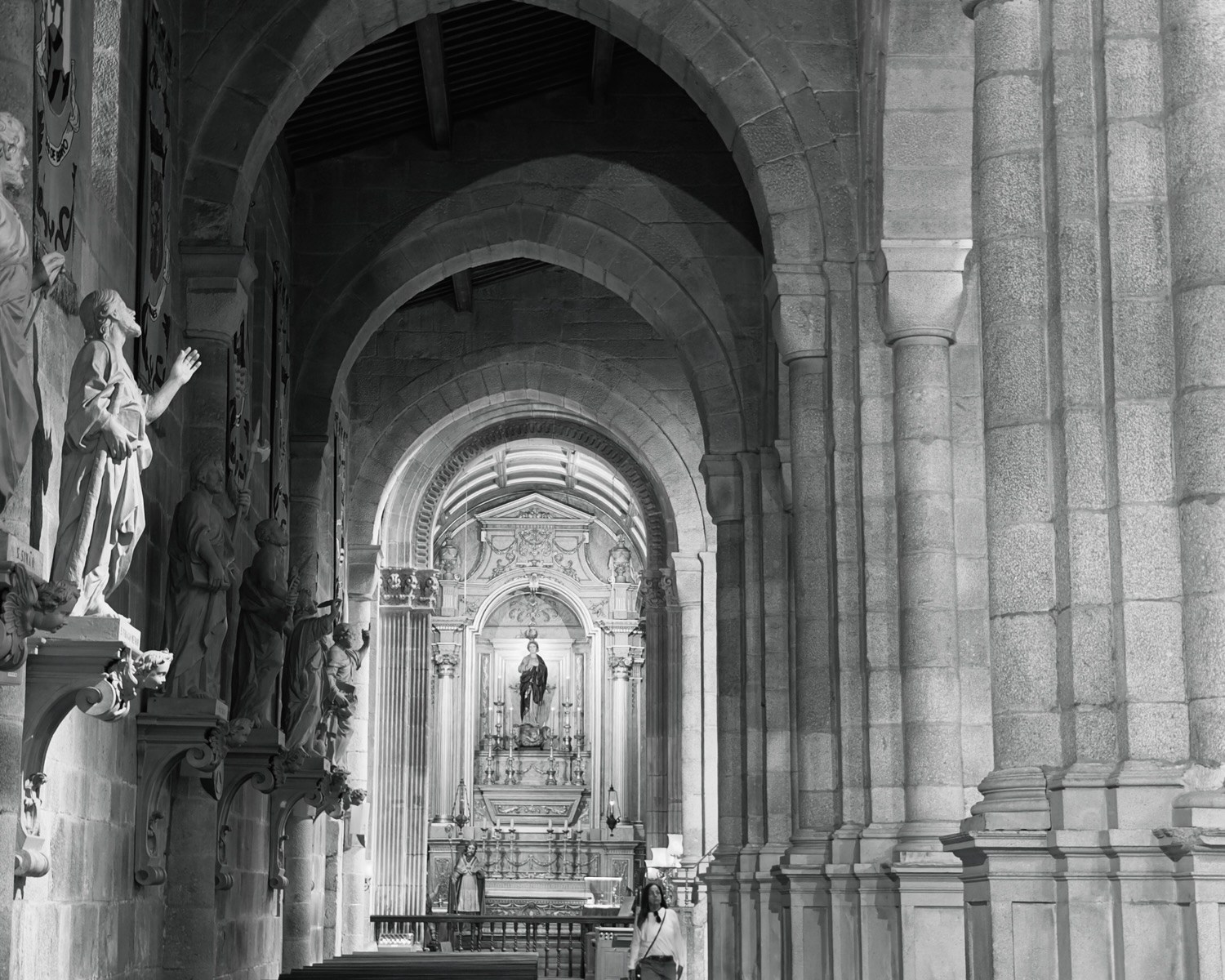
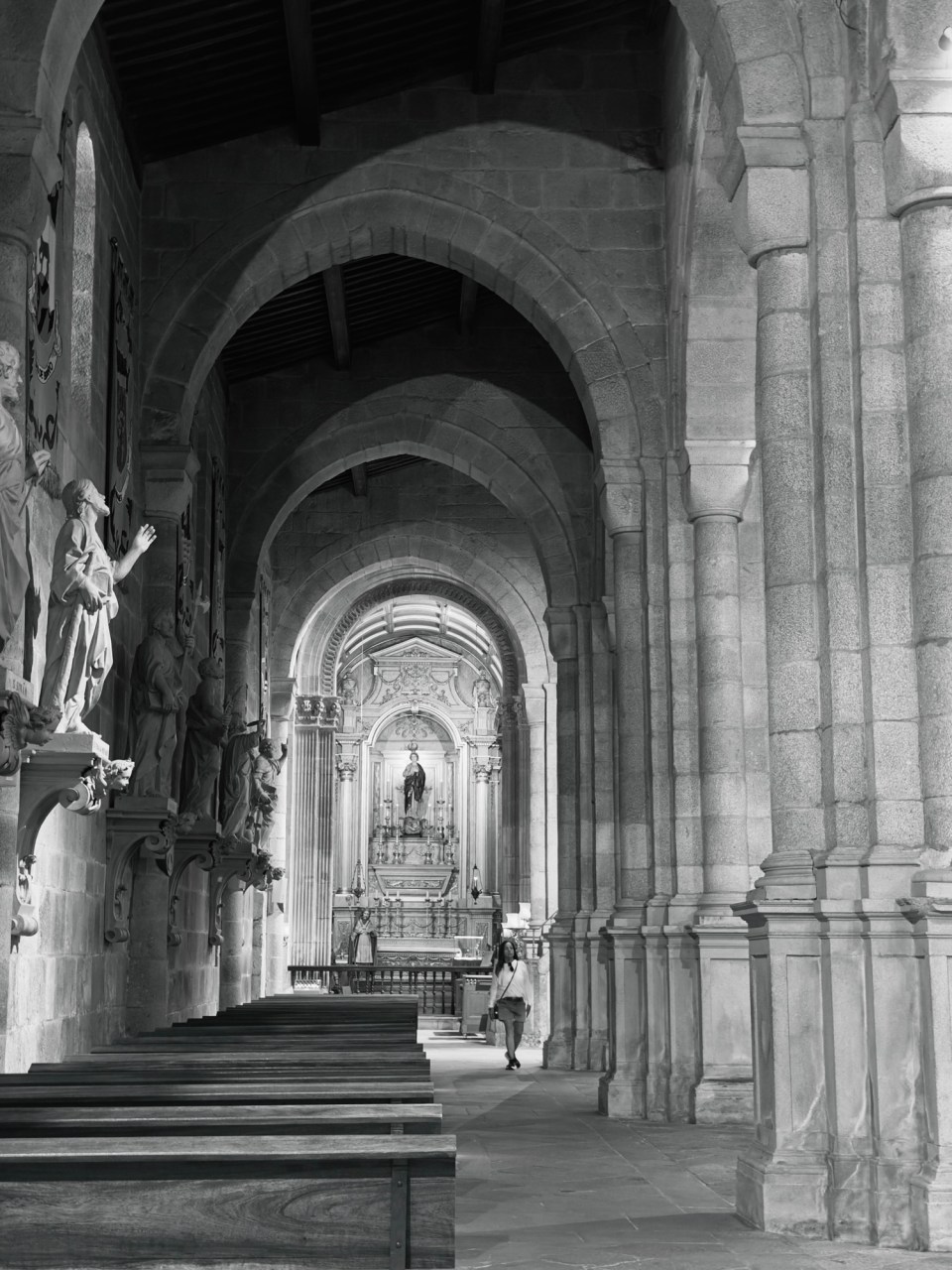
I love this photo. It simply happened. As I sat looking at the columns and really feeling the history. I was travelling with cousins and my cousin’s wife entered the frame. It made for a wonderful memory of a special moment.
The cathedral itself was built in 1071 and was consecrated in 1089. The incredible age of things here astounds me. I think of all the lives that have passed through these halls.
It’s an incredibly important cathedral in the Iberian peninsula and I intend to spend some more time studying the history of the incredibly interesting part of the world.
Once again, rendering this as a mono image communicates the solemnity of the place better than a colour image ever could.
iPhone 17 Pro Max
Main Camera — 48 mm
1/25 sec, ƒ/1.78 ISO 500
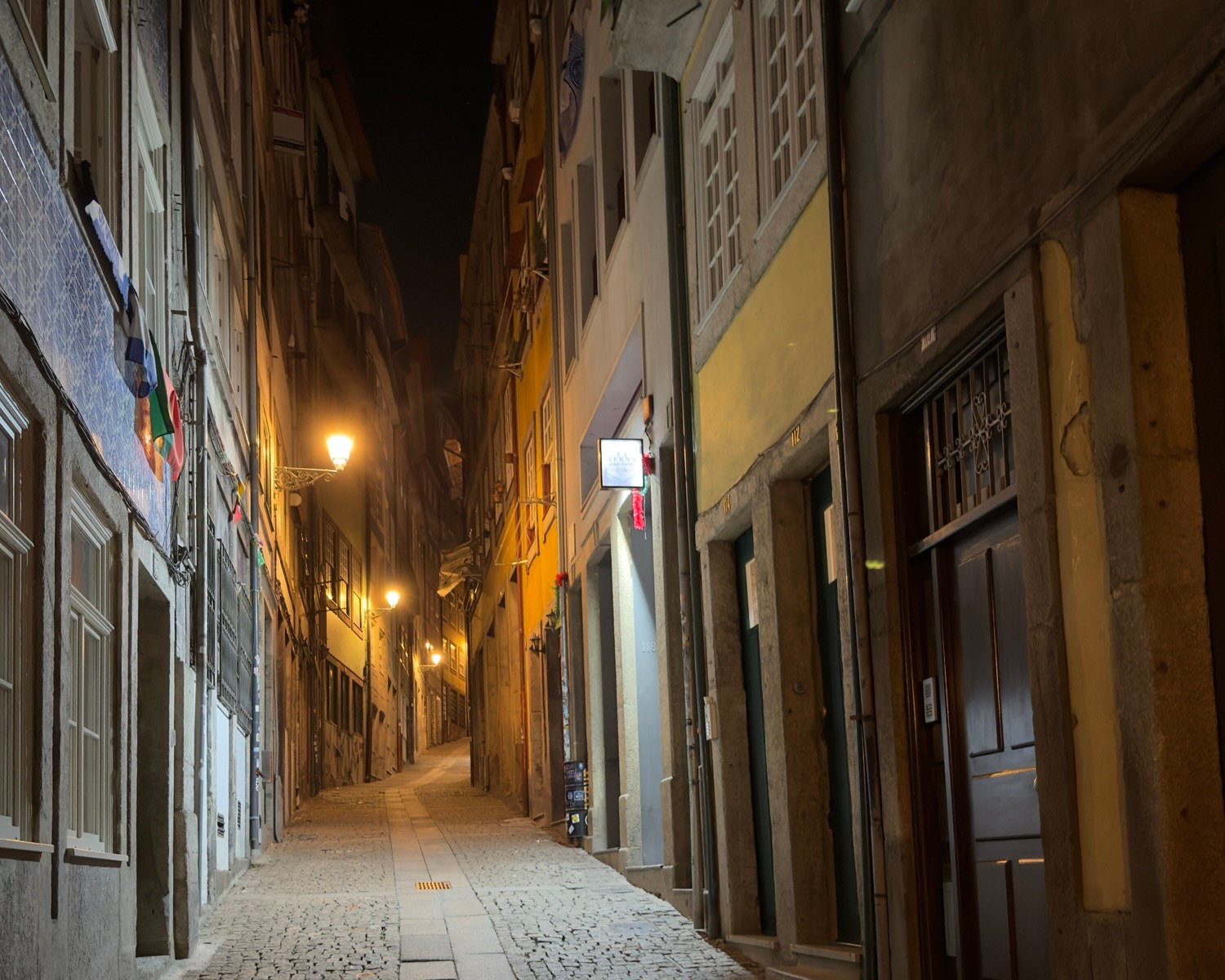
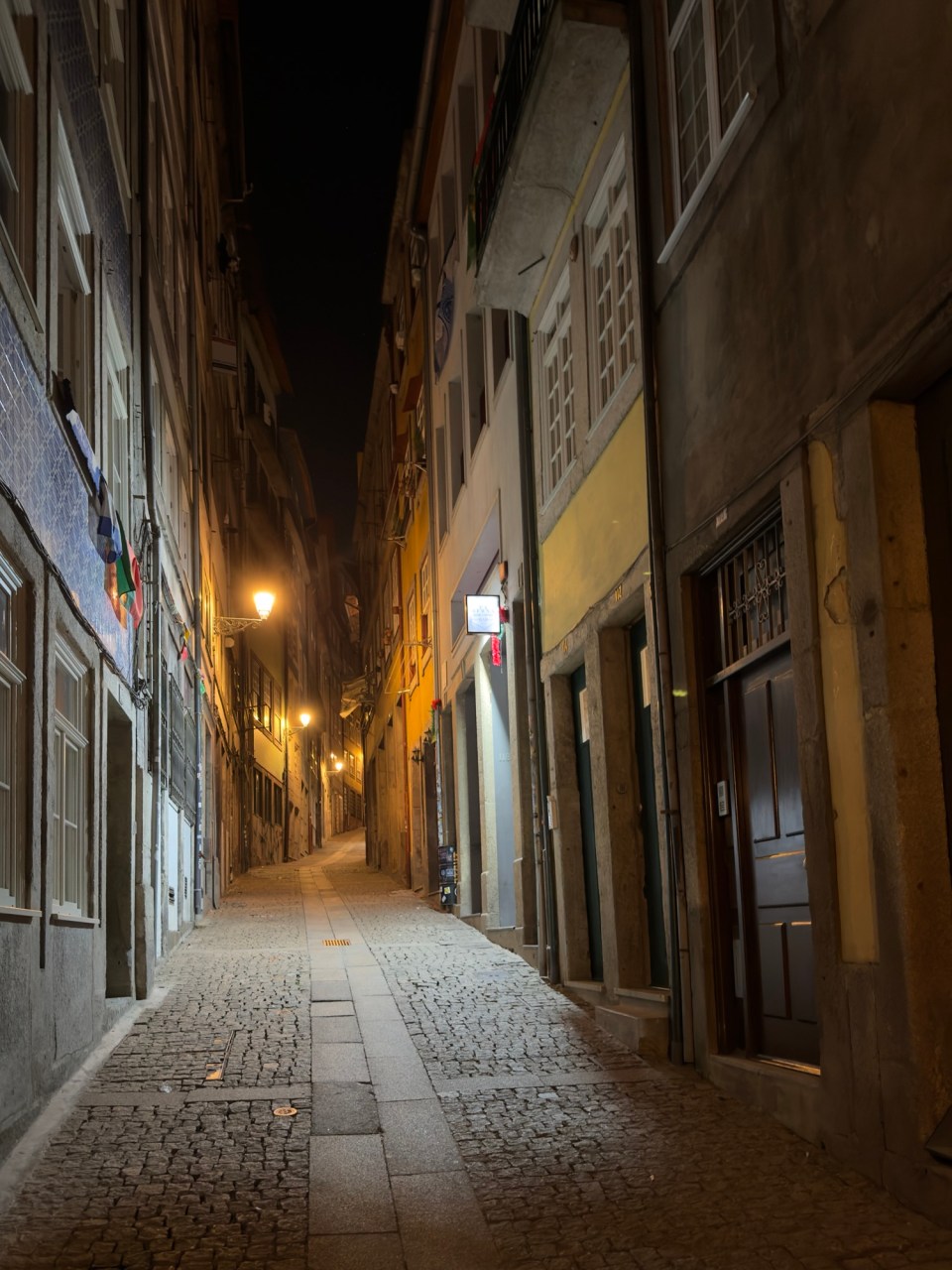
Our first night in Porto, exploring backstreets and the quite places. The hustle and bustle fades away, crowds gather along the main avenues for dinners and drinks, the secondary arteries largely forgotten.
Yet, it still feels safe. The streets are lined by lesser venues, closed for the night. Silence and dim streetlights dominate. You can’t even hear the din from one street over. This part of the city takes a deep breath, ready to slumber for the night.
Tomorrow, it will be alive once more. Stores open with vendors selling their wares. The cycle repeats.
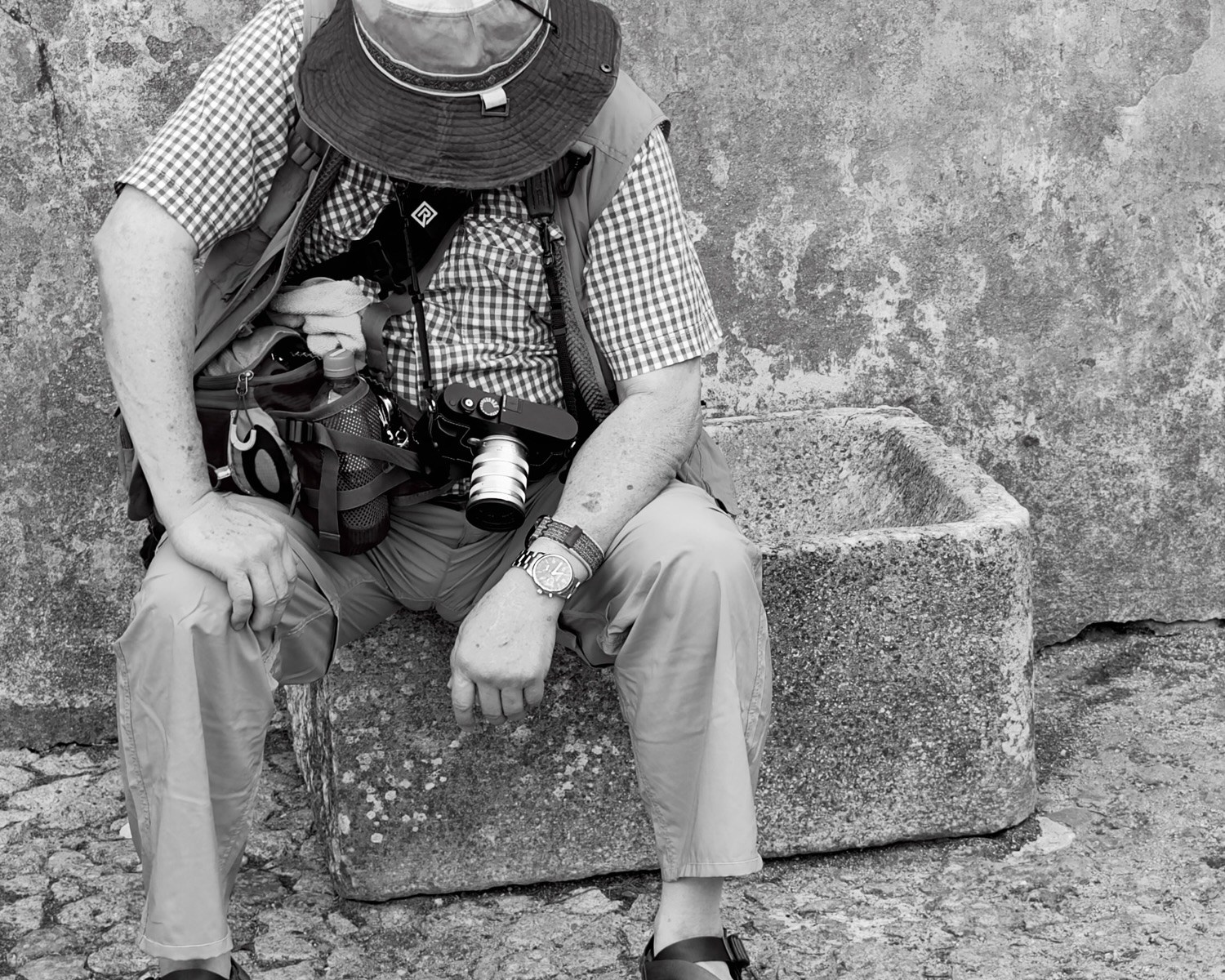
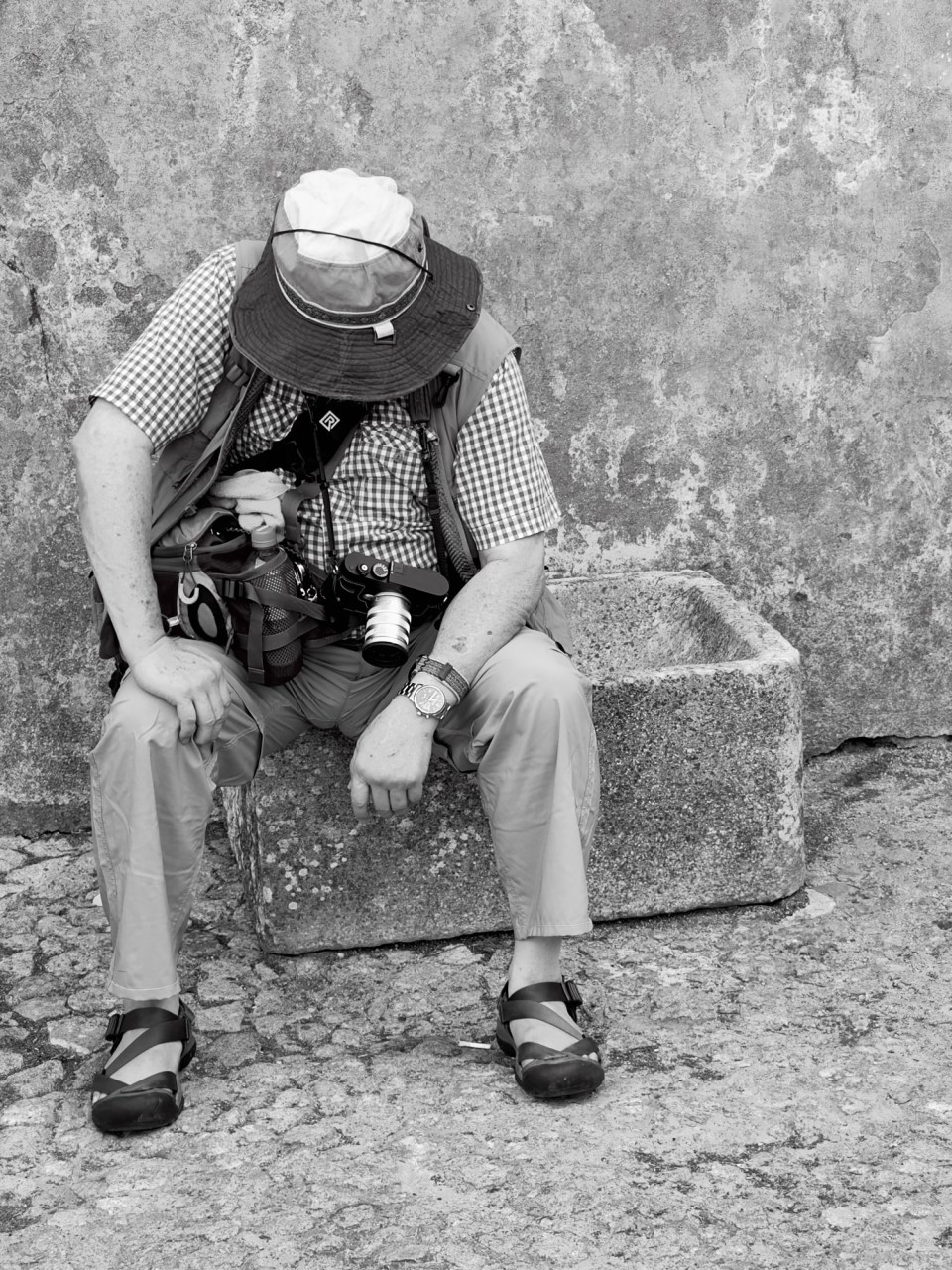
Surprisingly, another opportunity for a candid shot presented itself today.
I watched this traveller come down from the walls of Sintra’s Pena Palace and sit down for a rest. I imagined the shot, but did not want to be intrusive. I decided that if he sat like this for a longer period that I would take the shot and see how it looked. It was nice that he kept his head down, so you can’t see who he is.
He seemed well prepared for travel, yet weary. It was already hot 28°C at 10:30, when this image was made, so he may simply have been resting or catching his breath. He was still sitting there when we left.
iPhone 17 Pro Max
Main Camera — 48 mm
1/133 sec, ƒ/1.78 ISO 64
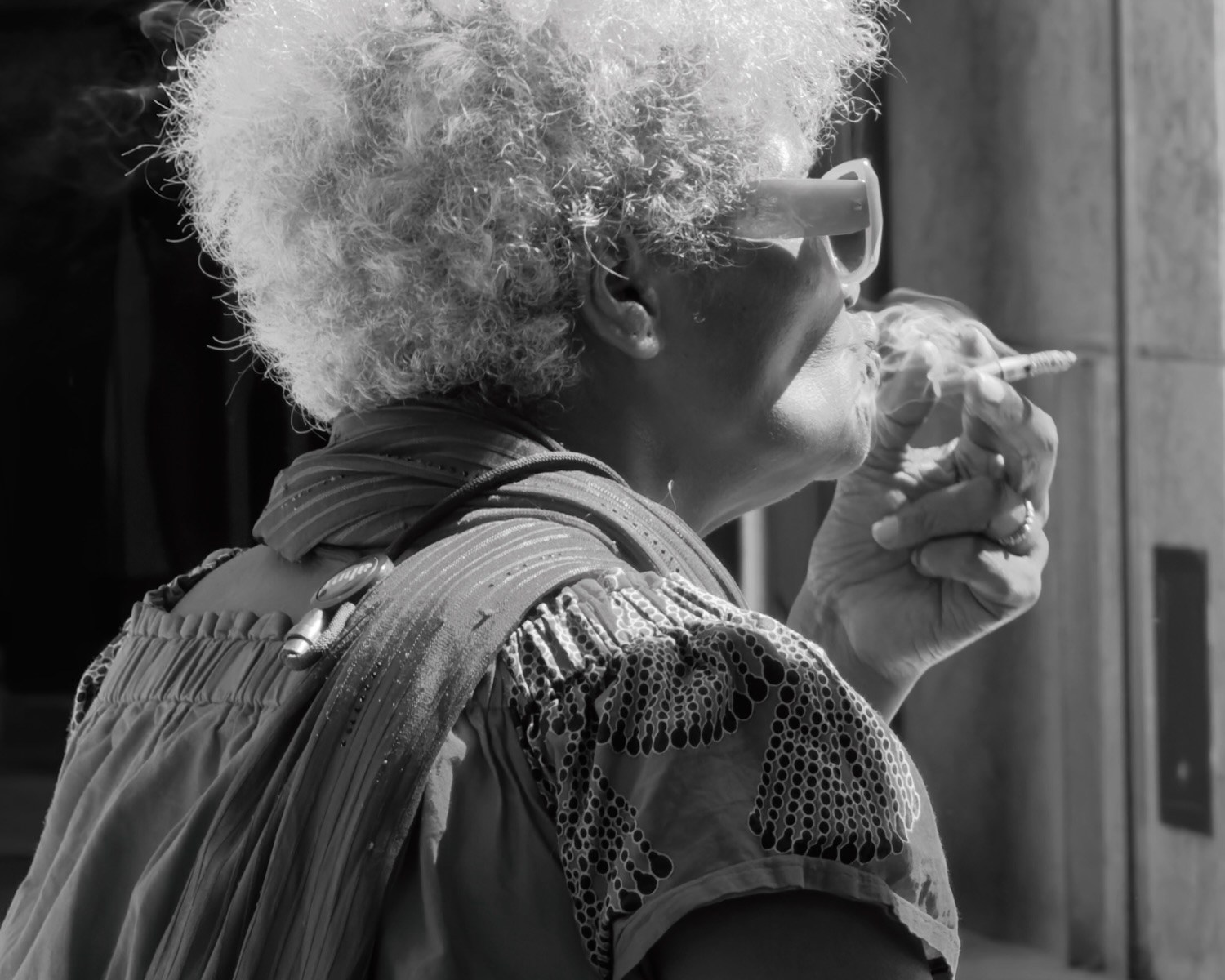
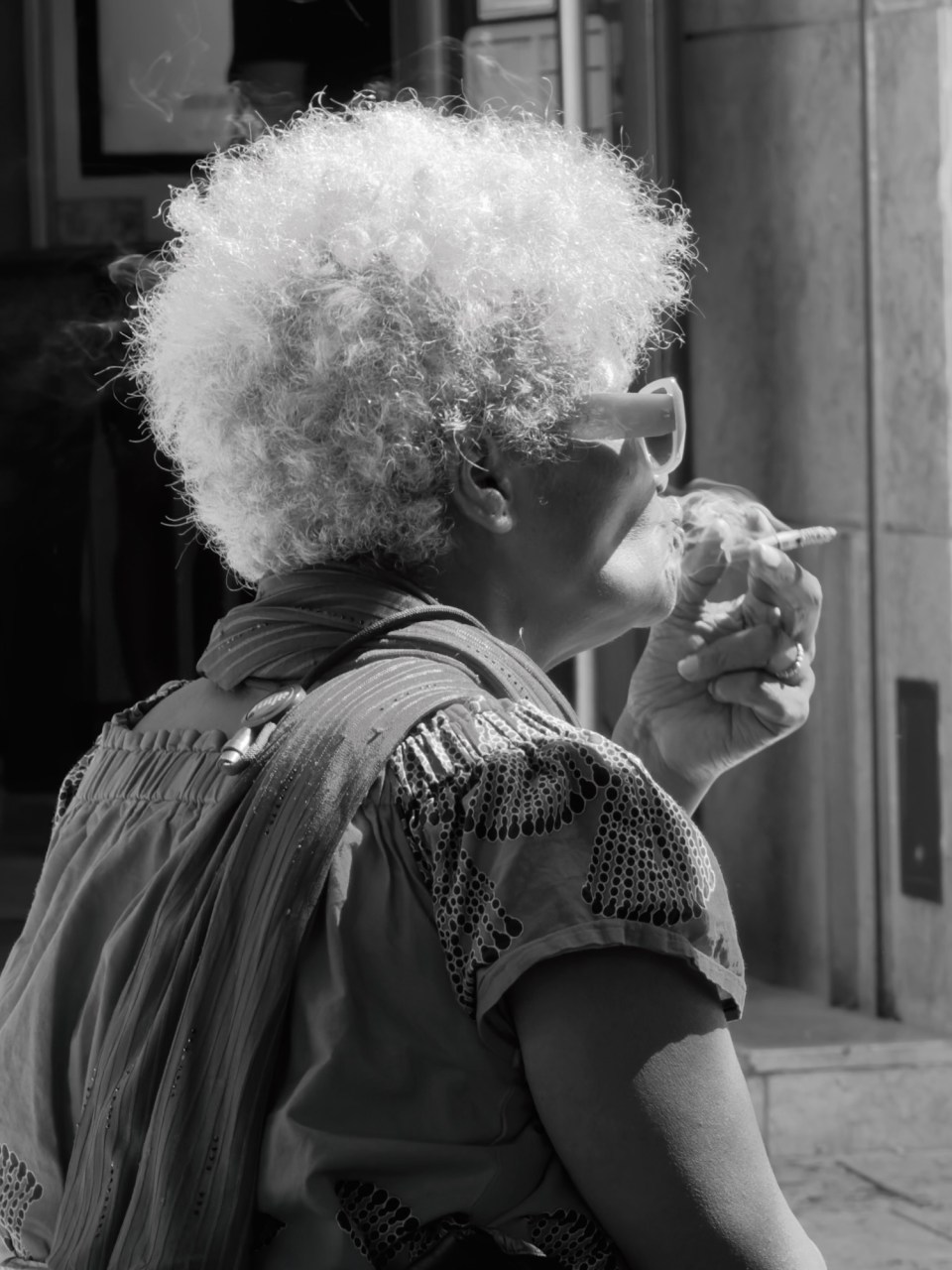
I’m always observing, but cautious of being intrusive when photographing people in public. This shot just about created itself.
As I was sitting in the shade of a tree in Lisbon’s Rossio Square, I could not help but notice this street beggar wandering the square and asking for spare change. One person finally relented and gave her a cigarette, which she quickly lit up and started enjoying.
As I sat watching the scene play out, I was fascinated with the rise of the smoke, the texture of her hair, and her casual attitude to the world around her. Maybe a small moment where she could simply exist in peace, no thought of her situation or the people around her. She was at ease and I think that’s what made the photo for me.
The more I look at the photo, the more details pour out and expand the story in my mind.
After a few minutes, she got up and started begging again, the moment was over.
iPhone 17 Pro Max
Main Camera — 100 mm
1/136 sec, ƒ/2.8 ISO 50
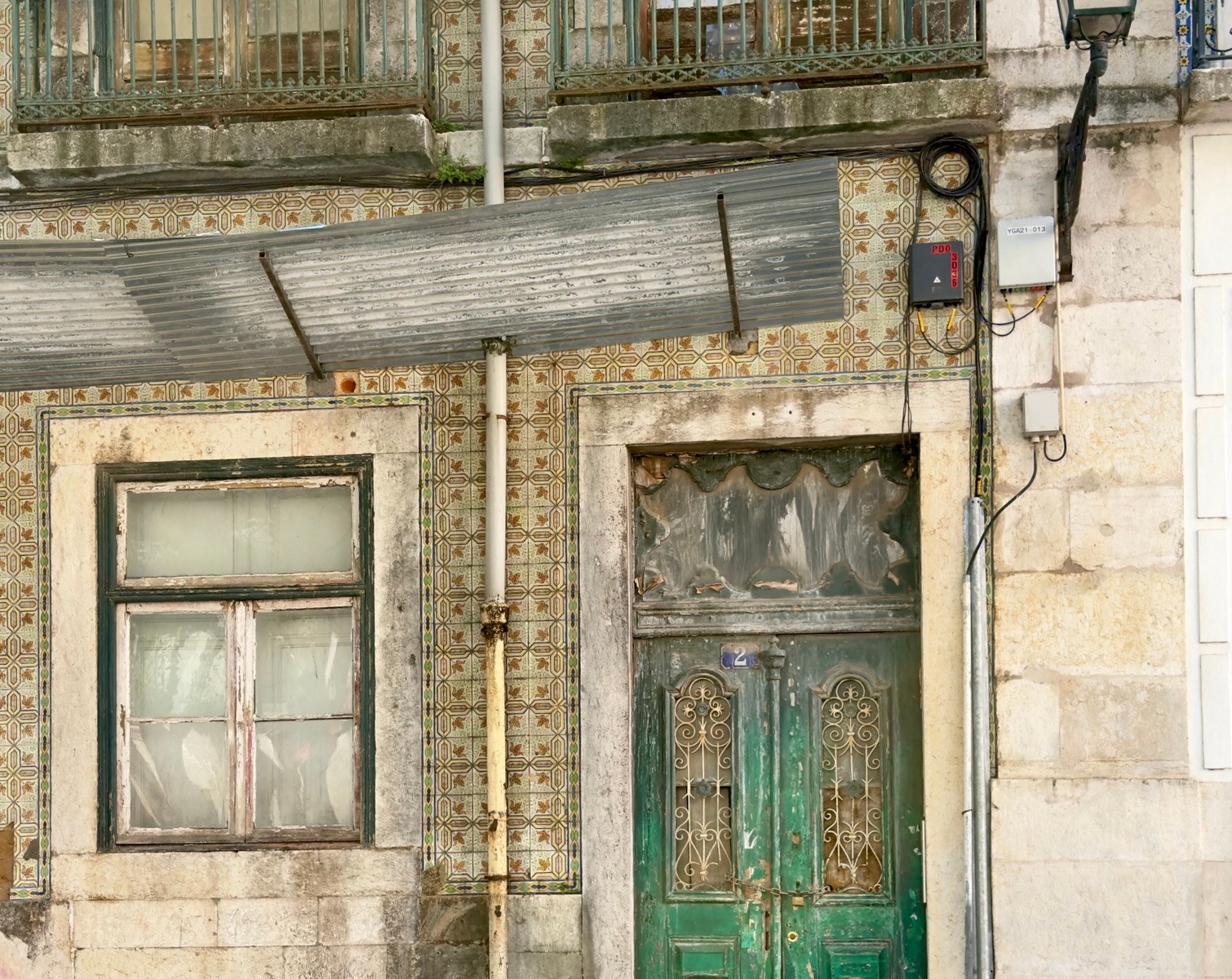
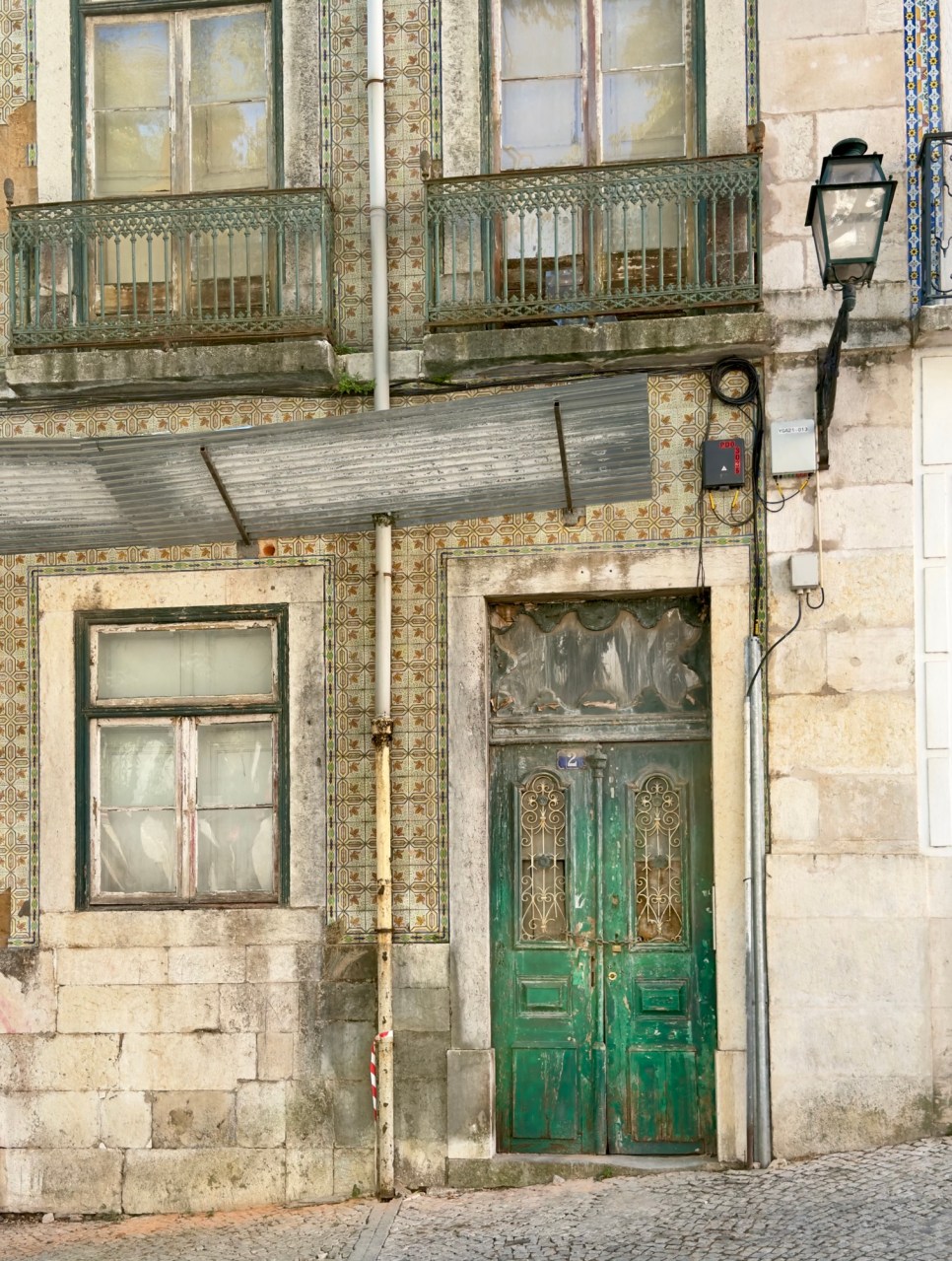
I love the hidden stories of the city, the mystery of the abandoned. This building, in a busy square sits abandoned while its neighbours are clearly occupied and modern.
There are stories here of lives lived and day-to-day routines. I think of these doors opening at the start of the day, children laughing and playing, neighbours chatting, now silent. Just one of many stories in this vibrant city.
iPhone 17 Pro Max
Main Camera — 38 mm
1/430 sec, ƒ/1.78 ISO 64
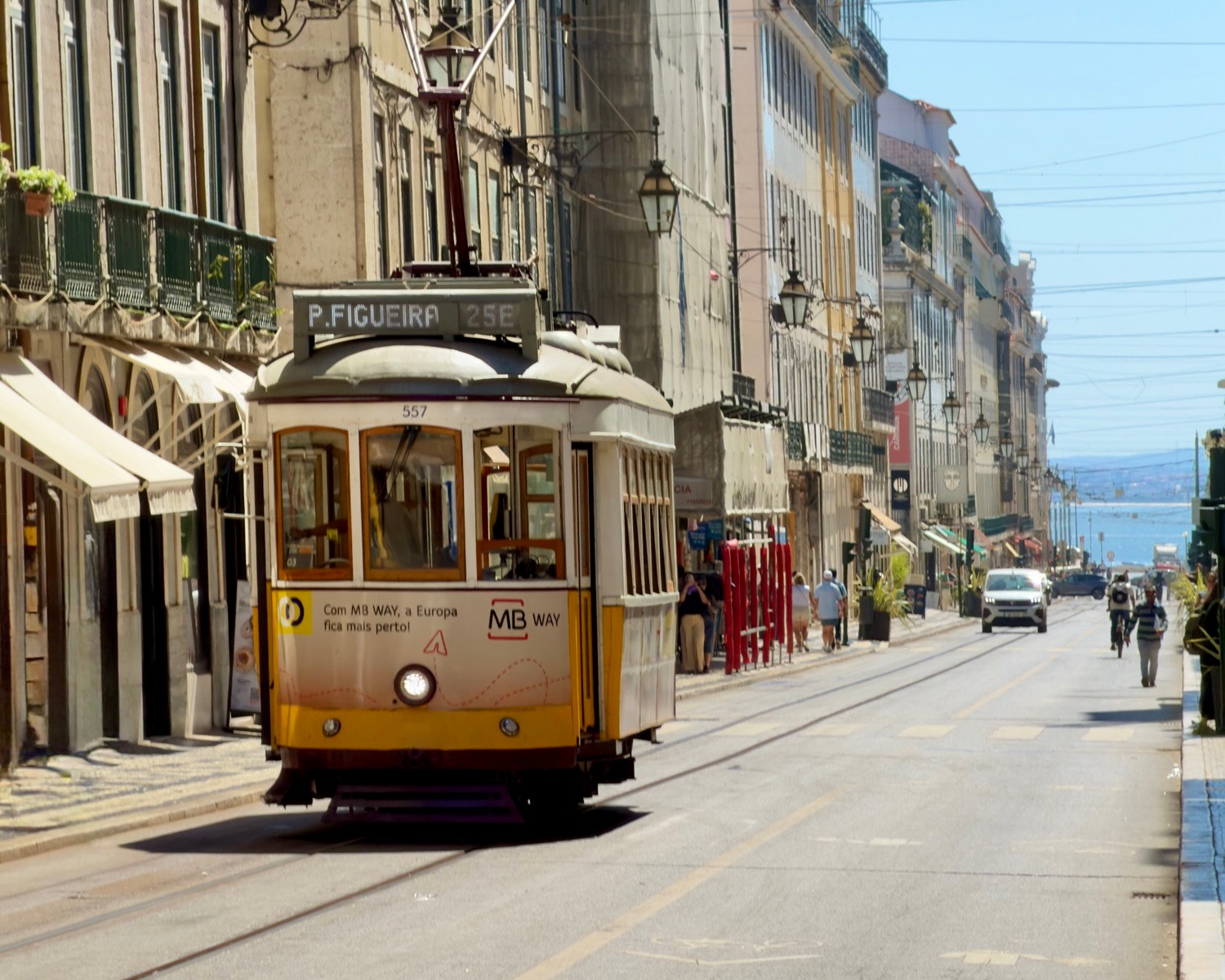
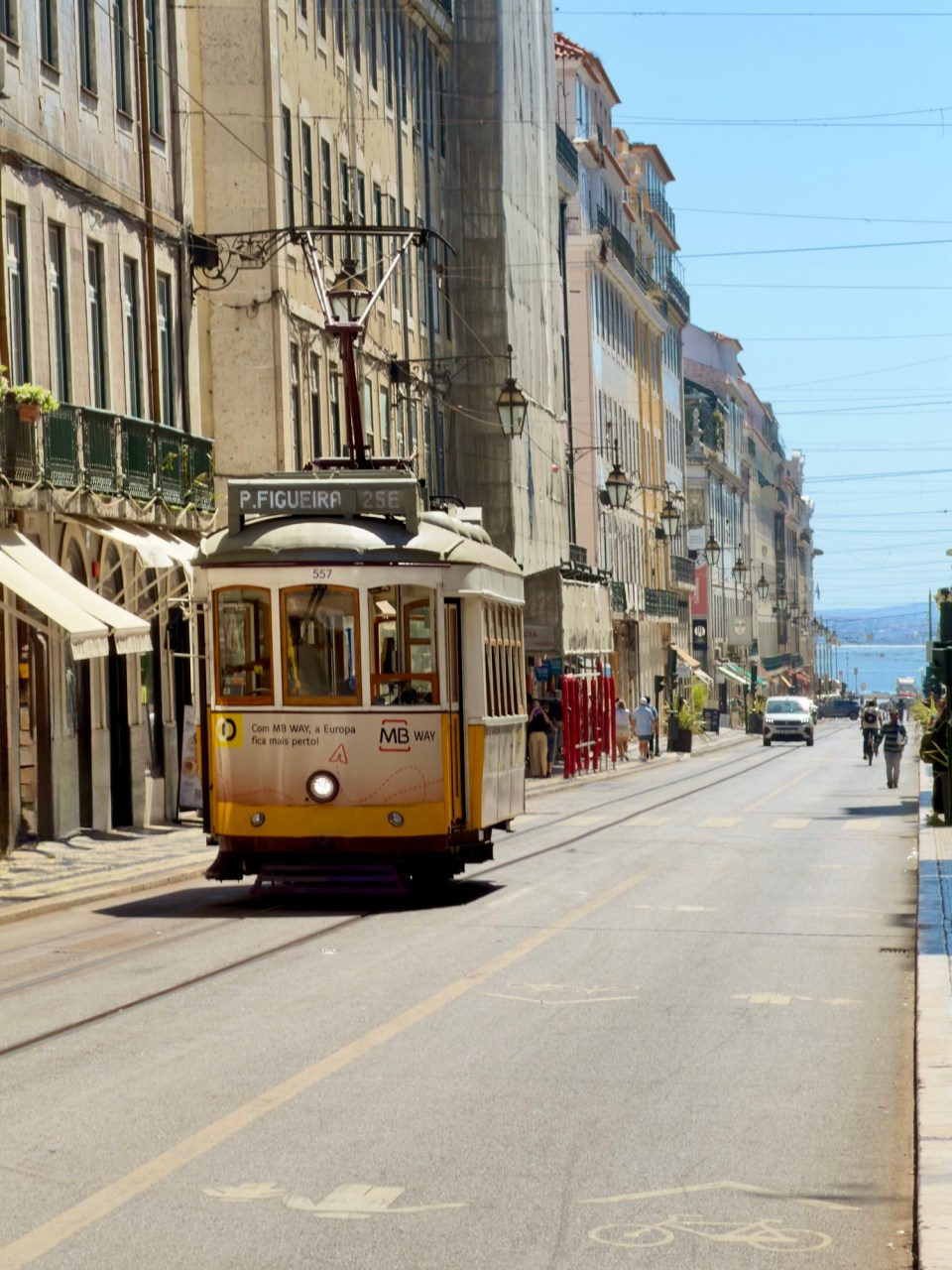
I still recall capturing my first tram photo in Lisbon last year. I stood patiently on the corner for just the right moment, figuring that the opportunity may not present itself again.
Much to my surprise, after a few more days here, trams are everywhere, on most of the streets of Baixa, Santa Maria Major, Chiado, and other downtown districts.
They run all over the place and are a more common sight than I thought. There are ancient trams and brand new modern trams, each adds to the character of the neighbourhood and the tracks feel like arteries leading to and from the heart of Lisbon, carrying residents and tourists alike to there various destinations.
They are beautiful and practical in this busy city and I still have not tired of them.
iPhone 17 Pro Max
Main Camera — 100 mm
1/638 sec, ƒ/2.8 ISO 20
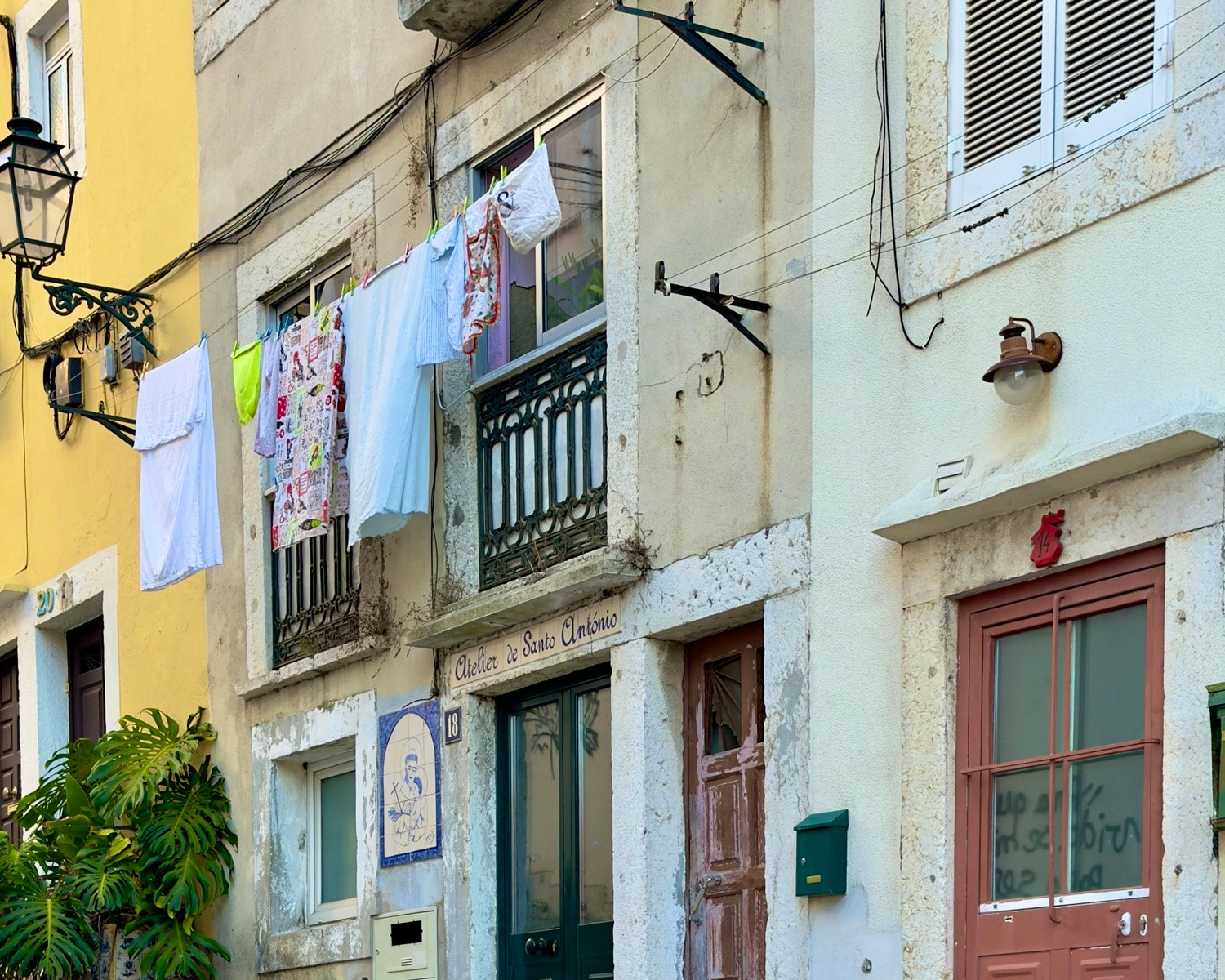
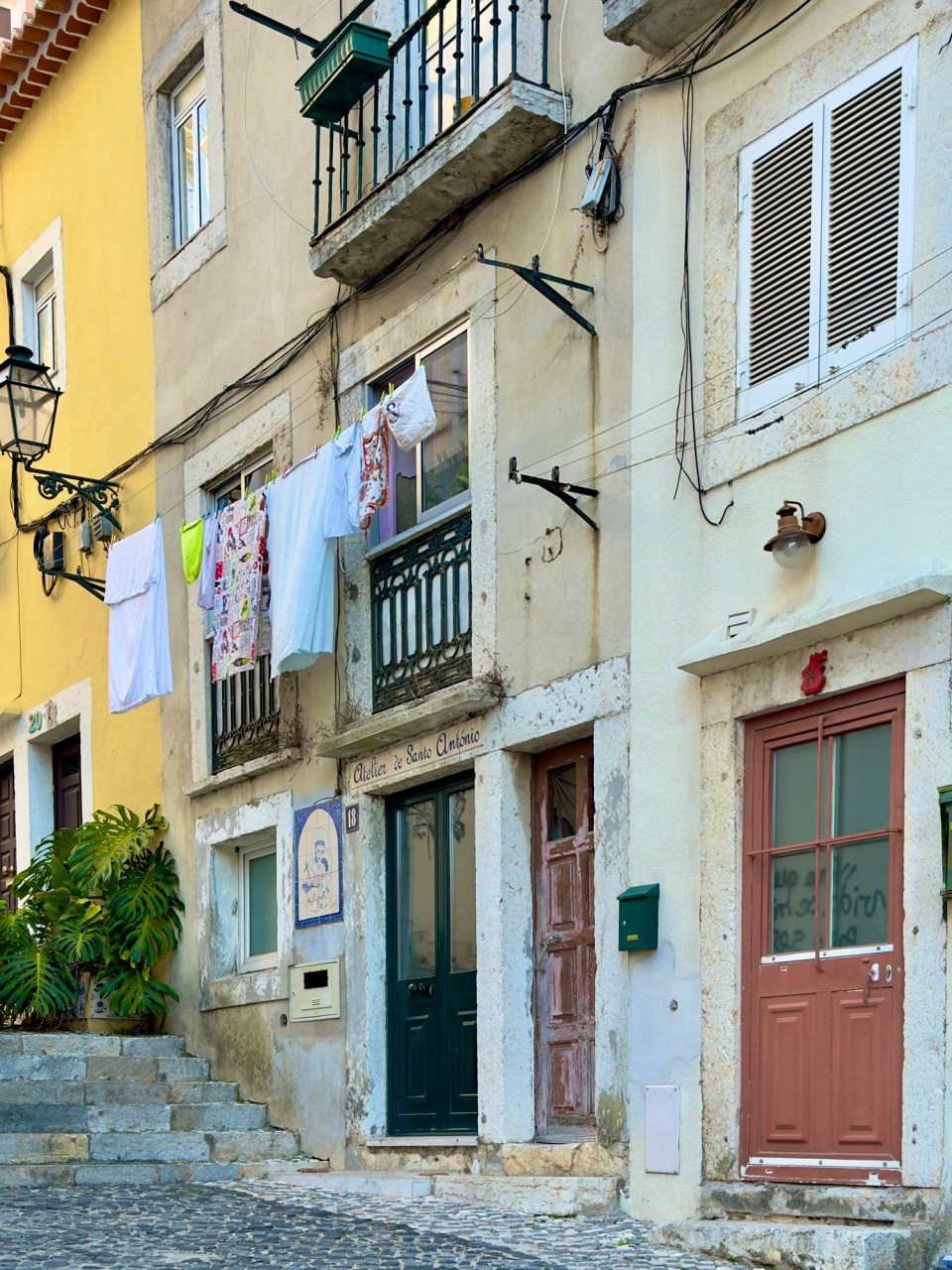
I love getting to destinations by back streets. They tend to offer a more authentic view of the city than the broad commercial avenues with their crowds and endless souvenir shops.
We found this scene while heading up the hill to the Castle of São Jorge. As steep climb from our apartment near the Tagus River, but more interesting.
The Atelier itself was, at one time, a small artisan ceramic shop. It seemed a bit worse for the wear when we passed by, and the windows were covered in cardboard.
iPhone 17 Pro Max
Main Camera — 48 mm
1/475 sec, ƒ/1.78 ISO 64
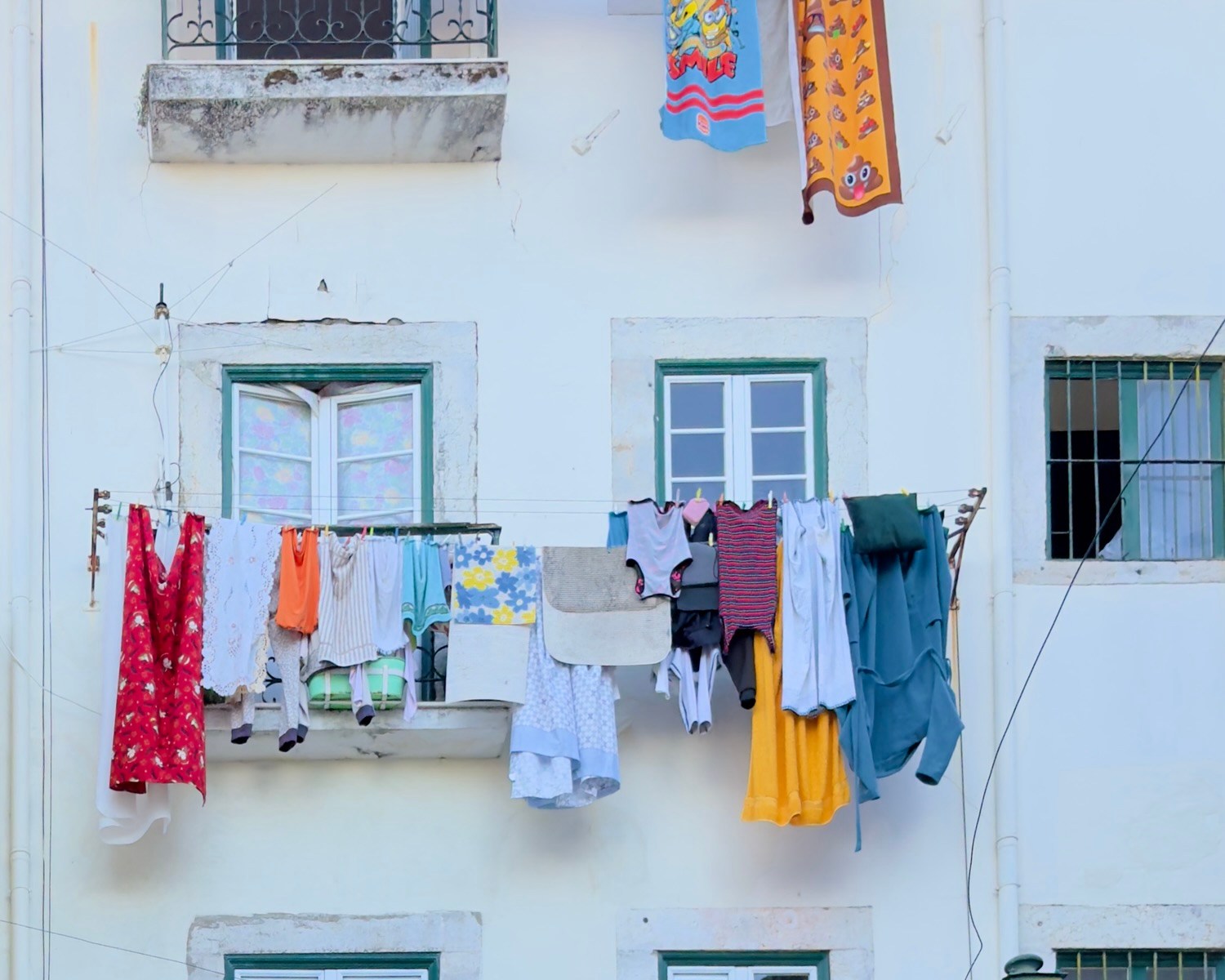
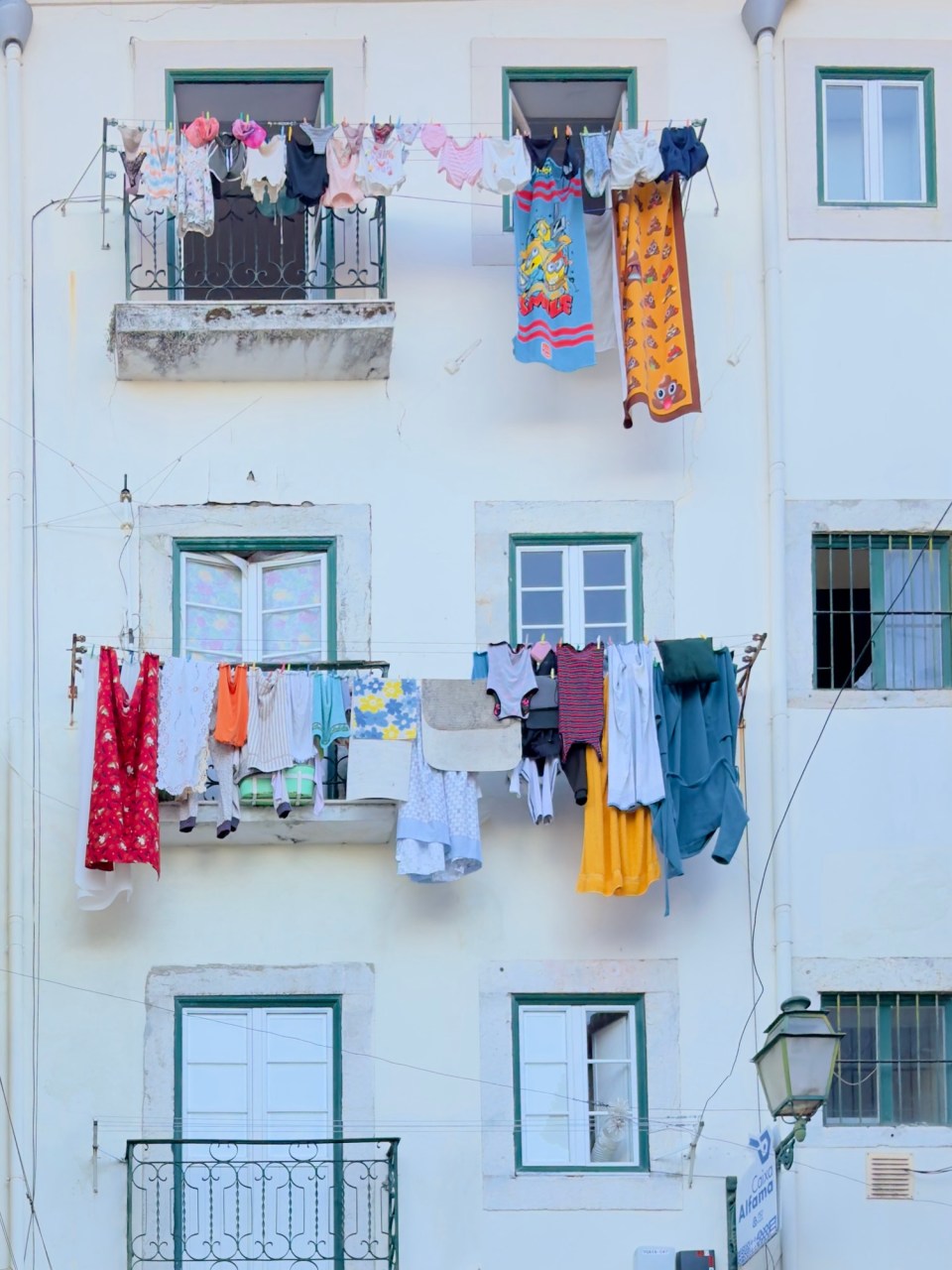
Such a common sight here. Every back street has laundry out drying. It’s quintessential Europe to me.
There is such a relaxing and unassuming feel to this place. It’s like stepping back in time.
iPhone 17 Pro Max
Main Camera — mm
1/783sec, ƒ/1.78 ISO 100
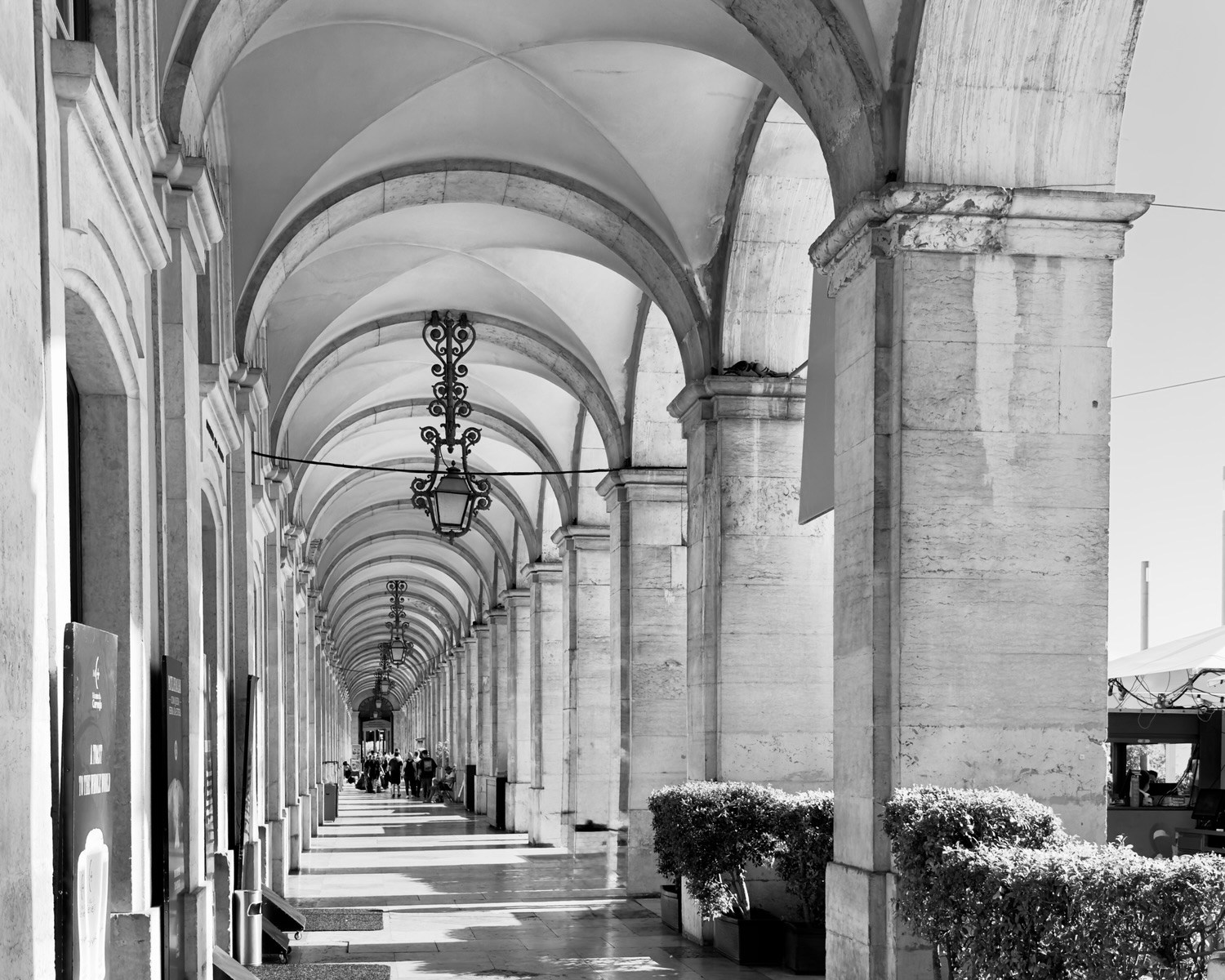
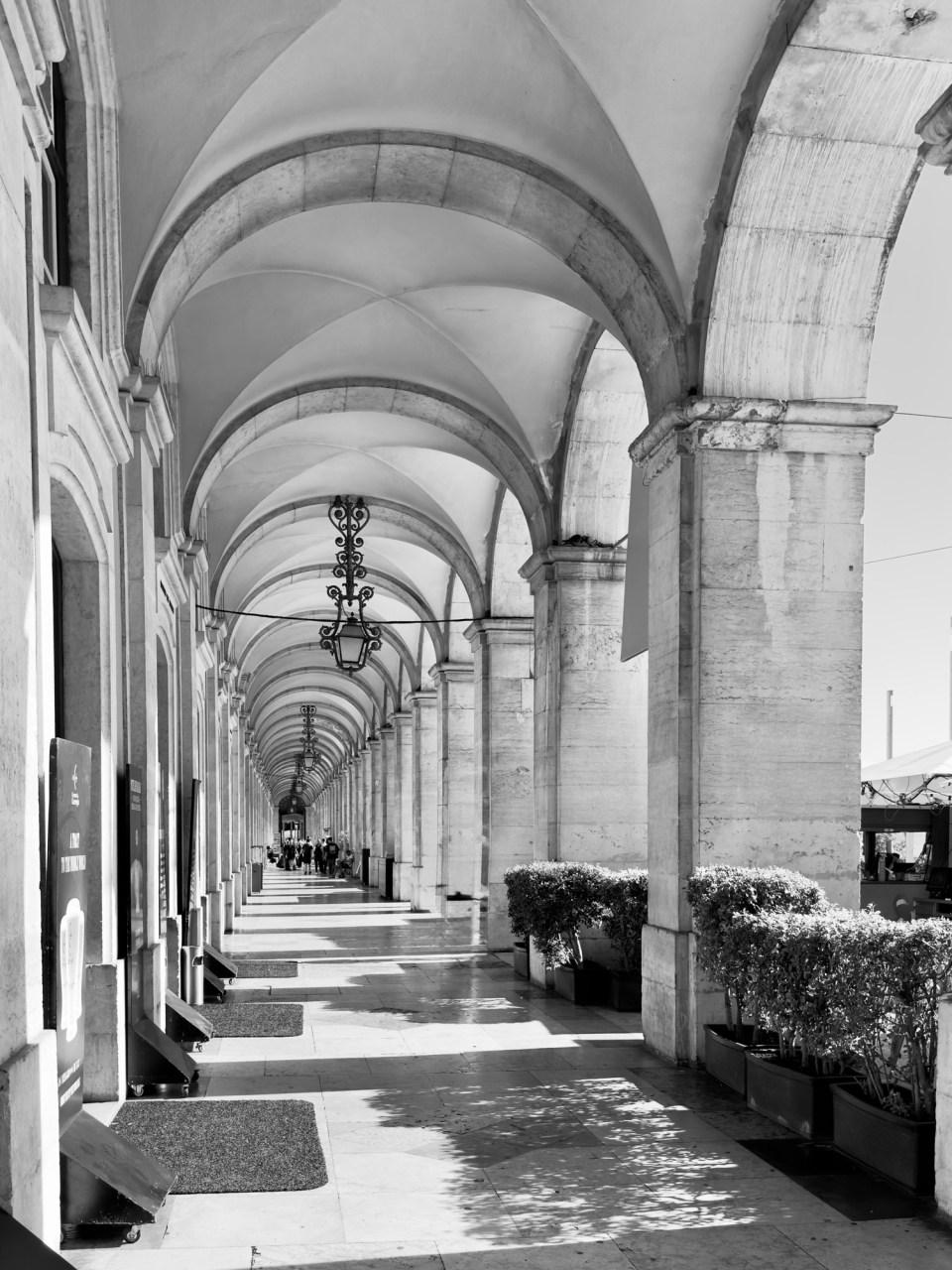
Another quick travel shot. I simply could not resist the arches and late day sunlight.
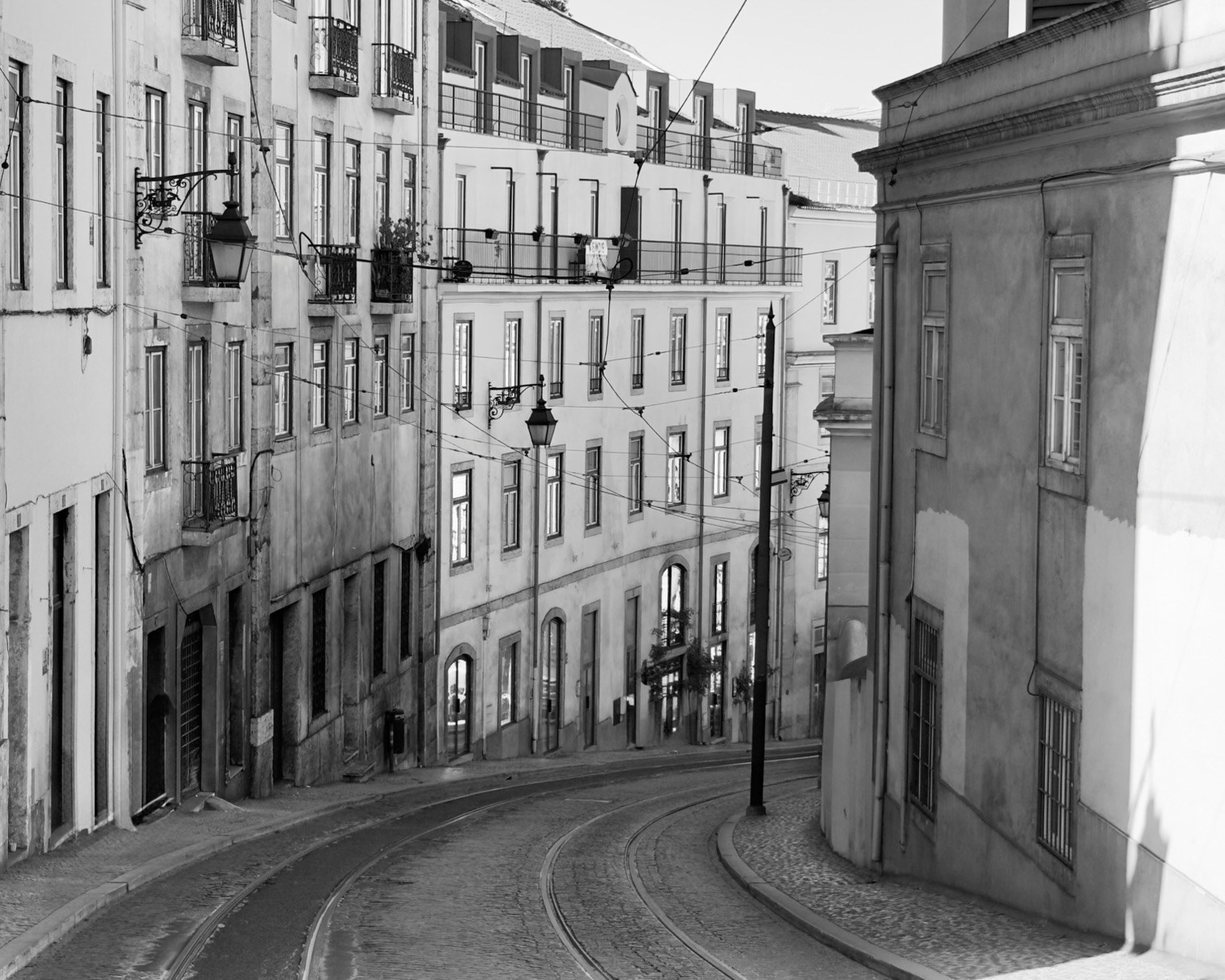
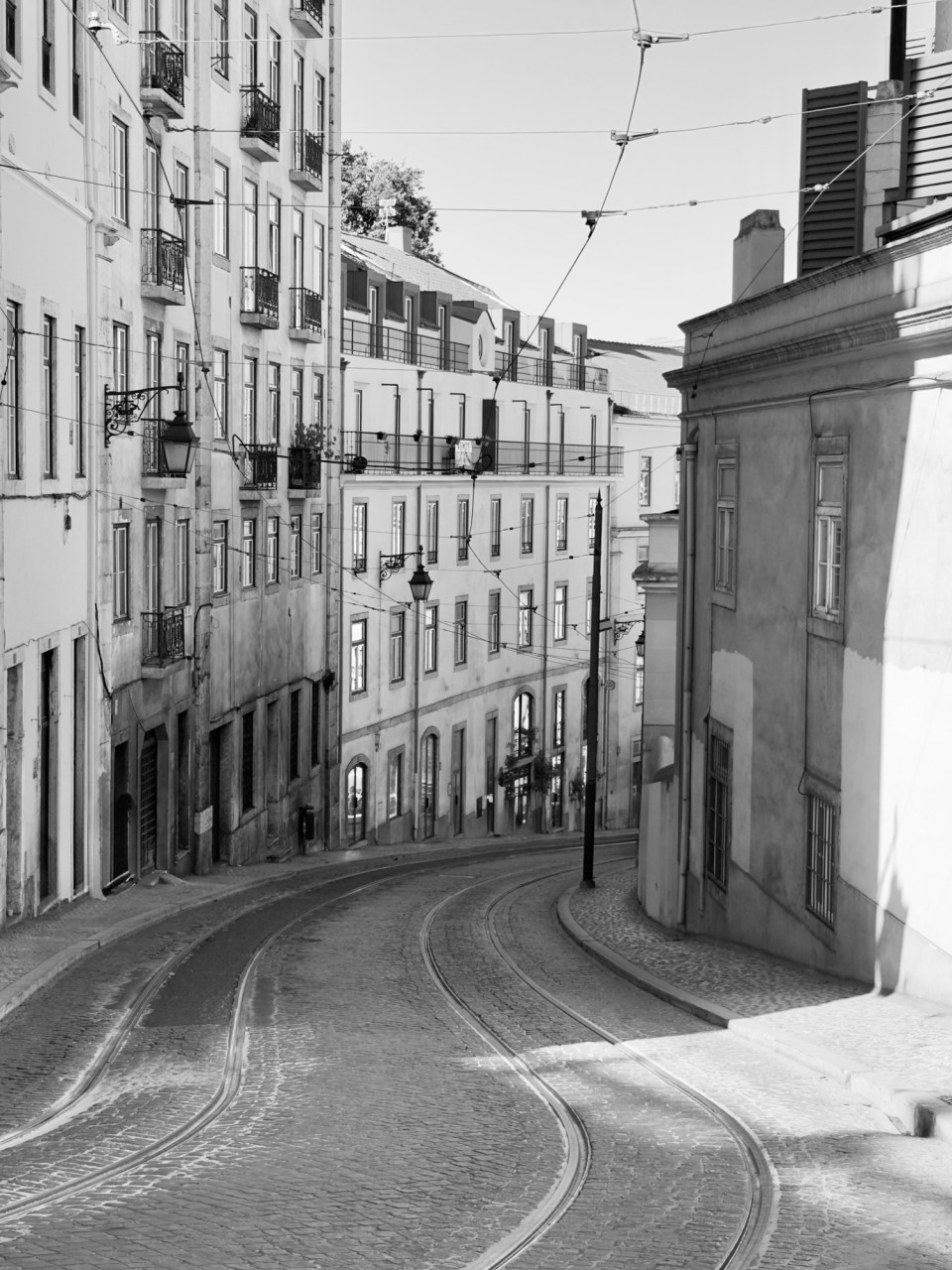
Who knew, when I posted the story about the Lisbon tram from last year, that I would be walking up the same hill this year.
Looking back, after ascending in 34°C temperatures is what inspired my caption. Even in the shade, the mid-day walk up this street made sure that I felt every step. At the top, the view back was beautiful and is shown here.
iPhone 17 Pro Max
Main Camera — 64 mm
1/2865 sec, ƒ/1.78 ISO 100

Travel day…I’ll post again when landed 🙂


“Antequera doesn’t rush you. It lets you wander its steep streets until the Alcazaba rises into view, all weathered stone and stubborn history. It’s the kind of place where you pause longer than you meant to, letting the past and the horizon settle into you.” – Ed Lehming
We had only one day in Antequera, a rail stop on our way Granada and some 47 km north of Malaga. It was supposed to be a stopping point between larger destinations — a place to stretch our legs, see one of Andalucia’s famous “white cities”, maybe take a few photos before moving on. But cities have a way of deciding for you, and Antequera made its intentions clear the moment the Alcazaba and the unusual Peña above the rooftops.
The fortress, high above the town doesn’t shout. It stands there with the quiet confidence of something that has outlived every argument, every kingdom, every passing traveller. Its stone walls catch the late afternoon light in a way that feels almost deliberate, as if the place knows how to pose for those who arrive unprepared for its beauty.
I wandered up slowly, letting the steep and narrow streets guide me. Whitewashed houses leaned into the hill, their balconies dripping with geraniums. Every turn felt like a small reveal — a sliver of tower here, a stretch of battlement there — until finally, from my high vantage point, the whole Alcazaba opened before me, solid and serene.
And then, beyond it, the mountain.
Peña de los Enamorados lay across the horizon like a sleeping giant, its profile unmistakable once you see it. Locals say it resembles a fallen lover, and once the idea settles in your mind, it refuses to leave. The story — tragic, romantic, impossibly old — drifts through the air like a second kind of weather. You don’t need to know the details to feel it. The landscape carries the emotion for you.
I stood there longer than I meant to, the hot Andalucian sun beating down, hisory whispering to me, my camera forgotten at my side. The fortress, the mountain, the soft Andalusian light — it all felt like a conversation between centuries, and I was simply allowed to listen.
Before we left, we visited the Dolmens de Antiquera, ancient structures, much like England’s Stone Henge, hewn from massive rocks, their true purpose unknown. I’ll write another post about them, as they were fascinating and deserve more than a mere mention.
Antequera wasn’t a stopover after all. It was a pause — the kind that rearranges your sense of time, the kind that reminds you that some places don’t just exist; they remember.
iPhone 14 Pro Max
Main Camera — 24 mm
1/5556 sec, ƒ/1.78 ISO 64
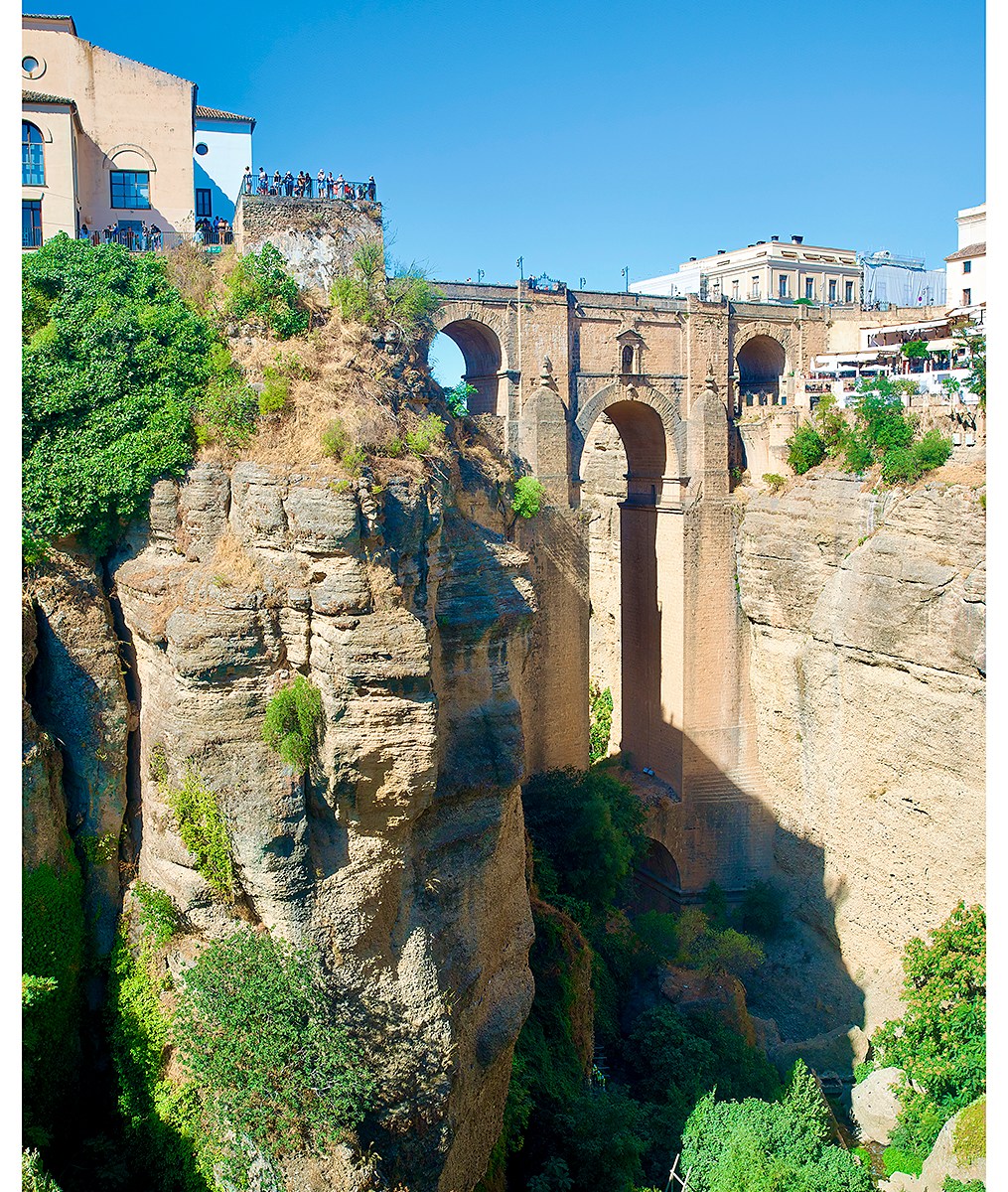
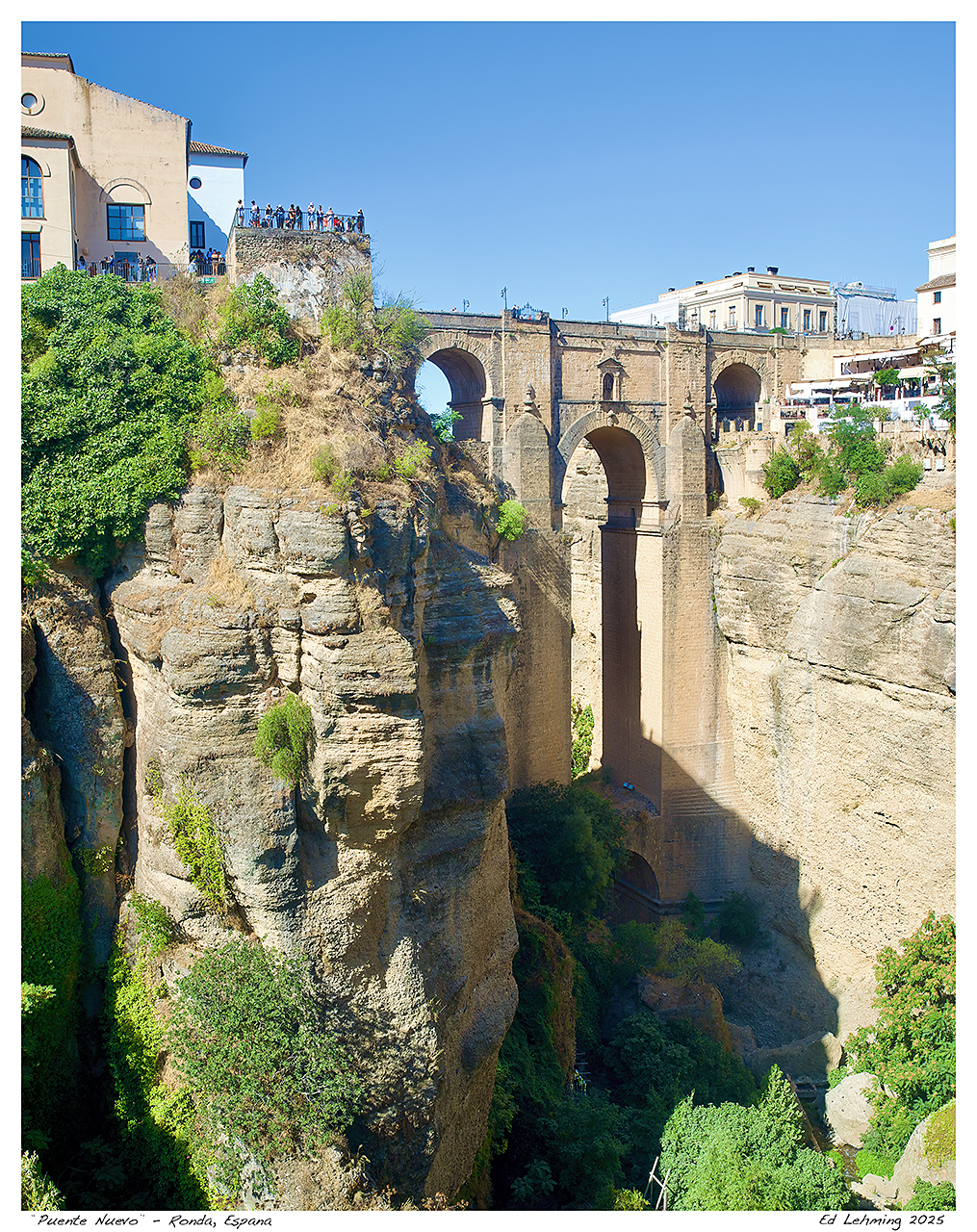
“Where stone meets sky, the world remembers how to stand tall.” – Ed Lehming
Moving on from Lisbon to Malaga, Spain. One of my most anticipated day trips was to get to Ronda and the beautiful bridge that seems to be on so many Spanish tourist sites and brochures. A short bus ride from Malaga brought us into the town of Ronda. I guess I was surprised when we pulled up that I had not seen the bridge or the gorge that it straddles while approaching the town. I had this vision that I’d see it in the distance.
The reality is that the road approach does not offer even a brief preview; in fact, it’s a bit of a walk from the bus terminal to get to the bridge itself. However, the walk is worth it, as it brings you past the Alameda de Tajo, a beautiful, treed urban park that leads to a viewpoint overlooking the gorge. The gorge itself is called El Tajo. The path through the park and along the steep gorge leads shortly to Ronda’s famous bullfighting ring. Ronda is famous for it’s bullfighting history. The ring is not the oldest in Spain, but it is unique in that it is constructed primarily of stone. Another feature is that the entire seating area is covered, which is a great benefit in the hot Iberian sun. There is also a spectacular statue of a bull in front of the structure.
Continuing past the bullring, you eventually come to the bridge itself. You know you have arrived because the density of tourists increases significantly. At street level, it appears like any other bridge, but the gorge it spans is spectacular and divides the town of Ronda in half, so the need for a bridge is understandable. This is not the first bridge; it’s the Puente Nueva, or the “New Bridge.” There was a previous bridge, built in 1735, but it was apparently constructed too quickly and poorly, collapsing in 1741 and killing 50 people. The construction of this version of the bridge started in 1759 and took 34 years to complete.
You’ll notice a small window at the center of the bridge, which leads to a chamber that has been used for various purposes, including a prison. During the Spanish Civil War in 1936–1939, the use as a prison and torture chamber continued, and apparently prisoners were often thrown out of the small window into the gorge 120 meters below. It now contains a museum.
There are various viewing platforms (visible in this photo), most quite crowded, and I found that the best view was offered by the Jardines de Cuenca, a bit lower in the gorge, which is where this photo was made. This vantage point can be accessed by various fairly well-marked paths and is worth the hike into the gorge.
You’ll also notice in my camera data below, that I switched to my Nikon D800 for this. Though my iPhone provided some really good images, I once again wanted more control over the aperture to control the depth of field, something that the camera does not do well, in my opinion. My wide-angle lens also has a circular polarizer, so I can eliminate unwanted glare.
Nikon D800
Tamron SP 24-70 mm f/2.8 Di VC USD @ 24 mm
1/200 sec, f/7.1, ISO 400
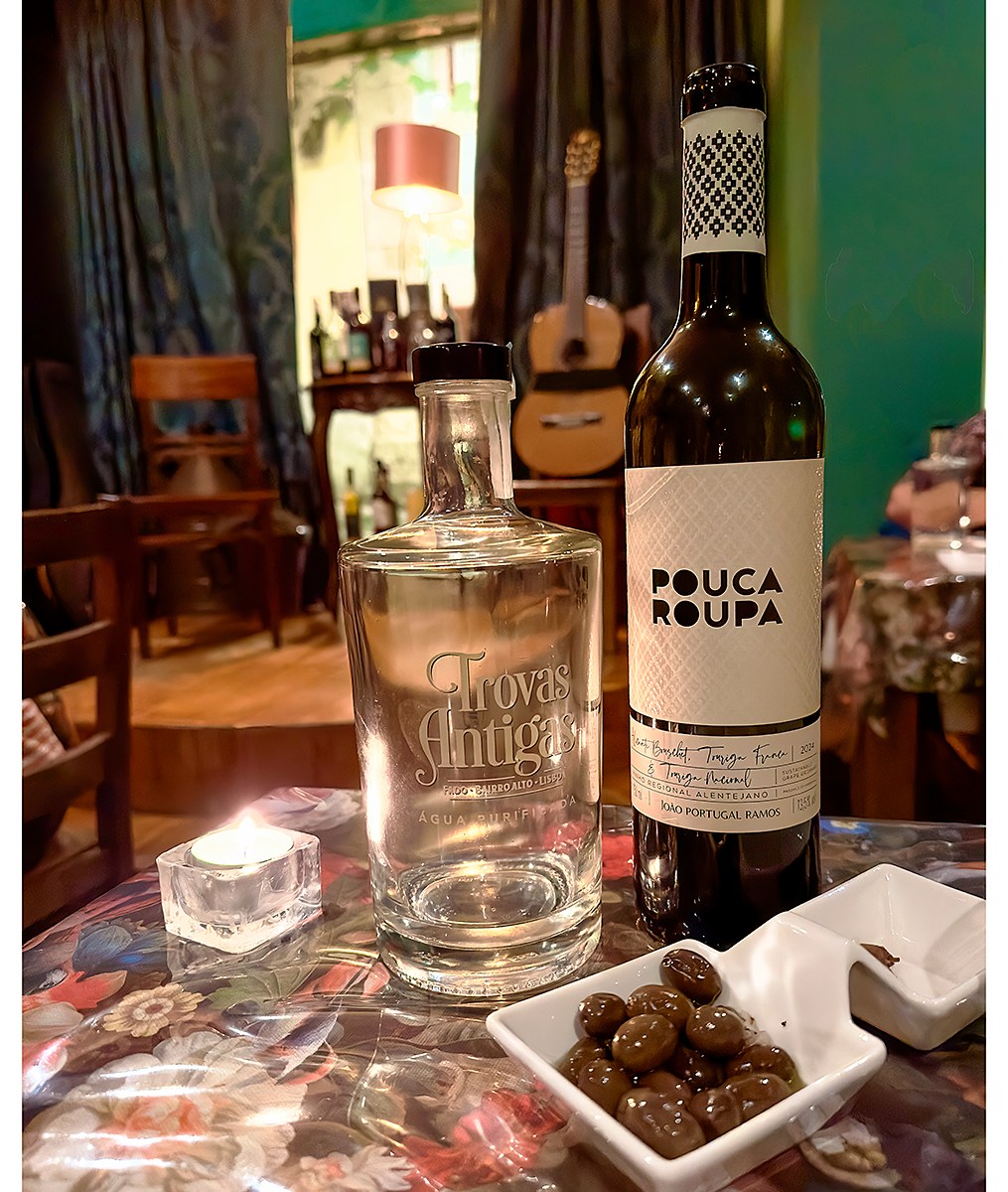
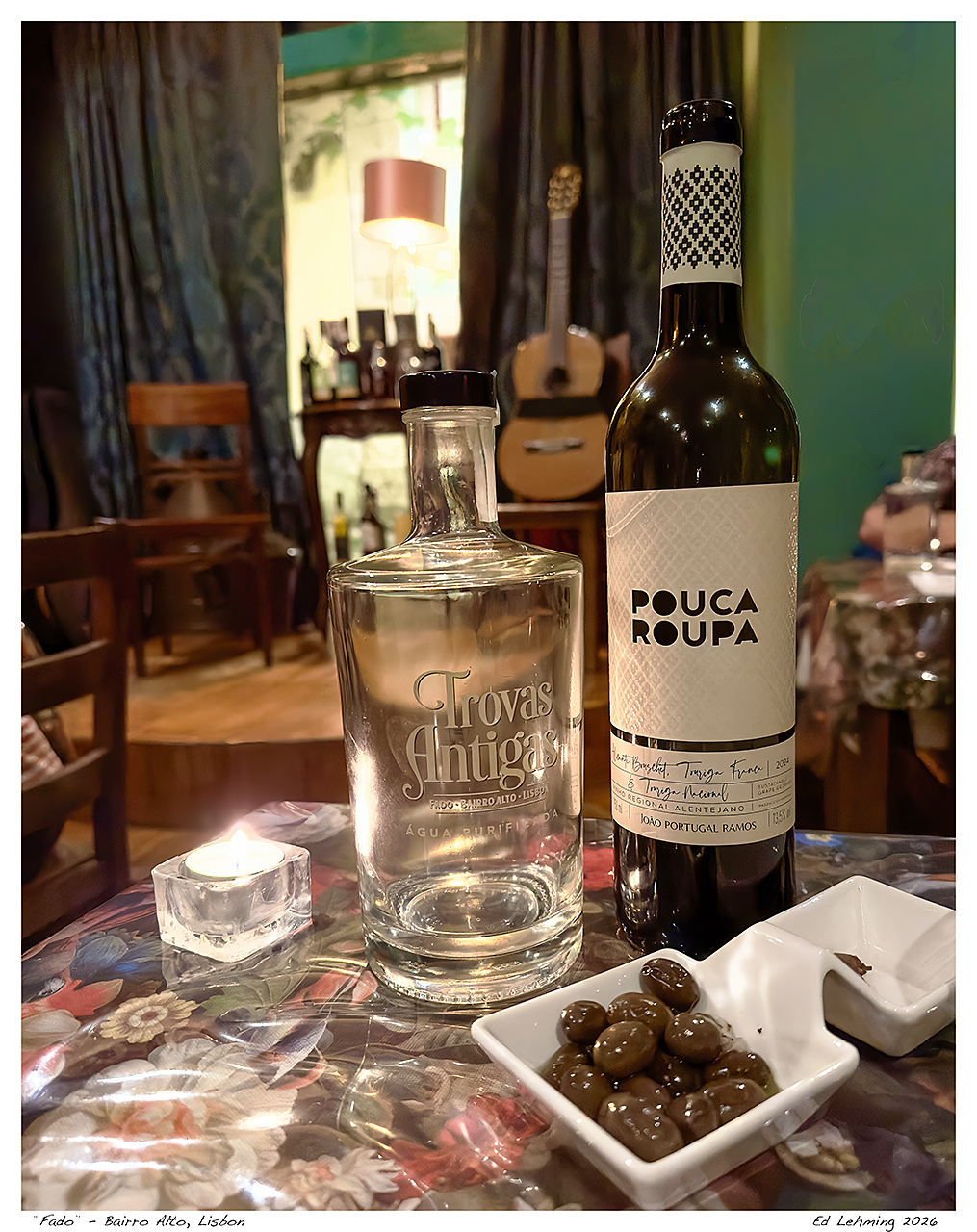
“In Lisbon, Fado doesn’t just echo through the night — it gathers around tables like this, where a candle flickers, a guitar waits, and every sip and every silence becomes part of the song.” – Ed Lehming
On warm summer evenings, within the narrow, winding streets of Lisbon’s Bairro Alto district, warm lamplight and voices drift from numerous taverns. Apart from the many commercial Fado venues, this area is intimate. It’s not grand or touristy; it’s close, human, and lived. This is the type of place we sought out to experience Fado, something genuine.
Fado, I found, represents Lisbon’s expression of saudade: longing, memory, tenderness, and resilience. It found its roots in working-class neighborhoods, where friends and neighbors gathered to tell their stories in song and music. Fado is honest and raw, and I think that is its attraction. It’s not polished and showy, and that, in my opinion, is one of the reasons it has evolved into a national symbol of the Portuguese people.
We found the Bairro Alto district through the advice of one of the people working at the property where we were staying. We told him we wanted something sincere and not put on. He directed us to this area, not far from our hotel in Baixa. The district is known for its Fado, and it has an interesting blend of old and classic taverns and modern bars, each catering to a different clientele. We really had no idea of what to expect, apart from a few YouTube videos we had seen of this place. We were given an address and not much else, and when we arrived, around seven thirty, we found a small unassuming establishment that felt “honest” for lack of a better word. People were milling around outside and gave us a friendly greeting, as we were pretty obviously tourists. They had to point out the entrance, as even that was not obvious.
The place was large but intimate; many tables lined the walls and filled the floor; intimate but not tight, and we were guided to our table. It was explained to us how this would unfold. Appetizers and wine would be served, and when the performers came to the stage, the audience was expected to be respectful and quiet until the set was completed. This routine would be followed as the various courses were served and the meal was complete. By the way, the meal was spectacular, featuring several course of traditional Portuguese cuisine and some really nice wine.
It all started with the two musicians coming to the front, taking some time to tune their instruments, and the singer rising quietly from a table near the back, taking the stage and singing. It’s all pretty spontaneous and feels very natural, as if it were members of the audience sharing their own stories of life. The mood was already set with dim lights, candlelight, wine, and attentive silence.
It’s hard to really describe Fado, except that it is raw, expressive, and fills the room with an emotional weight that I can’t fully articulate. There is a beautiful interplay between the musicians, one playing a Portuguese guitar and the singer. There are pauses and crescendos as the music weaves its spell.
Fado in Bairro Alto feels participatory; the audience becomes part of the emotional landscape, with locals and visitors sharing a moment of shared vulnerability and beauty. I found this to be more than just a performance; it was a lived experience that seems to preserve Fado’s soul in Bairro Alto. For me, it made Fado less of a genre and more of an expression of Lisbon itself.
For reference, here’s the website of the venue: https://xn--pequenaslembranas-osb.my.canva.site/trovas-antigas-restaurante-fado
iPhone 14 Pro Max
Main Camera — 24 mm
1/25 sec, ƒ/1.78 ISO 1000
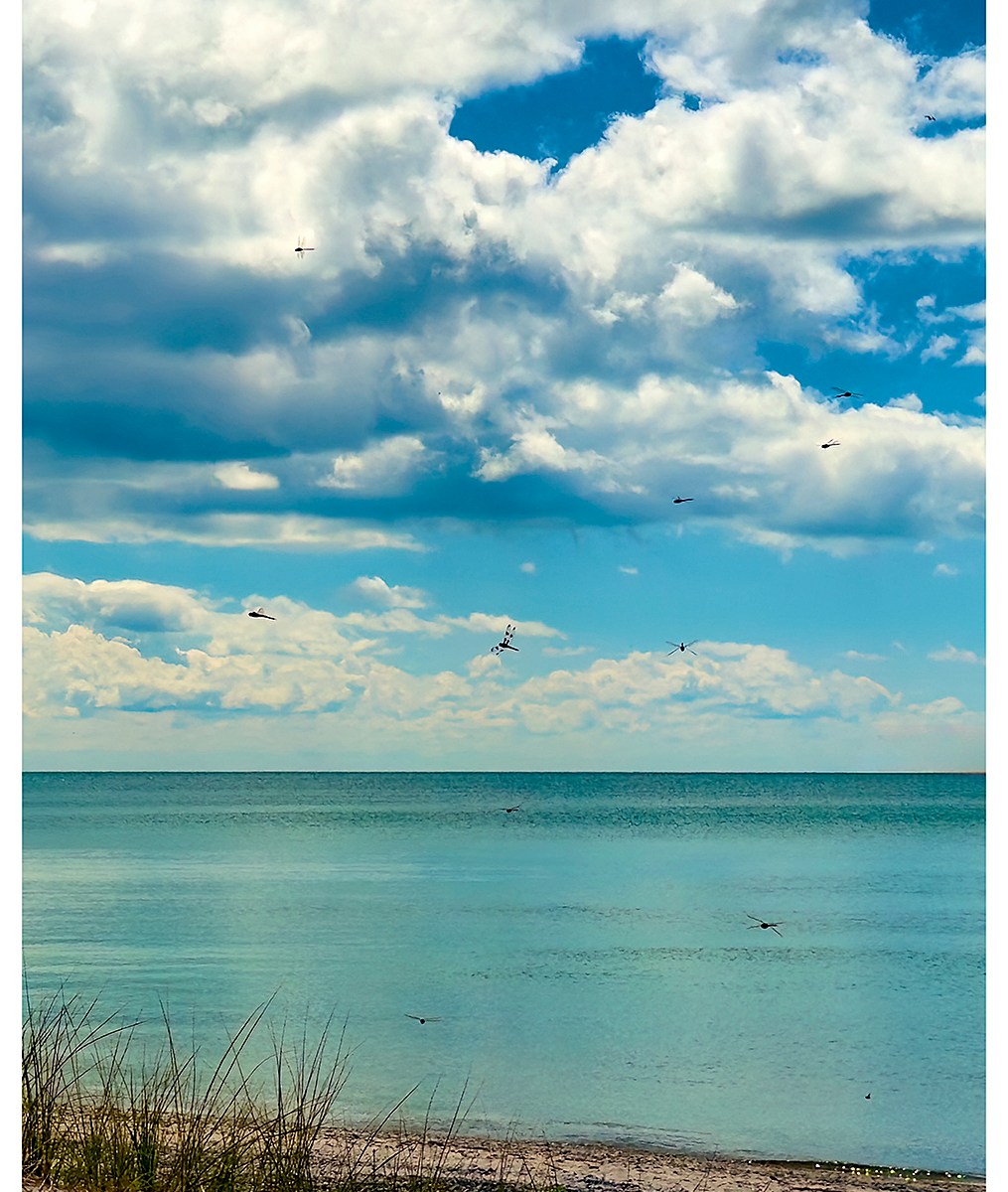
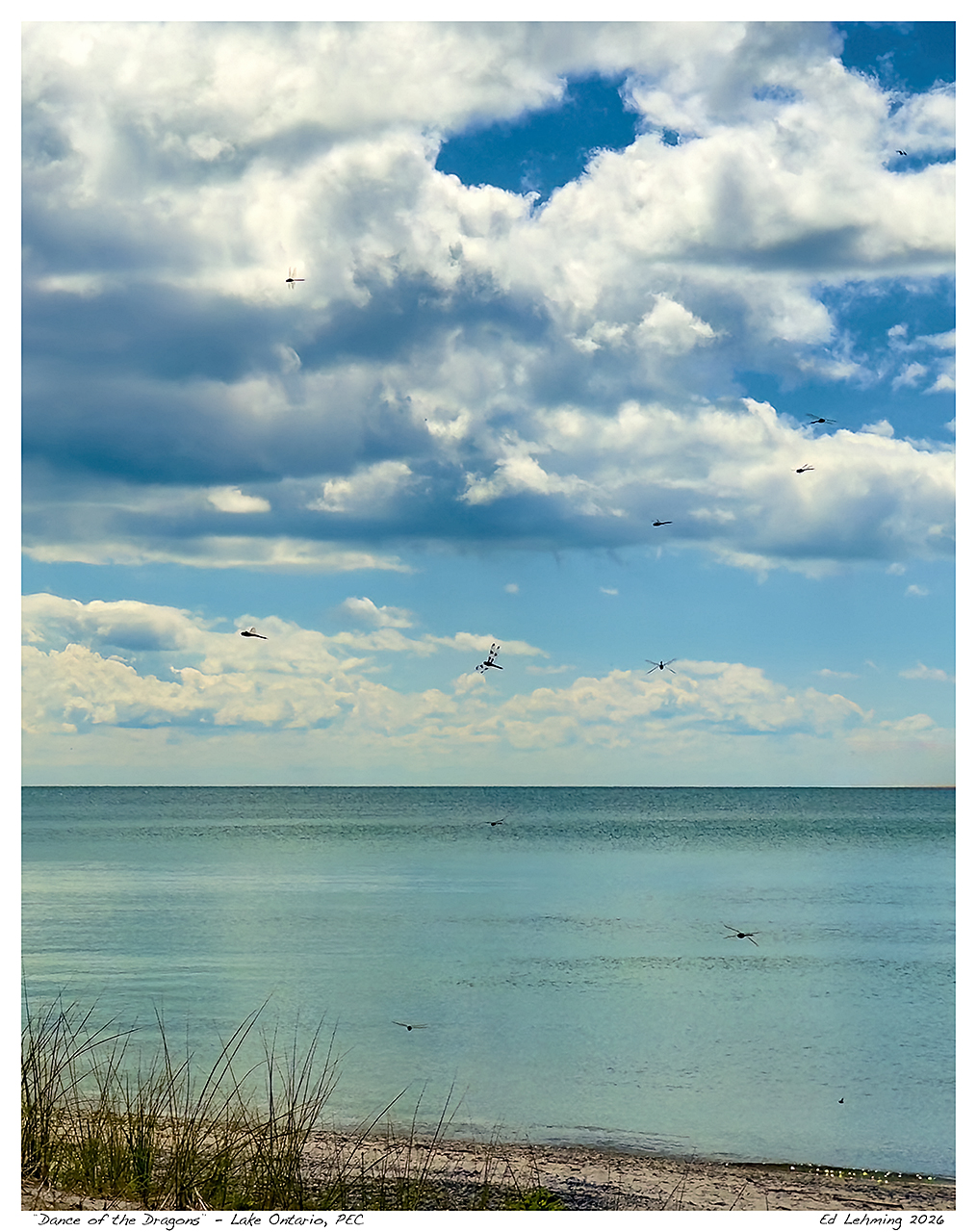
“Dragonflies dancing above the lake, near the summer’s end — a moment the wind almost forgot to breathe.” – Ed Lehming
Nature provides these miraculous moments that take my breath away. They are almost always spontaneous and unexpected. I had just walked along the stretch of beach and never even noticed them. Maybe it was the angle of the sun, or maybe I was focused on something else, but when I stepped over the dunes for a different view, the dragonflies filled my sight. It hearkened me back to summers lying in a meadow, looking up at the clouds and seeing the sky filled with dragonflies high above.
I sat on an old driftwood log on the shore and just watched them dance and weave through the sky. They are quite amazing in their maneuverability and speed. I had read somewhere recently that because they have such control over their movement, they have one of the highest success rates in catching their prey of any predator, and I can believe it.
The show never stopped in the time I spent sitting, so there must have been a plentiful supply of food, though there was nothing that I could see.
The other amazing thing that I witnessed, but was unable to capture, was the migration of Monarch butterflies across the lake to their winter home in Mexico, over 4,000 kilometers away. One by one, I saw them head across the water, the start of their journey.
So, a day that I figured would simply be a relaxing stroll on the beach and some nice shoreline photos gave me so much more. It gave me an airshow of sorts and I was happy to be able to document it.
iPhone 17 Pro Max
Main Camera — 24 mm
1/6172 sec, ƒ/1.78 ISO 64
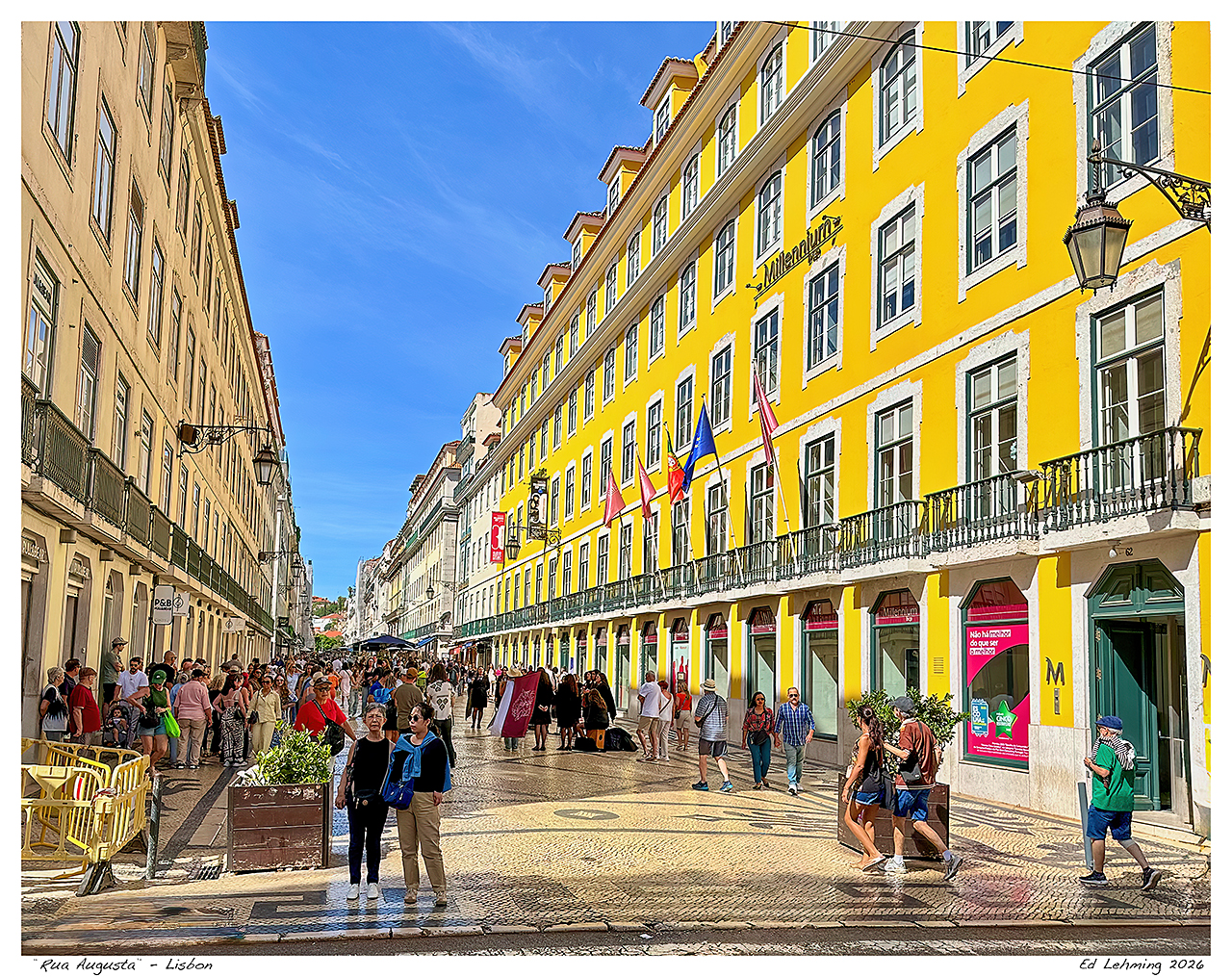
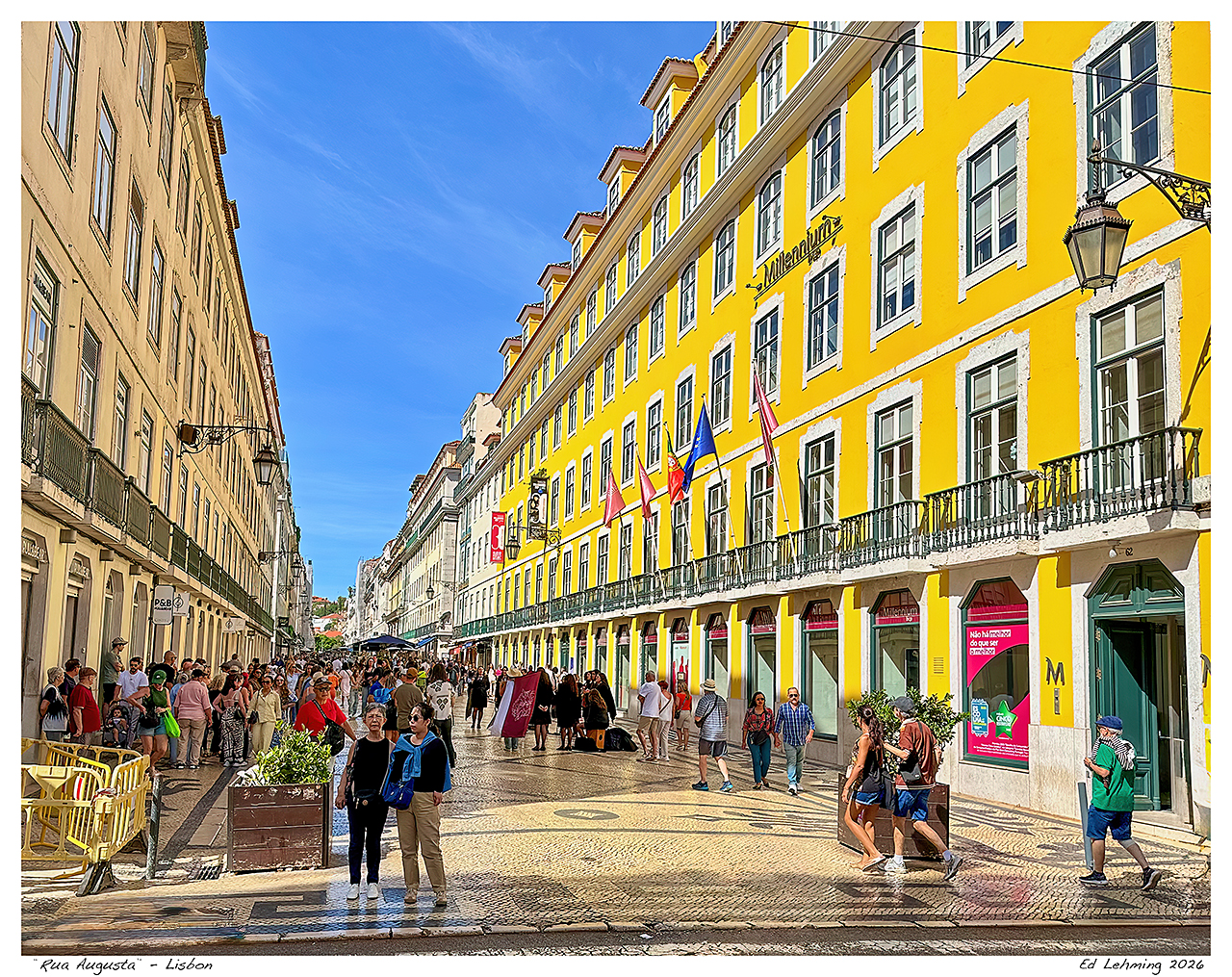
“Walk Rua Augusta slowly — Lisbon reveals itself one storefront, one smile, one sunbeam at a time.” – Ed Lehming
Yesterday’s image of the Praça do Comércio inspired me to do something that I don’t often do: post a photo with lots of people in it. Realistically, it’s hard to avoid on Rua Augusta unless you are out very early, and even then, this main thoroughfare is bustling with activity.
I chose the accompanying quote quite carefully, trying to capture the essence of the avenue in the heart of Lisbon’s Baixa district. The street is lined from top to bottom with stores, bakeries, and restaurants. You could spend an entire day here and not take it all in. Further up and not quite visible in this image are numberoud restaurants with table sit up in the middel of the braod street, allowing you to fully enjoy all the activities while savouring local dishes. The servers are quite agressive in trying to get you to eat at their establishment, but don’t seem offended when you move on.
The other feature that stood out for me as a photographer is the beautiful lighting. The bright buildings and the reflective cobbles produce amazing light and minimize shadows. When you look at the image, you will see people’s reflections on the ground but only a hint of shadow. Despite how busy it is, it never feels overly congested. People, especially locals, take their time, often chatting with a friend or co-worker. It’s not unique to Lisbon, but it sure is a nice way to adjust to a better pace.
iPhone 14 Pro Max
Main Camera — 24 mm
1/5525 sec, ƒ/1.78 ISO 80
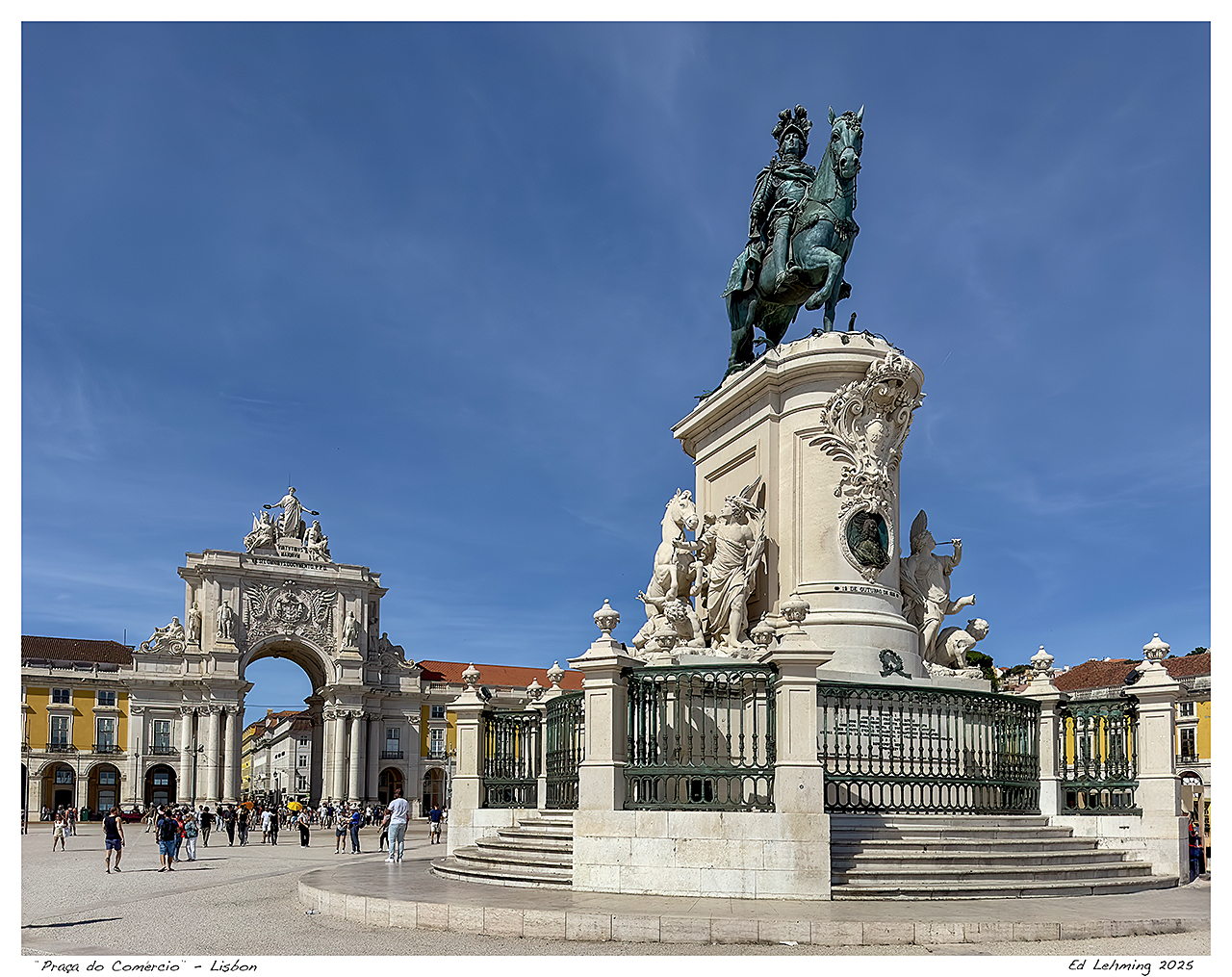
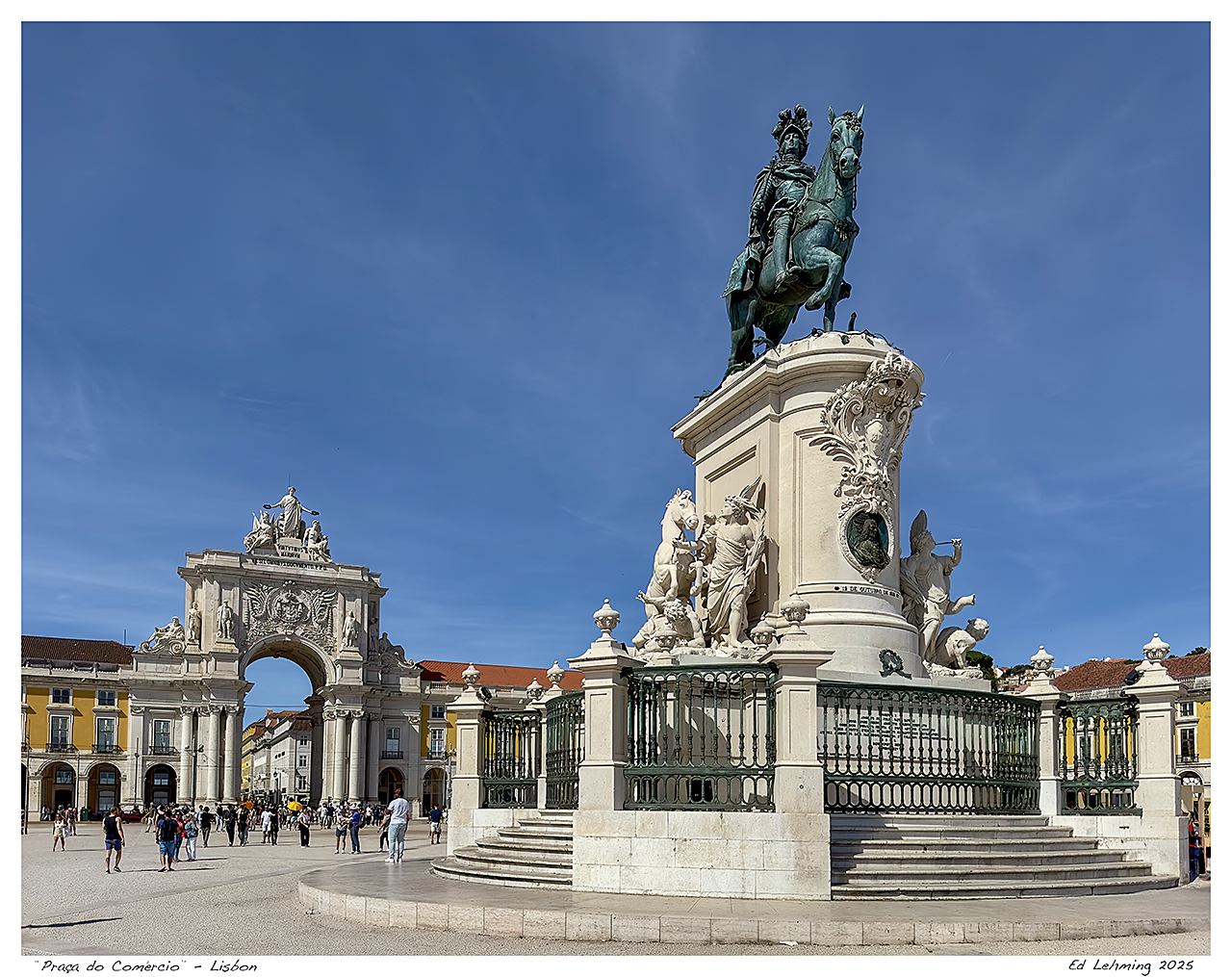
“Praça do Comércio reminds us that every city has a gateway where past and present shake hands.” – Ed Lehming
Here’s another image from my exploration of Lisbon last September. As we walked toward the river along Rua Augusta, the main commercial street, we passed through the Rua Augusta Arch, which dominates the base of the avenue. Built to commemorate the city’s reconstruction after the devastating 1755 earthquake, which destroyed much of Lisbon, it is massive and impossible to miss. Passing through the gates and the throngs of people, we emerged into the large Praça do Comércio. It’s an expansive square fronting the Tagus River, surrounded by stately buildings.
At the centre of the square—and fortunately not surrounded by people when I was there—is the equestrian statue of King José I, inaugurated in 1775 as well. This bronze monument was the first monumental statue dedicated to a king in Lisbon. Interestingly, at the base of the horse’s feet are snakes, symbolizing the king crushing his enemies. The square was named Praça do Comércio, the Square of Commerce, to reflect its new role in Lisbon’s economy. The symmetrical buildings around it once housed government offices regulating customs and port activities.
For centuries, Portugal’s wealth moved through this plaza and its adjoining port. More than a transportation crossroads, it became the commercial heart of the city, directing movement west toward Belém and south across the Tagus. The northern trams link Lisbon to its historic district, while the southern ferries carry passengers over the river, continuing the square’s long tradition as a gateway of trade and travel.
For me—as is often the case—standing in a place like this brings visions of what may have happened in the past. A great deal unfolded here, including, as I discovered while studying the history of the square, the assassination in 1908 of the last king of Portugal. He was shot and killed as his family’s carriage made its way across the square. The Portuguese monarchy ended a short two years thereafter.
iPhone 14 Pro Max
Main Camera — 24 mm
1/5385 sec, ƒ/1.78 ISO 125
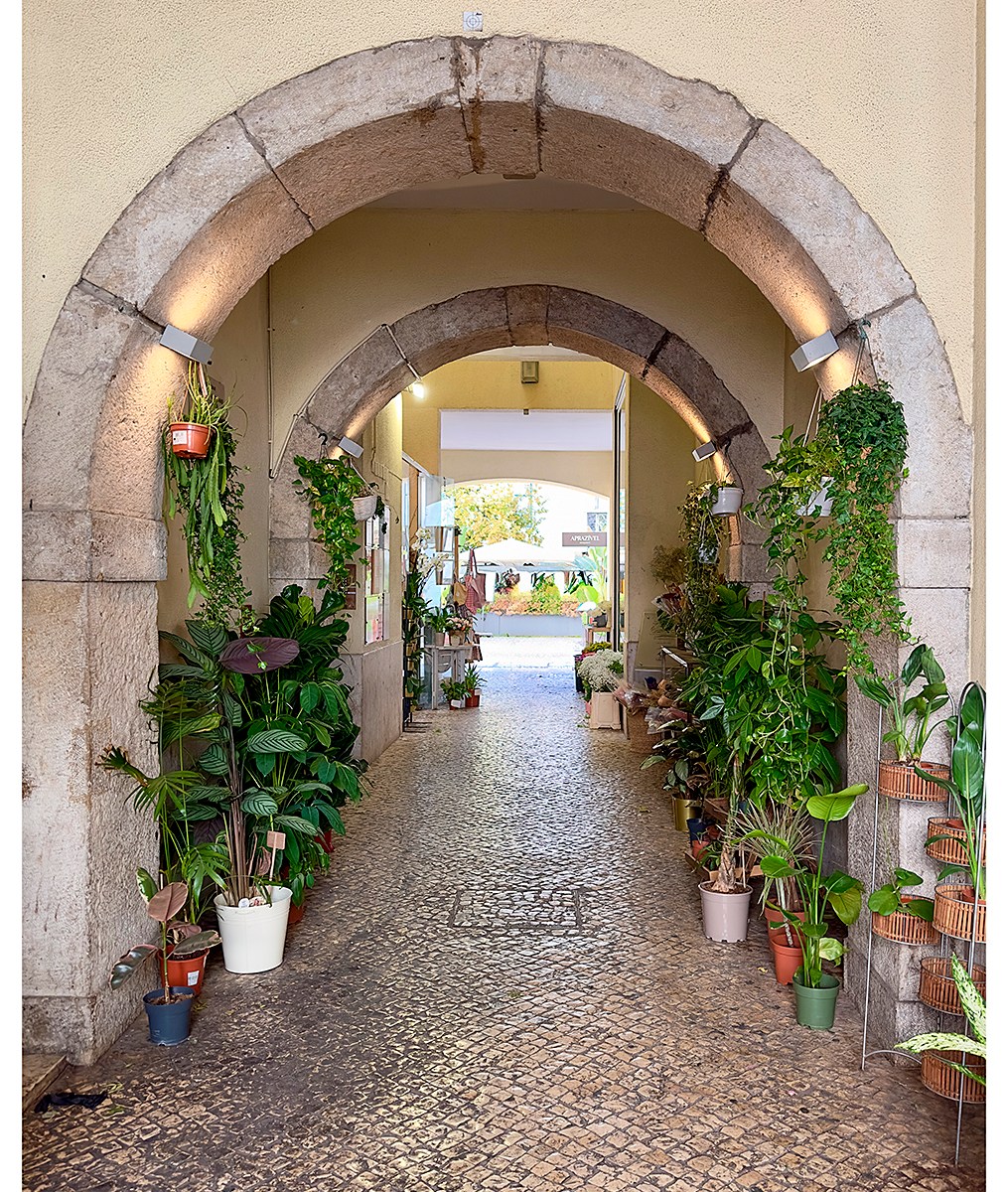
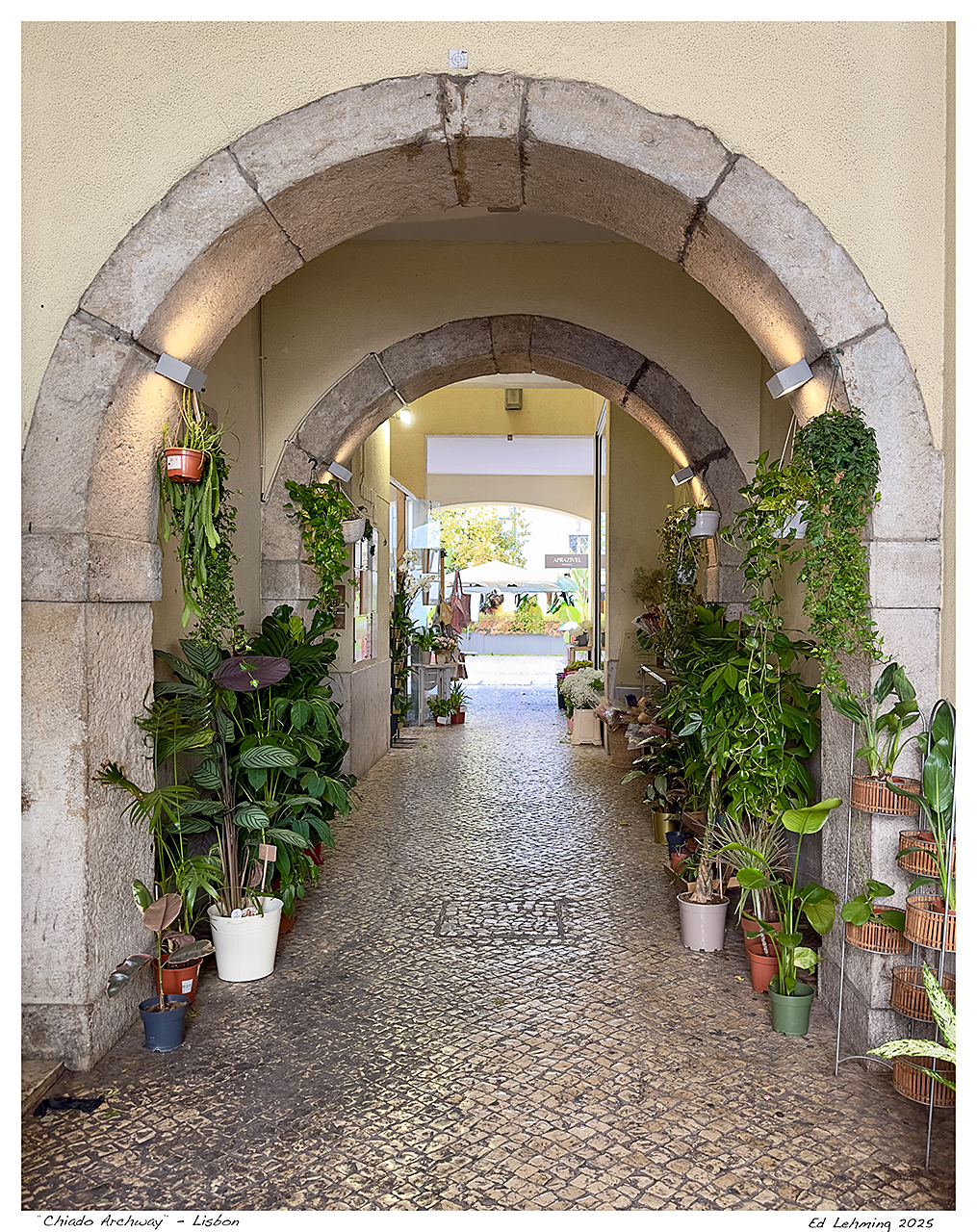
“Every passage we walk carries the present forward, yet leaves a quiet echo of the past behind.” – Ed Lehming
Today’s image is another favorite of mine from the Chiado district of Lisbon. Many of the cobbled roadways have these arches that lead to large, mostly private courtyards. This particular one was open and led to several nice restaurants, and a clever florist has taken advantage of the space to showcase house plants.
Another feature, which I hinted at at the start of this post, is the cobbled streets of Lisbon. There is very little traditional pavement as we would be used to in North America, except on main streets; rather, almost all the side streets and walkways are paved with small limestone cobbles. Each is hand-cut and installed by craftsmen. They are all very polished from years of traffic and quite slippery. A warning to travelers: make sure you have shoes with good grip, and I would suggest that high heels are right out for those unaccustomed to walking on this type of pavement. They get even more treacherous with a light rain. They are beautiful, and no two are alike, but they take some getting used to.
There are also places where they have been lifted out, often for a repair to something below, and there does not seem to be any urgency to reinstall them. They just sit in a pile next to the building. Life moves at a different pace here, and you just get used to having to look down constantly for hazards.
I do like these kinds of features; they provide me with a sense of mystery as I explore the streets, and I’m always aware that many of these features have been here for hundreds of years. They are like a gateway to the past.
iPhone 14 Pro Max
Main Camera — 24 mm
1/100 sec, ƒ/1.78 ISO 125
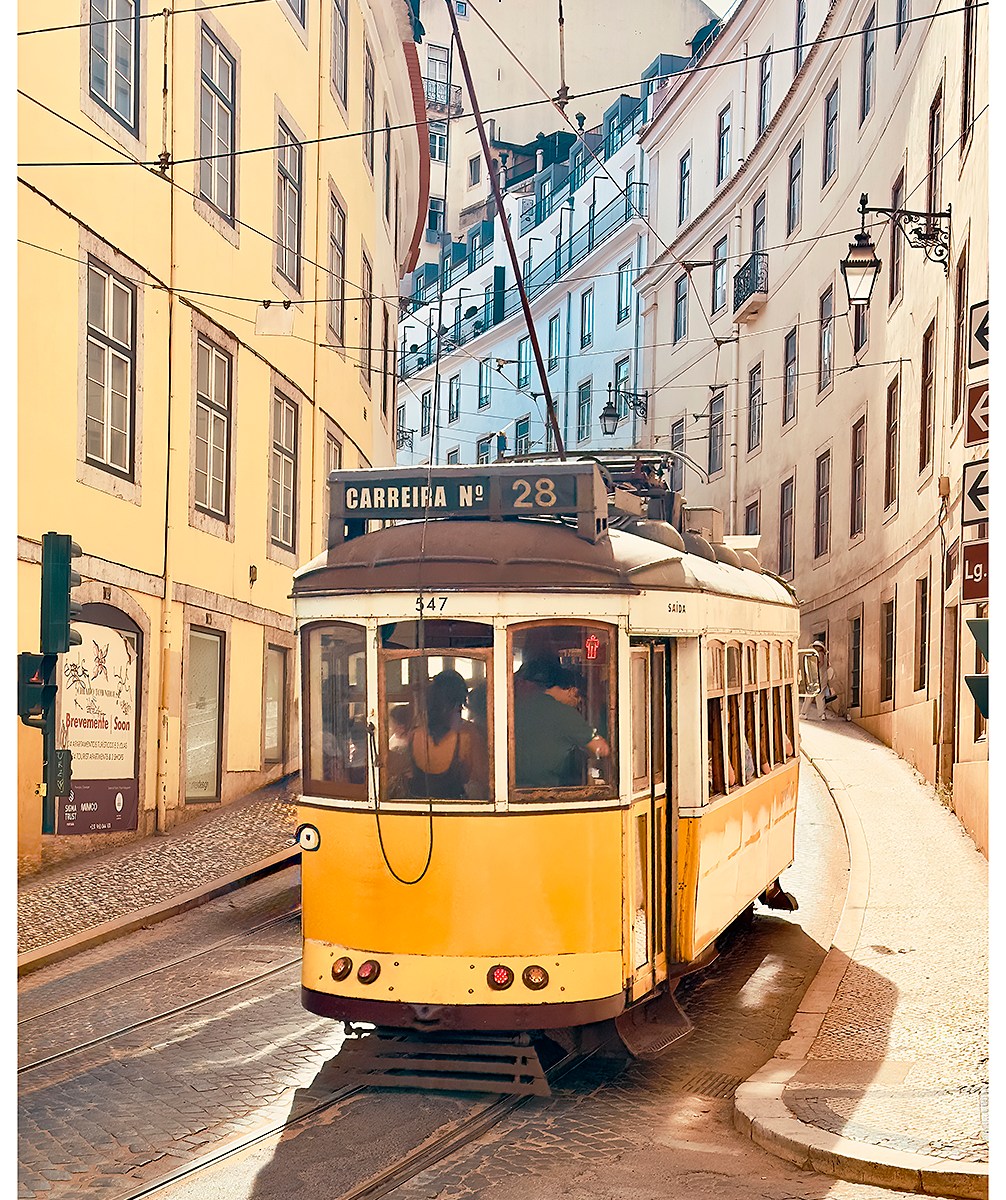
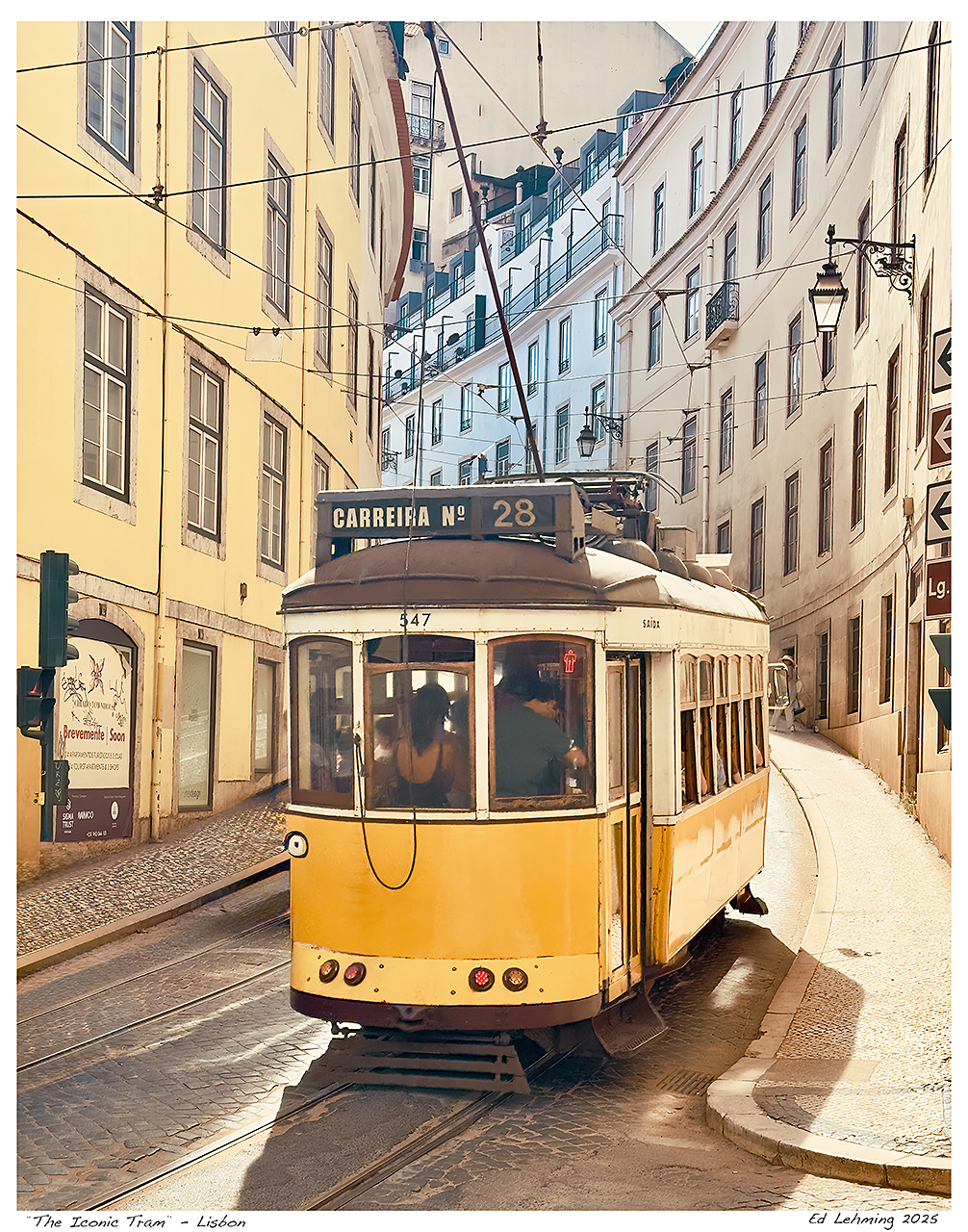
“Where the hills rise and the tracks curve, Lisbon carries you gently through time.” – Ed Lehming 2026
OK, so I decided to go back to the start of last year’s Spain/Portugal trip and walk through the photos in a somewhat clean timeline. It will be my way of sharing photos and memories and creating a bit of a travel journal for myself—something I had not really considered before. So, here we go.
The first photo I chose, taken the day after arriving in Lisbon, is the iconic tram photo. It’s not as simple as it seems to get a photo like this because, by mid-morning, the streets are filled with people. Nobody is in any real hurry, but it’s hard to get an image without someone walking through the frame or standing awkwardly. I waited several minutes to capture the tram driving up the curving hill, hoping that nobody would arrive to interfere with the shot, and yet, unnoticed to me, there is still a woman coming down the hill behind the tram.
I liked this location, with its curved road rising between the buildings and a bit less foot traffic, though immediately to my right is a busy shopping district. I remember the moment well and constantly thank my wife for her patience as I stand around waiting for the right moment.
In the end, the shot turned out nicely and has become another fond memory of our stay in Lisbon, starting me on a broader journey through this lovely city.
iPhone 14 Pro Max
Main Camera — 48 mm
1/2070 sec, ƒ/1.78 ISO 64
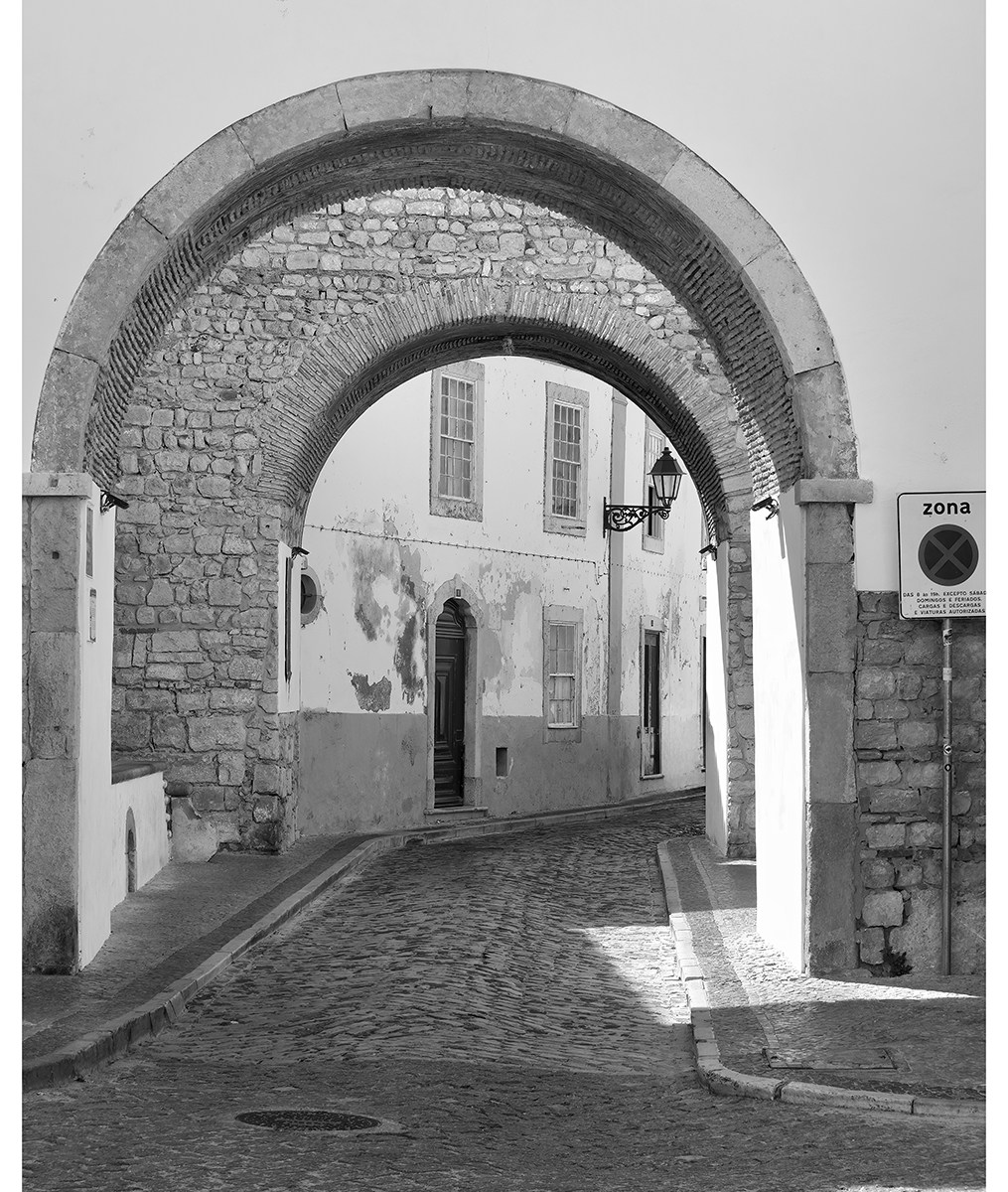
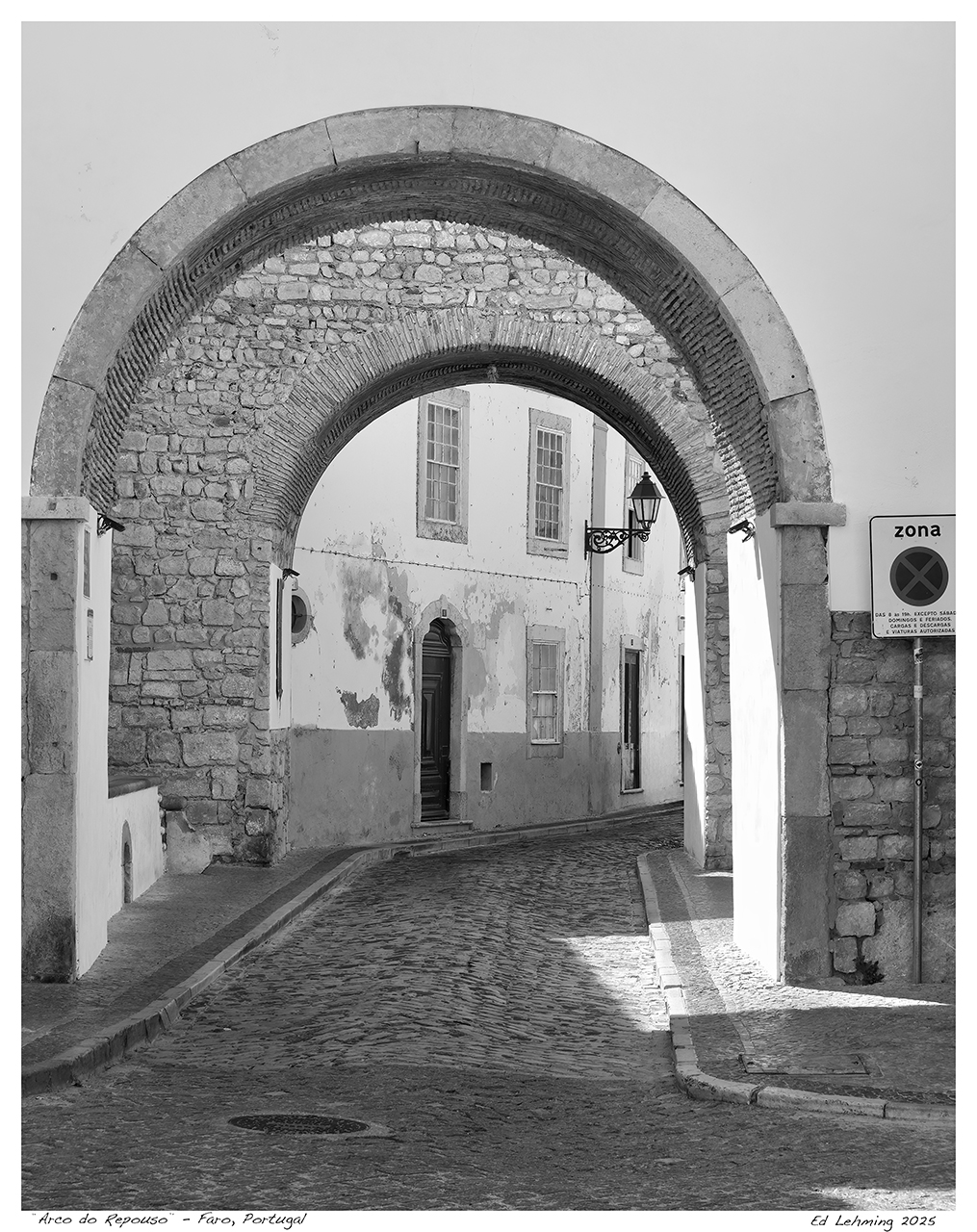
“Every path we walk is shaped by the footsteps that came before it and the ones we choose to take now” – Ed Lehming
I’m taking a bit of a nostalgic journey and revisiting images from 2025, including many from my trip to southern Spain and Portugal. I may jump back and forth a bit, so don’t expect a smooth timeline at this point. That too may change as I get into these images. For now, I’m going with the images that made me proud, so stay tuned.
One such image is this gateway in the city of Faro, Portugal. The gate, it turns out, dates back to the 12th and 13th centuries, during the Almohad dynasty, and is one of several access gates to the old city. It is part of the old defensive walls built by the Arabs to enable them to defend the city entrances.
The name of the gate comes from, as is the case with many old landmarks, folklore handed down through the generations. One legend is that the army of King Alfonso III, after conquering the city of Faro from the Arabs on March 27, 1249, rested at this site. Another is that a Moorish daughter of a governor fell in love with a knight of the conquering Christian army. She was apparently bewitched by her father and rests (reposes) here.
From my standpoint, I love the way the arches frame the doorway and windows inside the wall and the way the road drifts out of sight just beyond the rear arch. I deliberately rendered it in black and white to remove distractions and highlight the architectural details and textures. You may also notice me switching between my handy iPhone and my full kit camera (Nikon D800) with various lenses. The 70-300mm is generally my go to since it gives me good reach and I can compose and frame photos a bit more discretly than I can with my phone. I often travel with both and switch to whatever I feel will best handle the situation presented.
That these structures are still intact amazes me as a resident of Canada, where even the oldest structures are only a few hundred years old.
Nikon D800
Nikkor 70-300mm f/4.5-5.6 G I AF-S VR Zoom @ 70 mm
1/640 sec, f13, ISO 400
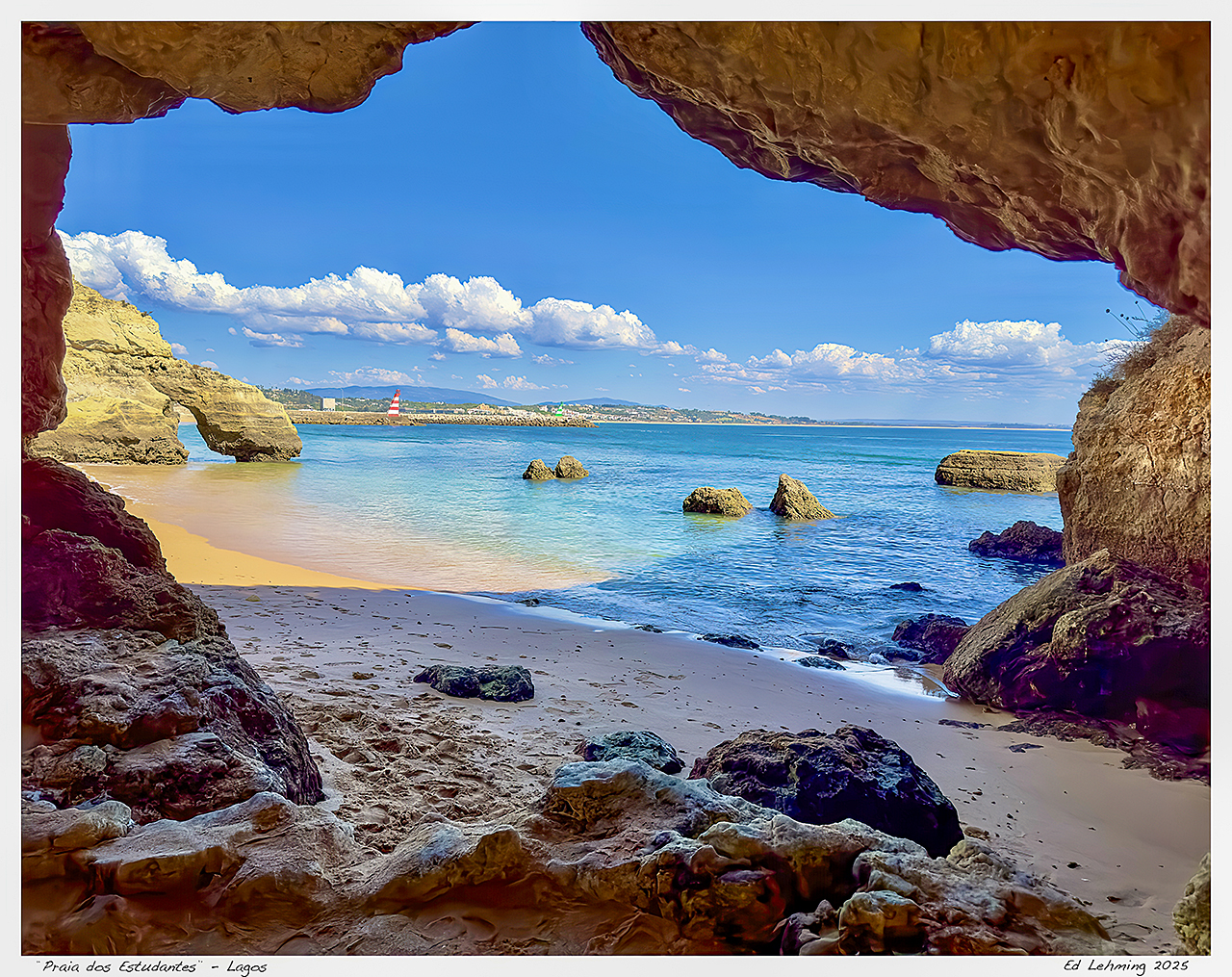
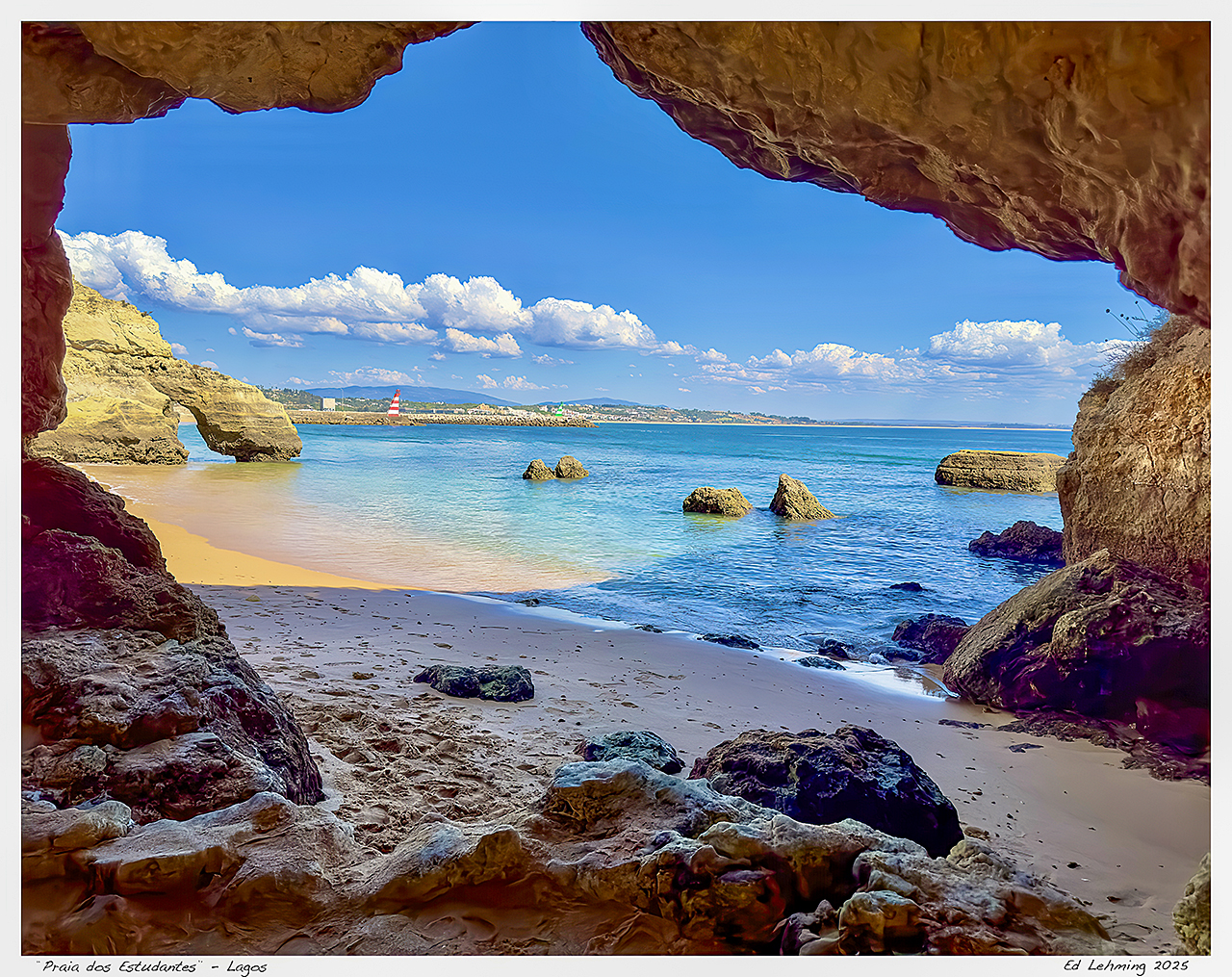
“In the quiet shelter of stone and sea, solitude becomes a companion—steady, vast, and deeply kind.” – Ed Lehming
This photo is a bit of a gem for me. Taken on vacation last September in Lagos, Portugal, on Praia dos Estudantes, the Beach of the Students. Usually a very busy place, but by late September, the air and sea have cooled and it’s less busy. It was still busy that day, but I had a brief moment, a quick snippet to myself where nobody was on the beach as I snapped the shot. I was given this fortunate moment, being able to capture this scene with no distractions. You can see footprints all over the sand as a testimony to activity, but I was offered this view for a few seconds.
I had no intention of being here, nor was I even aware that this visit existed until much later when I looked up the location. No, I had set out late that morning with the intention of spending some quiet time wandering the local seashore and exploring the harbor. It was mere chance and curiosity that put me here at this time.
I’d been exploring for about two hours, walking some 5-6 kilometers along the shore, through the harbor and towards the rocky bluffs that define the Portuguese coastline of the Algarve. I was hoping for some photos of the rocks and the seashore and came to realize that there are beaches among these tall rocks, including this one. There were lots of people on the beach and many tourists, like me, exploring. The beaches are all connected by tunnels or caves that run between the rocks. Some are manmade and some are natural. As I went from tunnel to tunnel, I took note of the view this one offered and determined to come back for a photo. It was sheer luck, and what started out as a walk seeking calm beauty offered me exactly that, but only for this brief moment, which I will cherish for a long time.
iPhone 14 Pro Max
Main Camera — 24 mm
1/5376 sec, ƒ/1.78 ISO 100
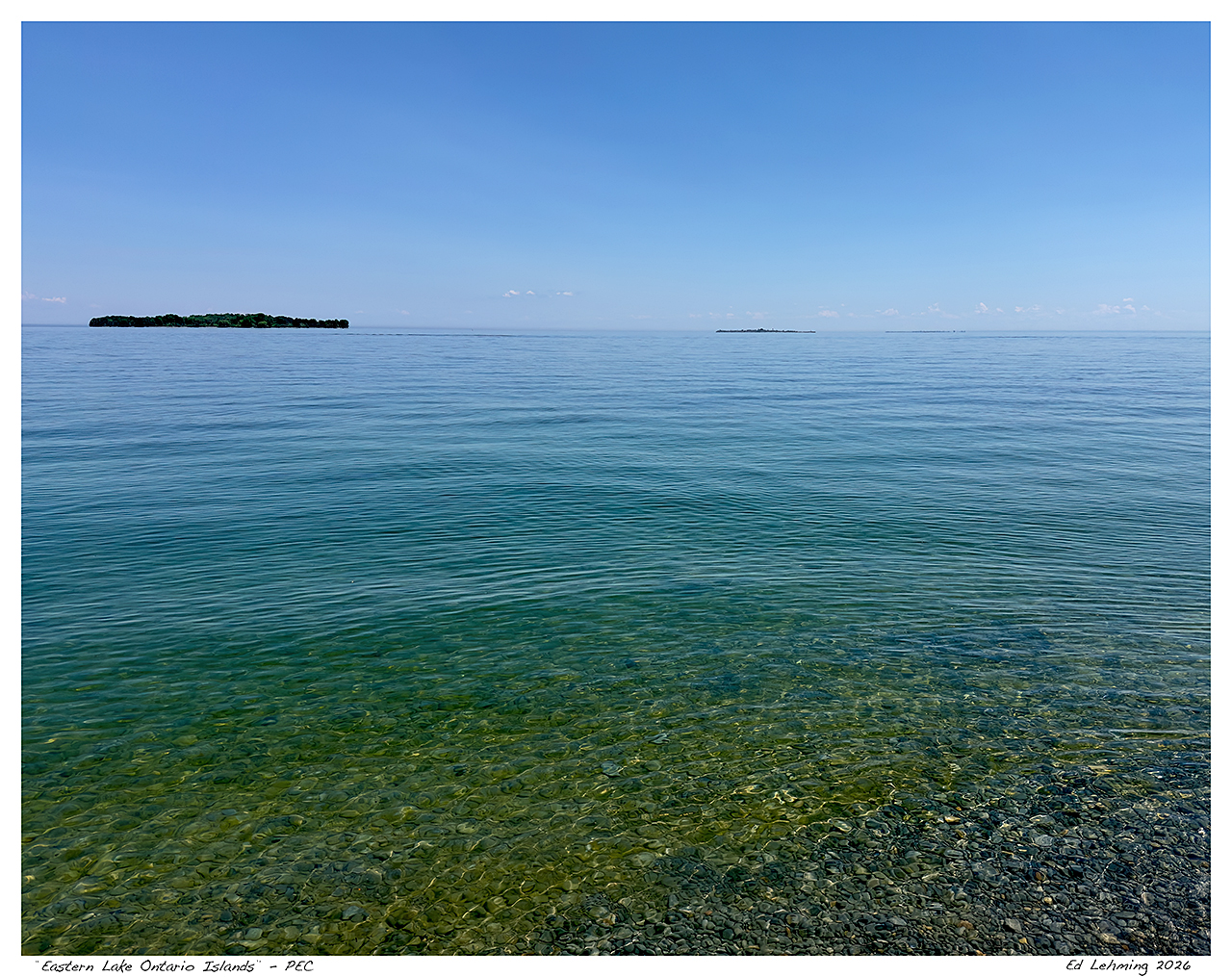
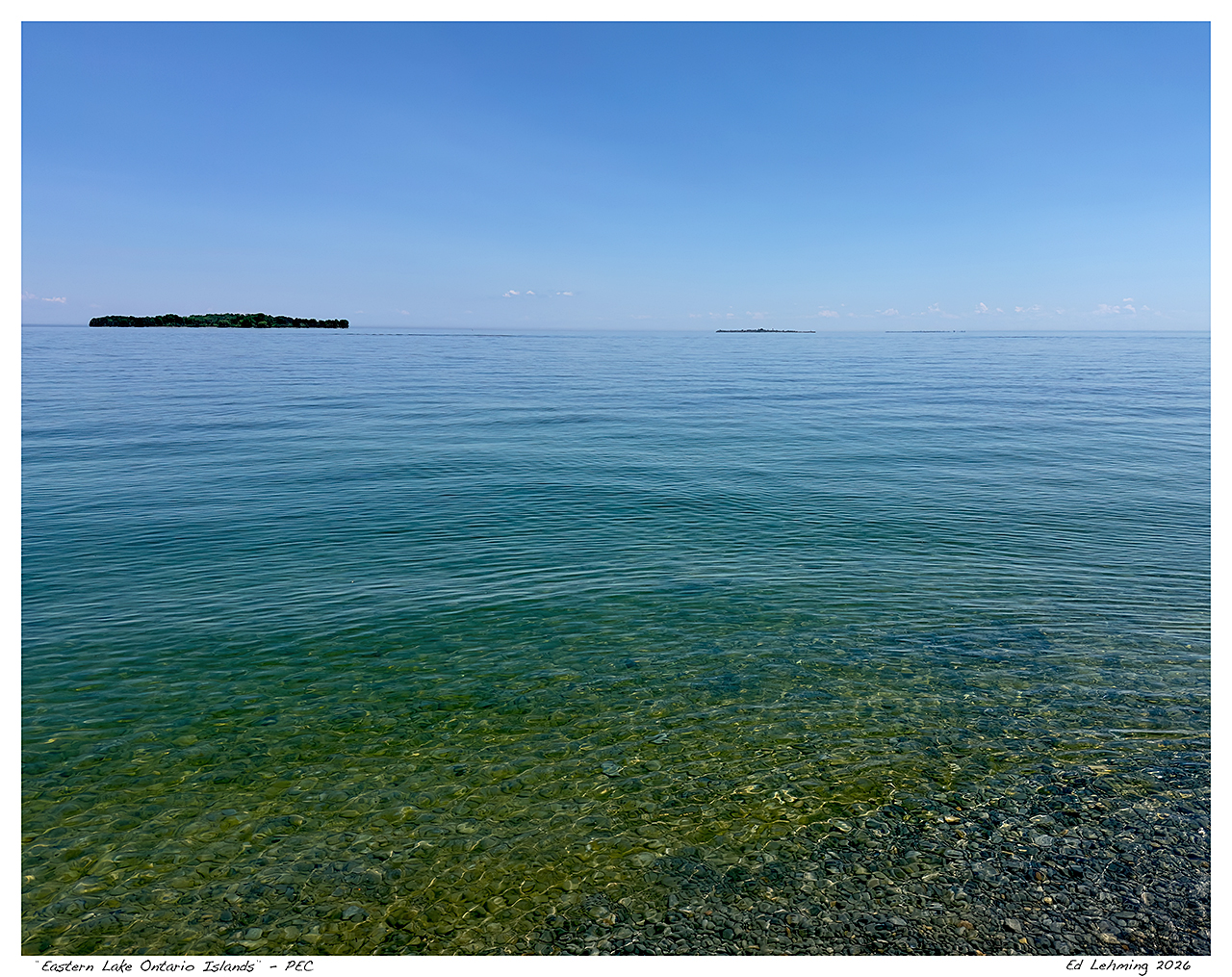
“The water stretches out like a quiet infinity, reminding me how small I am and how endless the world can feel.” – Ed Lehming
Above is a photo of three islands at the east end of Lake Ontario. Despite the depth of the lake, geology plays its part and produces three low-lying islands that are all visible on a clear day from the southeasternmost point of Prince Edward County. From left to right, they are named Timber Island, False Duck Island, and Main Duck Island, and they remind me just how vast Lake Ontario is. Main Duck Island is approximately 12–14 km (7–9 miles) across open Lake Ontario and appears as a low shape in the distance behind False Duck Island.
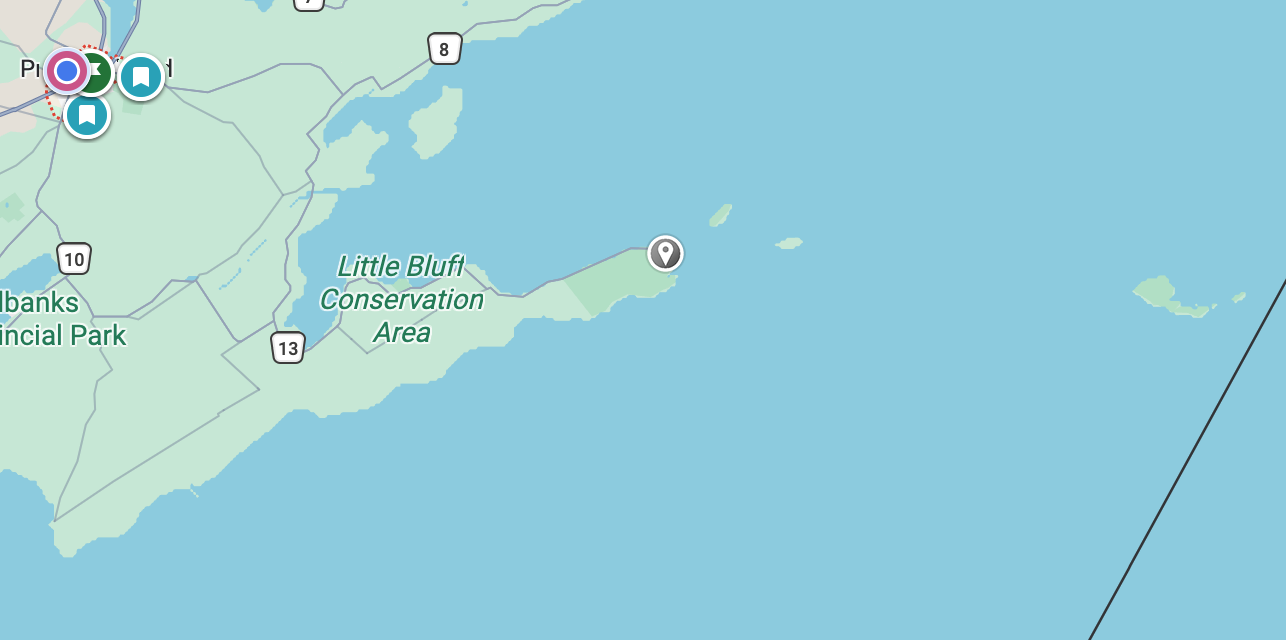
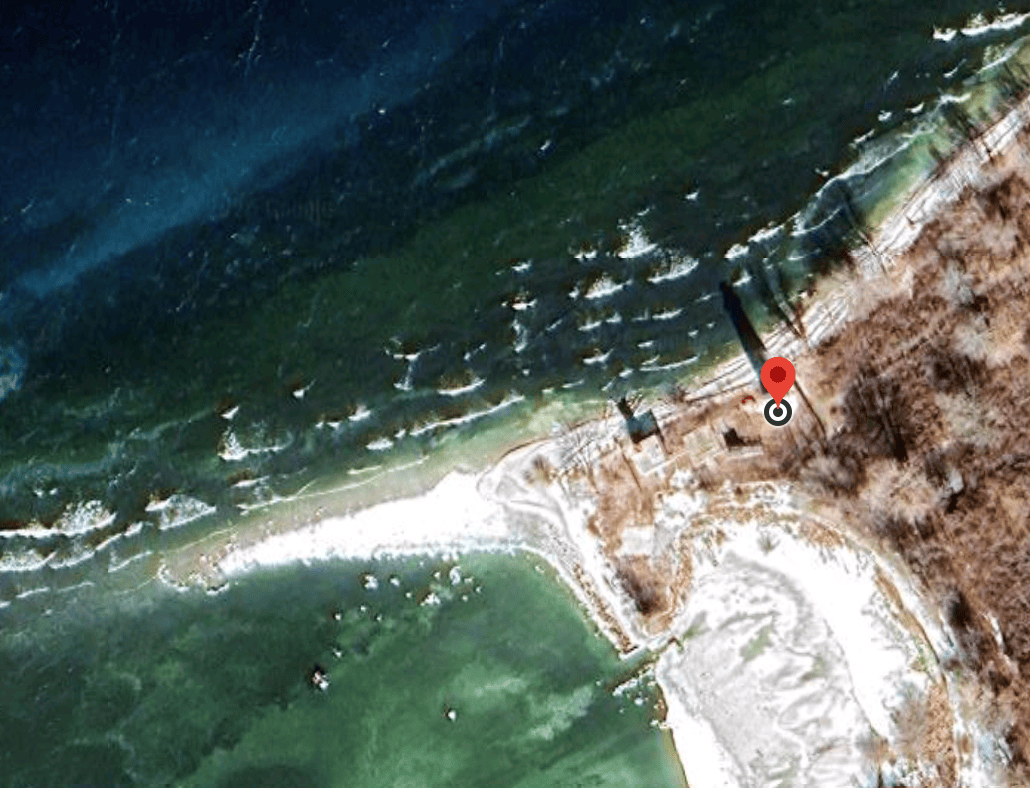
None of the islands are inhabited but do have abandoned buildings from many years ago. Given their low profile, they all have lighthouses. I have yet to visit the islands, but they have a long and colorful history, given their proximity to the USA border. They used to be staging areas for “rum runners” during Prohibition. I’ll have to post another article about them in the future, but I need to do some more research.
But back to the photo. I’ve stood on this shore many times, gazing across the water and the islands as they fade into the horizon. My grandsons always ask about them: what are they called, how far away are they, does anybody live there? They are hard to miss and they really add a sense of scale to the vast body of water, and this is just a small part of it. On clear days, if I look directly south (further to the right), I can see steam billowing up from the cooling towers of the Nine Mile Creek Nuclear Station just east of Oswego, New York (NY).
Interestingly, given the current politicizing of the very name of Lake Ontario, the Town of Oswego, NY, is the home of Fort Ontario, which dates back to the American Revolution and at which one of my ancestors served as a member of the Loyalist Butler’s Rangers. History, geography, and ancestry all merge for me in this small yet vast part of the world.
iPhone 17 Pro Max
Main Camera — 24 mm
1/6494 sec, ƒ/1.78 ISO 64


Recent Comments