“Among the grand landscapes and broad vistas lie the simple and commonplace, which combined, make up those vast scenes. Often overlooked, they are beautiful in and of themselves.” – Ed Lehming
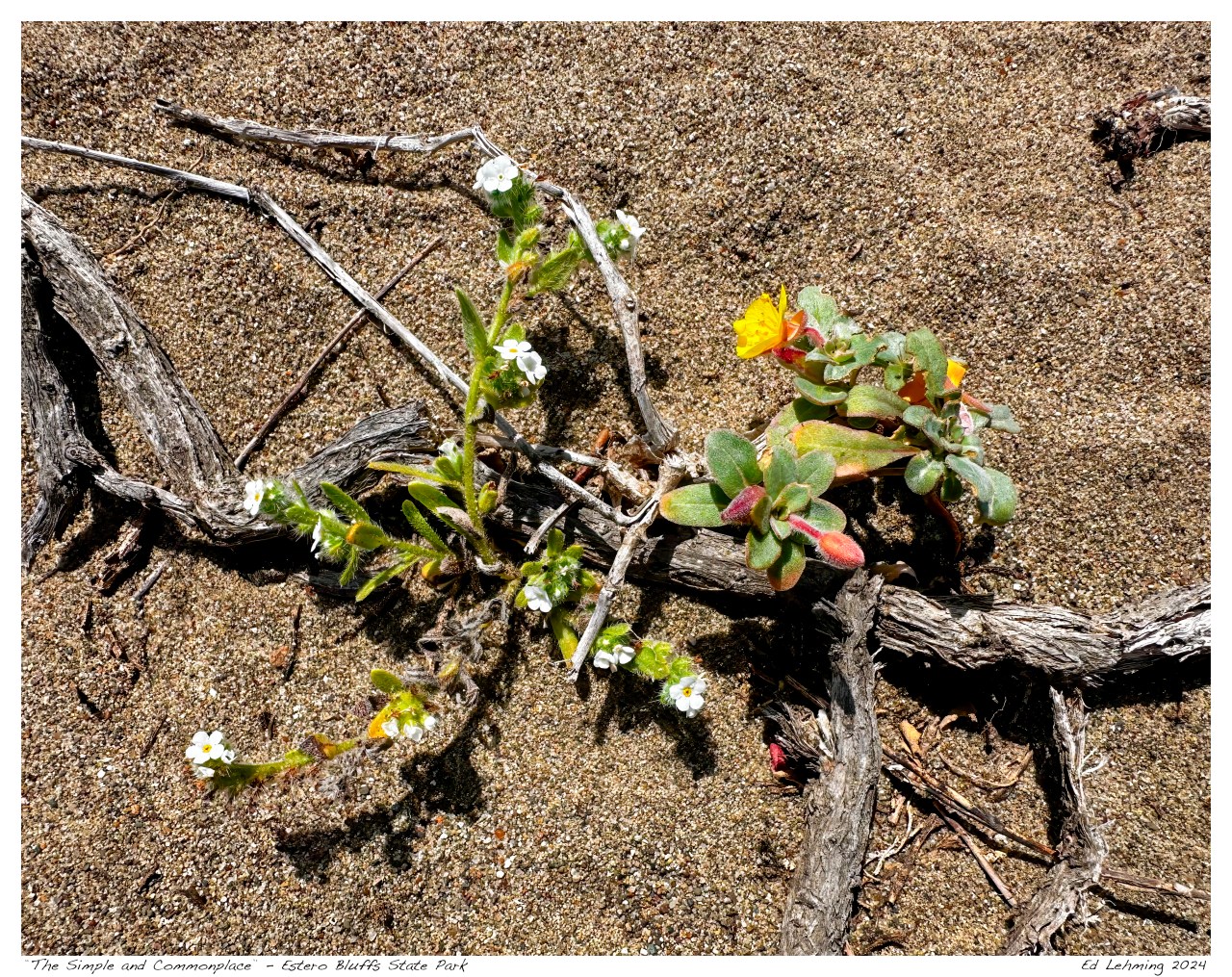
Something that I am ever conscious of, and often observing, is the humble scenes like this; a small cluster of plants creating something beautiful in their simplicity. This composition of the yellow flowered Beach Evening Primrose and the white Lappula Squarrosa immediately caught my attention as I strolled along the shoreline at Estero Bluffs State Park.
It’s these micro-scenes that I am reminded make up the larger landscapes that are more generally photographed. Looking at small compositions like this is very satisfying to me and allows me to take the time to recall when I and why I made the image to start with.
I have been very deliberate over the years to acquaint myself with the flora and fauna that I capture in my photographs, and I find great satisfaction in conducting research and expanding my knowledge about them. What truly captivated me in this instance was the abundance of small wildflowers thriving in this harsh environment. As evident from the image, the predominant features are the dry and tough roots, intertwined with resilient grasses that adorn the summits of these cliffs. Furthermore, the landscape is constantly battered by the wind and sprayed with salt from the ocean just a few meters below these rugged bluffs.
These sturdy, low-lying plants have evolved to withstand the relentless winds that sweep across this landscape, showcasing their resilience and adaptability. Their vibrant hues create a striking contrast against the predominantly yellow and parched grassland, infusing the environment with life and color. As I immerse myself in the natural world, I continue to deepen my understanding of the intricate balance and purpose that governs every element within this expansive ecosystem, reaffirming the significance of every living being within its own microcosm of the greater world.
I made this image with that in mind. There was a profound sense of connectedness, as if every element in the scene was intricately woven together. The composition unfolded effortlessly, exuding a sense of harmony and balance that felt remarkably natural. It’s important to me to appreciate as much of the environment in which I’m photographing as possible. It invokes the same connectedness for me as I witness when photographing them.
iPhone 14 Pro Max back triple camera 24 mm
1/2304 sec, f/2.2, ISO 50

“Just around the corner, just out of sight, wonders present themselves, but you have to have the courage to look beyond what appear as barriers, always anticipating something wonderful.” – Ed Lehming
That was the feeling the day I made this photo. This stretch of beach was just beyond an outcropping of rock. The tide was on its way in, and every second wave raised the water level. But I just had to see what lay beyond, so I carefully timed my passage and stepped around the corner to find this scene.
I’m not saying to throw caution to the wind. Nature can be very unforgiving and I’ve found myself in a few “interesting” situations. I always try to stay cognisant of my surroundings but photography can be almost hypnotic as I fall “into the moment”, totally engrossed in what I am witnessing. And while I thoroughly enjoyed the beautiful vista, I also kept an eye open behind me, to make sure I still had safe passage back the way I came. As you may see from the photo, while lovely, it would be an unpleasant climb out or a knee deep walk through the surf in my only pair of shoes. I only lingered a while, capturing this scene, and then ducking back around to the main beach.
What really stood out to me is the strong contrast between the bright stone and the dark, looming clouds over the ocean. It’s one of those moments when elements come together to make a photo memorable. I enjoy reviewing these images, because details emerge that were not consciously noticeable. For instance, I just finished talking about the rising tide. The evidence of the effects of the tide shoes in the image; you can clearly see the surf line on the beach and it had come in quite far just prior to me making this shot.
I was just talking with a fellow artist this past weekend about this subconscious sense of a good image, or painting. At a different level, I often “see” a scene as something special as I compose my shots. I’m rarely aware of just “what” makes it special, in the moment, I simply sense it. That “what” does not always materialize immediately, but the more time I spend with these images the more I begin to be able to extract it and become more aware of the elements that come together to make it happen. I’ve even had images that sat for years before I revisited them, and with fresh eyes, am able to draw those elements out, because they were always there, just not obvious at first.
I’d encourage my fellow photographers, travellers, dreamers, and adventurers to step beyond and consider not just the scene presented but why it resonates so strongly. I find it makes for stronger and longer lasting memories.
iPhone 14 Pro Max back triple camera 14mm
1/6897 sec, f/2.2, ISO 50

“Bounded by ancient stone and lush green brush, the sea ebbs and flows in a timeless rhythm, advancing forward and drawing the land into itself.” – Ed Lehming
On the Pacific coast, just below the town of Aliva Beach is a public access spot called Avila Sea Caves. The parking area is just behind where this image was made. The draw of this place is primarily Smuggler’s cave, a large sea cave high on the bluff above the ocean. While the sea cave itself was interesting, it was so marked up with graffiti that it lost its appeal to me. I did make several photos but they really are not worth sharing here.
What did capture my attention was the rocky shore, covered with deep green foliage that seems to flow into the ocean just below the rocky bluff that separates them. Though lush looking, the vegetation is quite dry and prickly, filled with large groves of poison oak and hemlock. The scrubby vegetation stands about chest level on the average person and is so tightly interwoven that passage is nearly impossible. The only access is by a series of tight trails that wind towards access points to the shore.
In the distance, you can see the Avila Pier, originally built in 1908. The first pier in Avila, there were three at one point, was the Hartford Pier, built in 1873 by John Harford to facilitate shipping and trading along the pacific coast. This trade was to become an important part of Avila Beach’s economy, as the piers served to deliver oil to awaiting tankers. I keep forgetting just how important oil was to California at one point. I was surprised to find that this tiny resort town was at one point the largest crude oil shipping port in the world. Remnants of this legacy remain today. In fact, atop the hill to the right of the photo are the remnants many large oil tanks. The access road is blocked to traffic and is posted as belonging to and oil company.
Which gets me back to the timeless ebb and flow of the ocean, having borne witness to all these events, boom times and bust times, relentlessly caressing the shore. I always find it interesting when I research the locations where I photograph. I would never have expected to find such a rich history in this small beach town, on the shores of the mighty Pacific. Were it not for that piece of pier jutting out, I would think I was on a vast and unspoiled shore.
iPhone 14 Pro Max back triple camera 24mm
1/2809 sec, f/1.78, ISO 80
“How I see things, it’s important to me, often it’s a struggle to communicate that.” – Ed Lehming
On a recent trip to California’s Central Coast, we stayed a night in Avila Beach, a small and quiet beach community. It’s very picturesque and has an interesting history, which I may touch on in a future post.
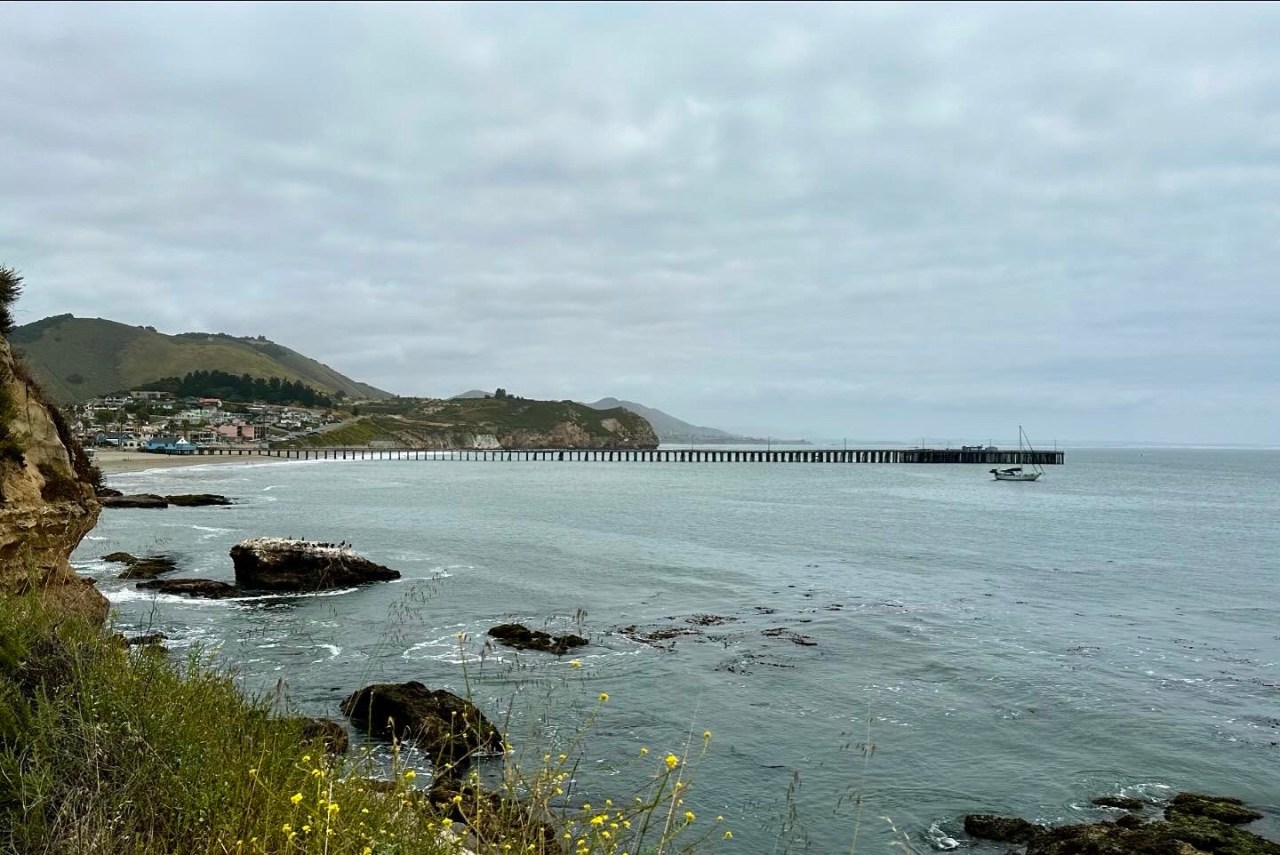
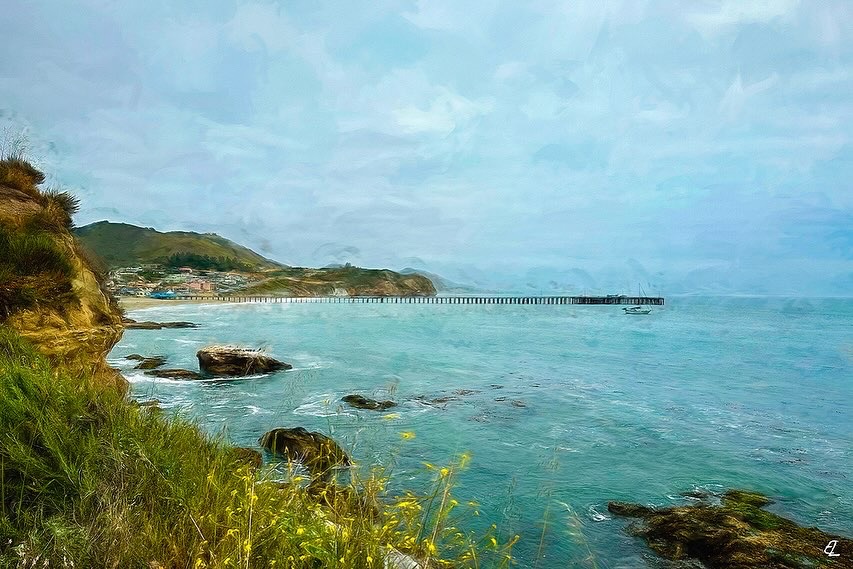
The purpose of this post, is to share how I have been using AI tools, for several years now, to assist me creatively. A recent example of my use of editing tools is the two images above. The top image is a shot from my camera, carefully composed to include the elements that I saw and what first drew me to this scene. I wanted to show the rugged coastline, the beach, and the pier, with a splash of colour for the wildflowers in the foreground. It was a fairly pleasing image but I was also faced with a bit of dull cloud cover and the image did not do justice to what I saw.
Further, as I edited the original image, the “feel” of what I saw never materialized. If I pushed the colour settings, light, and vibrance, it began to look artificial. Yes, it was brighter and more colourful, but it did not feel true to what I saw. What I often do with images like this, rather than discard them, is to use a Photoshop Plug-In Called Topaz Impressions (now Topaz Studio 2), which offers me a series of “looks”. My prefered filters are the Impressionist brushes. This tool allows me to enhance my photo by overlaying AI driven brush effects. I use this tool unabashedly, because in my mind, it’s simply modifying an existing photo till the outcome is closer to what I envisioned when I made the photo.
There may be many traditionalists out there that will disagree, and that is fine by me. I have chosen to create art rather than simply documenting a scene. It’s pleasing to me, and produces something that I am proud to hang on my wall and enjoy. If I could paint well, I would use my images to inform my paintings, but I’m not quite there yet, and may never be. So, I get the outcome that I want, something that I can enjoy, and something that I can produce without spending hours agonizing over. It’s kind of like talking to an artist and telling them that what they painted is not what it looked like, unless the are photo-realists. Be patient, I’m talking in generalities here.
Paintings, from my experience, are all about what the artist sees, or imagines, communicated in the way that is pleasing to them. It’s the same for me, except I’m using a computer rather than a brush. I’m sure the same conversation happened when photography was developed. It became easy for the average person to create an image, simply by pushing a button.
iPhone 14 Pro Max back triple camera 24mm
1/13699 sec, f/1.78, ISO 80, f/1.78, ISO 80

“Even the most mundane and commonplace things that most take for granted are seen as beautiful by those who don’t have them.” – Ed Lehming
I love California poppies. I think, mostly because they don’t grow where I live. I expect to people who have them everywhere, they may seem as common as dandelions are to me. One of the things I love about travelling is finding new things and I do have an affinity for flowers.
This cluster of poppies was growing on the edge of the bluff that overhangs Moonstone Beach. At the tp of this bluff are many local plants, suited to the ocean shore environment. I found many of these plants to be dry and prickly, probably designed to protect them from the constant wind and salt spray along the Pacific shore. Among these plants are endless tangles of low scrub with a tightly woven canopy, providing excellent shelter for the numerous rabbits and California ground squirrels, to name but two thatI saw.
I selected a wide aperture in an attempt to isolate the poppies from the beach below. As with many of my photos, I did not notice the details of the beautiful wild grasses woven between the poppies until I started editing it. It may not be an eye catcher, thought it was to me at the time, but it’s a single moment in a series of wonderful memories of that day and I’m happy to have it.
Nikon D800
Tamron SP 70-200mm f/2.8 Di VC USD @ 200mm
1/4 sec, f/25, ISO 400
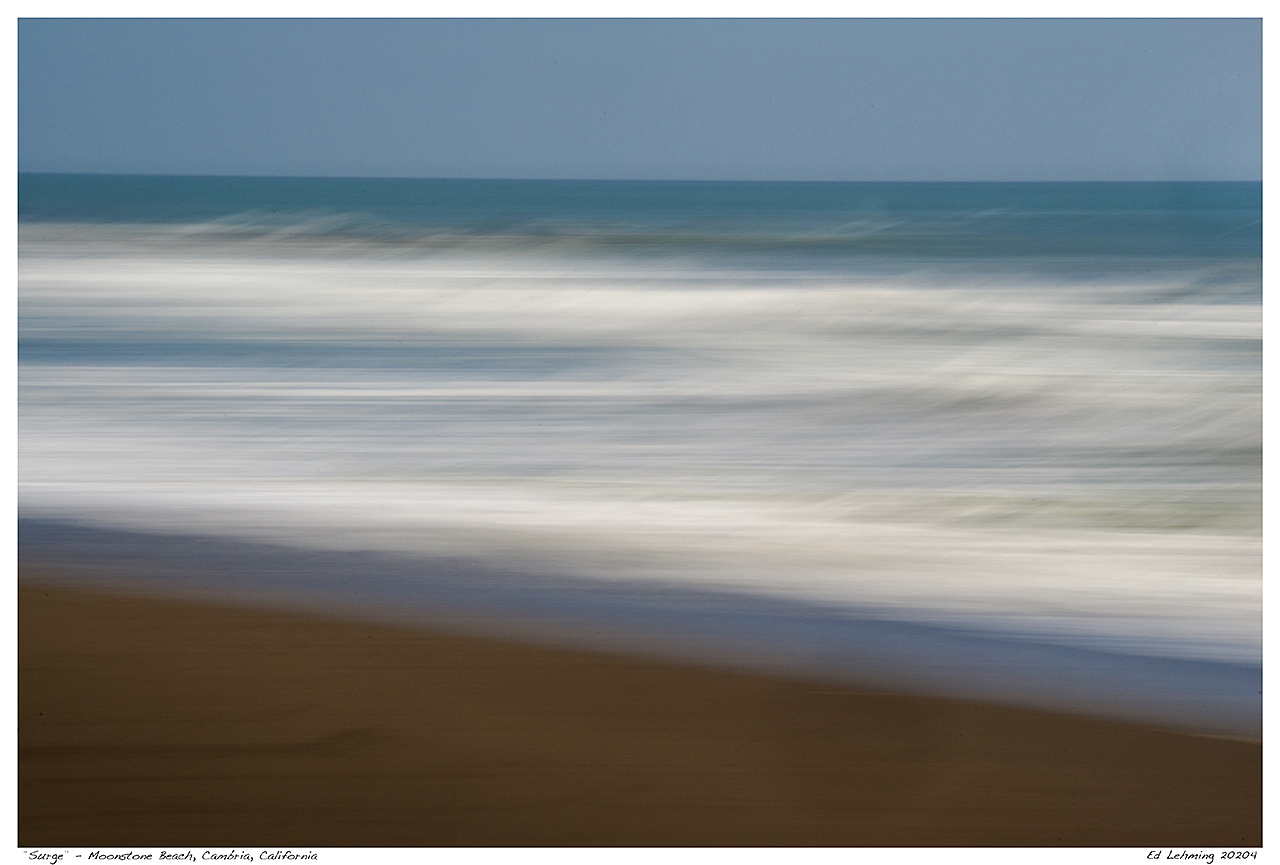
“Motion within motion. It is amazing what a difference a slightly different perspective makes. By looking at things differently, new wonders emerge.” – Ed Lehming
I almost named this image “Motion within Motion”, but what struck me first, and how I generally name my images, is the impression I first get from the image, and that impression was “surge”.
It was not till I spent a bit more time with the image, something I tend to do a lot; simple self-indulgence in a memory captured as an image, that I saw the impact of moving my camera horizontally as the waves crashed to shore. There was a compounding of the motion that transformed it into something more.
The technique I used is called Intentional Camera Movement (ICM); something I have tended to do a lot of in forest scenes with strong vertical lines, and only occasionally, horizontally, to get something a bit more “artsy”. I always have my camera set to 1/4 exposure for this, as that I where I find I get my best images and it’s the speed I can comfortably tilt my camera up and down constantly and relatively straight. My next decision, is the aperture and ISO. Forgive me non-photographers for getting a bit technical here. ISO is the sensor sensitivity to light and aperture is how narrow the camera aperture is. The narrower the aperture, the less light gets to the sensor and the more in-focus the overall image is (depth of field).
Now that I’ve covered that aside, a crucial factor is that I can correctly expose the image. At a 1/4 sec shutter speed, a LOT of light enters the camera, a big problem on sunny days where I can’t compensate for the exposure through ISO and aperture settings. At some point, there is no way of lowering my exposure enough through camera settings to prevent a blown-out image and I have to resort to a neutral density (ND) filter, which is a filter of varying shades of grey that acts like sun glasses for my camera
At one point, I carried a series of ND filters in my kit, till I discovered a Circular Variable Density ND filter that I could darken and brighten just by twisting it (one filter rather than 3 or 4). On the day I made this image, I had it with me in my camera bag and simply began to experiment with different levels of filtering. I did that by adjusting the filter darker and darker and reviewing my images on my camera display. Once I have what I want, I begin to shoot another series of images to get the motion right. In the end, this image took about 20 attempts to get everything to fall in place and produce the image I was after, that and a touch of post-editing. This was not a point and shoot day where I could take out my iPhone and get the shot in one go. Which is a limitation I noted on my previous post, yesterday. This was technical moment to get the image I envisioned. One final point on this technique is that you never get the same thing twice and each image is a surprise.
There you have it, a far more technical post than I had intended, but I think it was important to describe the process so that you know what you are looking at and how I got it..
Nikon D800
Tamron SP 70-200mm f/2.8 Di VC USD @ 200mm
1/4 sec, f/25, ISO 400
K&F Concept Variable ND8-2000 @ 1200

“It’s a strange thing, that an ending brings such joy. Sunsets draw people to the waters edge. It’s almost a time of reverence. Such beauty, different every day, and the calmness that ensues as light fades and bathes the worth in gold.” – Ed Lehming
I have to say, my visit to Moonstone Beach last month was an absolute pleasure. I have not been spending nearly enough time outdoors with my camera and being able to spend time in such a beautiful place was so refreshing.
I’m not sure we we often fall away from the things we love to do. For me, it was several factors, primary among those factors, I think, was selling our home of 30 years and moving to a new house we had purchased nearly four years ago. It simply took up a lot of time maintaining two properties coupled with the 2 hour drive back and forth.
I’ve been more deliberate about getting outdoors and making photos but the passion and pleasure of it, as well as writing about had waned a bit. Being in these beautiful places and being able to document them has re-inspired me, and I’m hoping to continue with this.
So back to my quote; I see this ending of the day as a beginning for me. Of all the photos I made during this recent trip, this one really brought thing back to life for me. It was a bit of a challenging shot for me, as I’ve been getting lazy with my iPhone that seems to make amazing photos all the time with it’s great dynamic range and Ai assisted processing. It’s hard to get a bad shot. But, It is also limiting in my ability to compose shots and managed depth of field and lighting that way I would want. An yes, I do have some control, over this, but not as much as I would like. On this trip, I took all my Nikon gear with me and was determined to get back to basics.
I spent most of the day walking the beach and photographing the waves crashing in and the local flora. I may still share these shots, but they are of more of a self-satisfying nature. At the end of the day, I made sure to be ready for the sunset, all my high end gear set up and at the ready. As the moment apprached, I took several shots with my Nikon and then a few with my iPhone. The iPhone won hands down on this shot with wide dynamic range, but the Nikon had far better clarity overall. However, to get an image that was representative of what I saw and how I saw it, is still requiring quite a bit of editing and It’s still not what I was hoping for. So, here’s the iPhone image.
I would be interested in hearing from my fellow photographers if this technology contrast is something you are experiencing as well. Rest assured, I’m not hanging up the DSLR any time soon!
iPhone 14 Pro Max back triple camera 24 mm
1/1212 sec, f/1.78, ISO 80

“The constant wonder of natural things is that the closer you look, the more wonderful details emerge” – Ed Lehming
In my previous post I mentioned the unique character of the sand at Cambria’s Moonstone Beach and the fact that many people sat on the beach just sifting through the pebbles and setting “treasures” aside.
It turns out, that several California beaches have this name. Primarily due to a form of feldspar among the beach pebbles which is semi transparent and resembles what many considered moon stone. It was highly sought after as a semi precious stone.
The image above is a quick image I made of a handful of the beach pebbles. It’s quite a profile of local minerals: quite a bit of jasper, agate, and also quartzite. I can see why this beach was so popular with collectors of stones and that a lot of the current day collectors gravitated towards these particular varieties. The jasper, polished to a fine lustre, reminded me of the cacao beans we saw in Mexico, or red kidney beans. There was such a variety of shapes and sizes. The other thing that stood out was just how finely polished they were. Even dry, they still held their sheen.
I, of course, followed suit, and sat among the pebbles looking for specimens that I fancied and would take home with me as a souvenir of this wonderful place. It was such a simple act, just sitting there, focused on the pebbles and listening to the pounding surf. It was quite magical and evoked childhood memories of taking joy in a simple acts.
iPhone 14 Pro Max back triple camera 13 mm
1/2212 sec, f/2.2, ISO 50
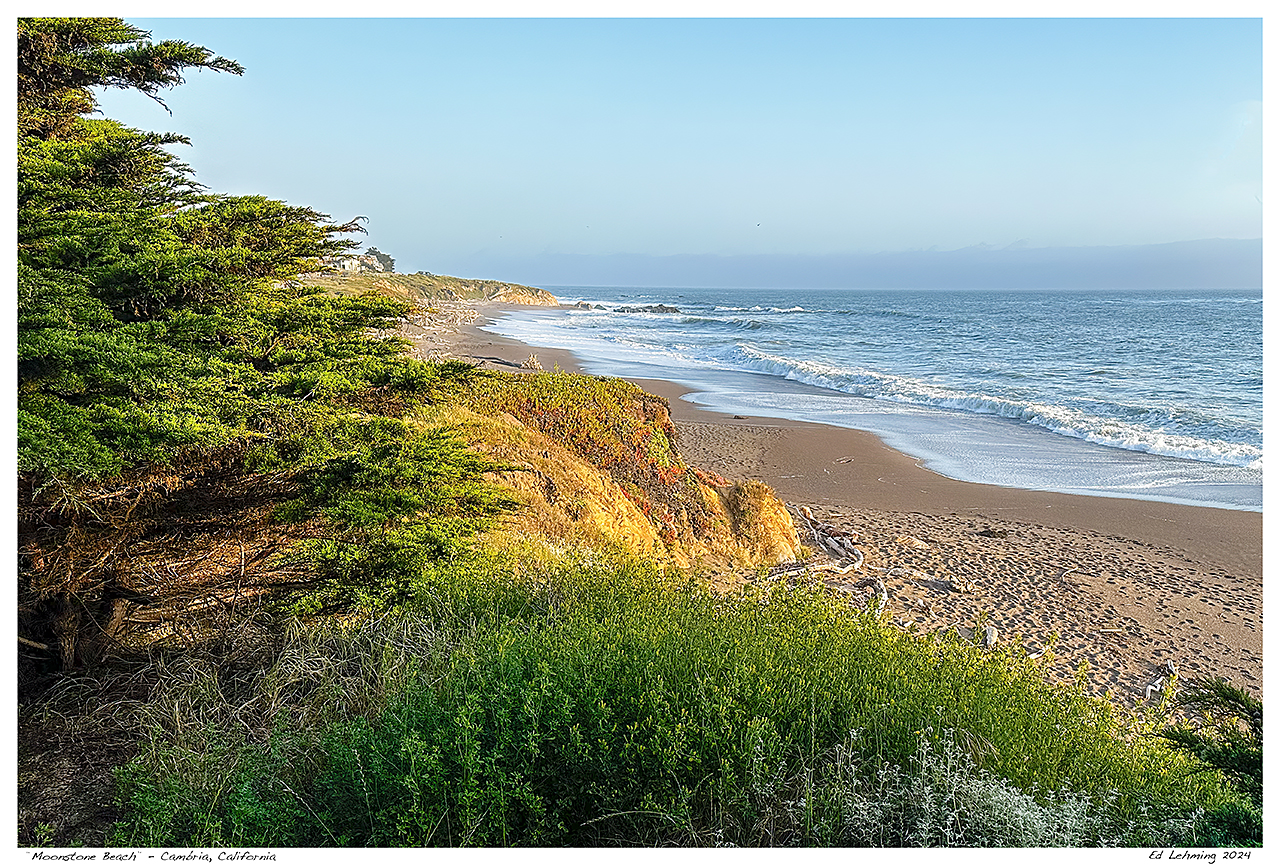
“I feel at my best near or on water. The ocean can be both serene and energetic at the same time and I feel at peace with this seeming contradiction. Be it pounding surf or gentle ripples, the energy of water flows to my core” – Ed Lehming
I’m sticking with the Central Coast of California for a while. It’s a region that is relatively new to me. It has its own “feel”. It’s between two large urban centres, namely, Los Angeles to the South and San Francisco to the north. Between these two cities lie miles and miles of rugged shoreline, filled with their own unique flora and fauna.
We had hoped to drive the Coast Highway (Highway 1), but as has happened many times in the past, parts of it had literally fallen into the ocean. If you have ever driven it, you would know why. It’s and old highway built into the loose sandstone of the central California coast. The Pacific shore is frequently battered by big storms that, over time, erode the bedrock beneath the highway.
In places, like Cambria, the shoreline is a series of short bluffs and wildflower meadows, with the occasional small beach. Moonstone beach, pictured here is typical of this shoreline. The land is filled with tough and dry looking vegetation and an incredible diversity of low lying flowering plants as well as some tall Cypess trees. Cambria has done an excellent job of providing access to the ocean vistas be means of a beautiful walkway that runs along the shoreline. There are also many access points where you can get down to the beach itself.
From this vantage point, the beach looks like a typical sand beach, but on closer observation, this beach is made up of small polished stones that feel like ball bearings when you walk on them. A difficult and unexpected walk to say the least. This fine gravel transitions into larger sea-polished stones as you get further up shore. The colours are magnificent and I saw many people just sitting on the beach sorting and collecting the. All the while, the surf that created this unique beach continued to pound in relentlessly.
I walked up and down this beach simply enjoying the scenes presented to me, including some wonderful tial pools, filled with life of their own.
iPhone 14 Pro Max back triple camera 24mm
1/1212 sec, f/1.78, ISO 80

“There are details in the darkness, if we just care to see” – Ed Lehming
Here I am, back at blogging. It’s been a long time and there have been many changes along my journey through life and I felt that now was an opportune time to get back into sharing my images and thoughts about them.
To start, I wanted to share an image I made last week, while standing above a beach near Cambria, California. We had stayed overnight in the town itself and were heading to visit Hearst Castle. On the way, we stopped at Ragged Point, California, near the Piedras Blancas Light Station, to see the huge colony of Elephant seals who use this beach as a birthing ground. I’ll share more about that experience in a future post.
As I was approaching the lookout, I happened upon this large crow perched on a post above the beach. It was the perfect shot and it just sat there, giving me lots of time to compose the shot. When I got home and began to process the image I was astounded by the amount of detail that emerged from the black plumage and the way the light played on its wings. It made me even more aware of my photographic process, whereby I will often photograph things that I find interesting bu, at the time, am not fully aware of why they strike me that way. THis is a great example of that. What at first appears as a plain black bird is filled with beautiful textures and light catches. I spend longer than I expected processing the image, simply enjoying the process and the structures that emerged as I spent more time with the image.
It may not appeal to everybody, but it has become one of my favourites, a photo I will return to time and again, to simply observe.
The title of the image, simply came to me without much though, as well as the quote I associated with it. There is a deeper significance to me as well.
Back in January, I awoke one morning with vision problems in my right eye. I did not think much of it at the time but as the week continued, it did not improve and I went to my eye doctor to see what was going on. It turns out that I had Non-Arteritic Ischemic Optical Neuropathy (NAION for short). Basically an eye-stroke that caused permanent partial blindness in my right eye. The cause remains unknown and I don’t have any of the typical conditions that cause it. Needless to say, as a photographer this was of great concern till I realized that I use my left eye when photographing and my brain fills in the blanks pretty well when I’m just looking at things, working, or editing photos.
What it also did was rekindle the desire to take in as much of the visual world as possible and make me truly grateful for the vision that I do have.
So, the title quote has a bit more significance to me. There are details, indeed, beauty, in the darkness, we just need to keep looking for it.
Nikon D800
Tamron SP 70-200mm f/2.8 Di VC USD @ 200mm
1/250 sec, f/8, ISO 400
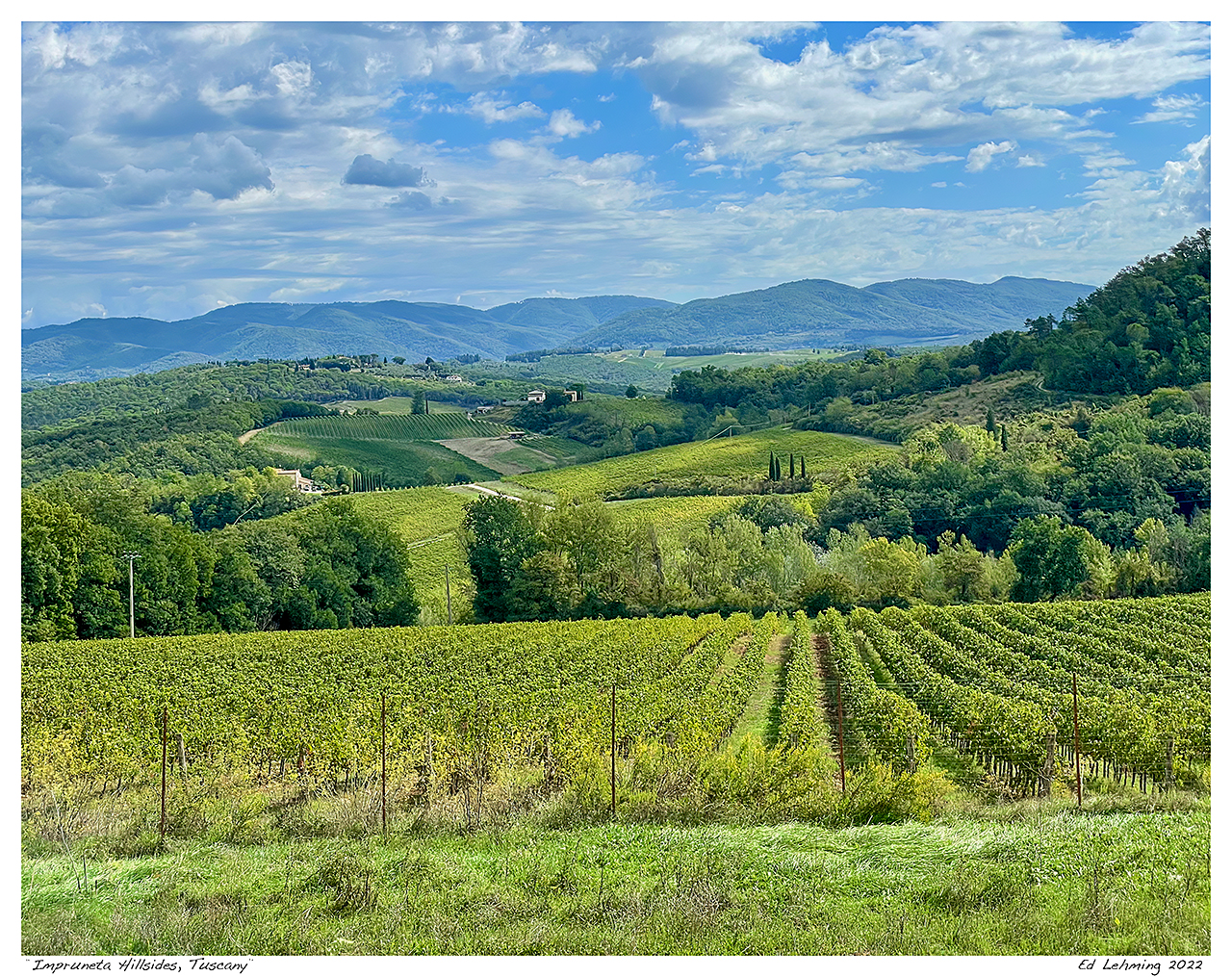
“Hillsides filled with vineyards and olive groves. Tuscany was just as I had imagined it, a sheer pleasure for the senses.” – Ed Lehming
The quote for the above photo is quite simple and to the point. For years I have dreamt of visiting Italy’s Tuscany region. I’ve seen photos online and in magazines and movies. It seemed like a paradise; a place where time stood still and you could almost hear the whispers of the past echoing through the hillsides.
We finally had our opportunity last September, just as the world began to travel again in a post-COVID era. The trip had been planned for years before, but never happened, and then the world came to a screeching halt, and nobody travelled. During this time, we were determined that we’d make this our first destination. With our travel companions, and cousins, we planned what we would do in our two week vacation. Firenze (Florence) and the Tuscany region where it is situated were first on the agenda.
One of my “bucket list” items was to ride a Vespa through Tuscany, that dream happened and our three hour ride through the countryside south of Firenze provided me many opportunities to stop and enjoy the scenery, and capture some of those moments with my camera.
One such occasion resulted in this photo, looking at the rolling hills just southwest of the town of Impruneta, in the heart of the Chianti region. The view was just as I had imagined it and this image brings me back to the moment I made it. The region is filled with rolling hills, forested valleys, vineyards, olive groves, and quaint villages where time seems to stand still. Seeing it, unobscured and close up from our Vespa was simply breathtaking and a memory that I will always cherish.
We ended our Vespa ride at two local wineries where we shared a delicious meal and wine with the people we had met on the tour, learned about the history of the regions, and toured a wonderful Medici estate.
iPhone 12 Pro @ 52 mm
1/2282 sec, f/2.0, ISO 25

“There is a joy and adventure in travel. Each new road opens up new possibilities and adventure. – Ed Lehming
There is something wonderful about discovery, even in seemingly barren places like the interior plains of western Iceland.
I made the photo that inspired this digital painting during a trip to Iceland with my son in October of 2018. The landscape, like much of Iceland, is simply “raw”. We had been driving southward for most of the day and decided to venture inland toward the very visible glaciers northeast of the town of Borgarnes on the east coast.
The landscape is barren and windswept, with the exception of towns and farms along the Hvitá River, which we followed inland. The contrast between lush green farms in the river valley and the jagged lava fields is remarkable. As during much of our travels, the road was covered with a thin layer of snow.
We travelled inland as far as we could go safely. Iceland has many interior roads which are closed to vehicles during winter months and our car rental contract prohibited us from venturing onto these “F” roads. When we got near the vast glacier fields, still some 30 kilometers to the glacier itself we realized that our planned route was not accessible and we’d have to turn back to the way we came. We parked the car for a bit and spent some time enjoying the beauty of this relatively untouched wilderness of blasted rock, ice, and numerous glacial streams that eventually join up to form the Hvitá.
On the way back, we found this great vantage point, where the road ahead just snaked off into the distance. The photo shows a large mound of volcanic rock, a vestige of an ancient volcano, the Hvità valley, and distant lava fields that make up the north face of the valley.
It was a beautiful scene, so vast and untamed that the image does not do it justice. As I stood there making the photo I felt very serene and just drank it all in, letting my vision drift down the road, into the distance.
Somehow, as is often the case with photos, it did not communicate this feeling very well and I was determined to bring life to the image.
Over the past few months I have been playing with the image with several of the brush tools available in Photoshop, trying to pull out some of the textures and colours that I perceived while I stood there. The resulting image was satisfactorily completed yesterday and as I look at it, the feelings I experienced nearly five years ago are flooding back. I thought I’d take this opportunity to share it as well as the story of its creation.
iPhone 7 @ 28 mm
1/2817sec, f/1.8, ISO 20
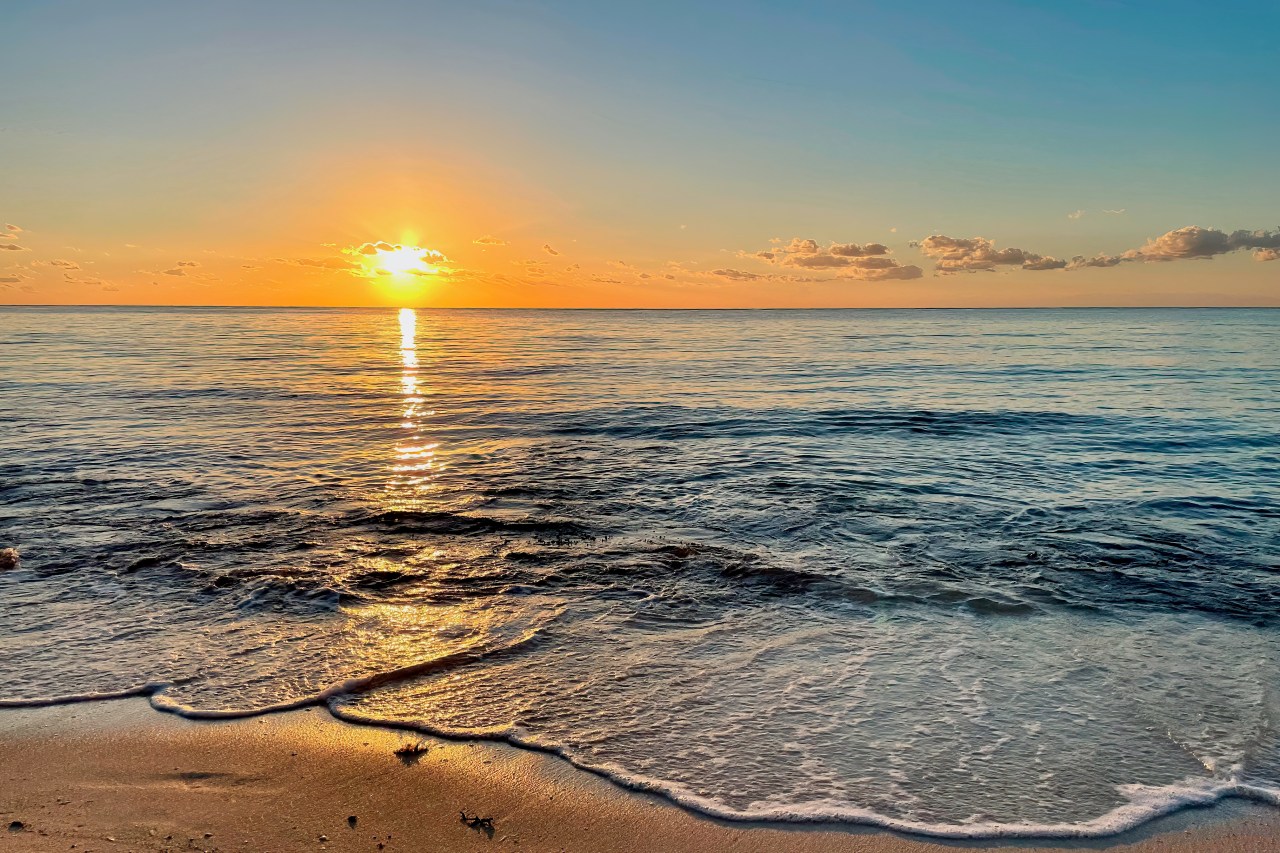
“As in sunset, we are reminded of what came before. The whole day culminating in the setting of the sun. There is peace in this reflection; the beauty and joy of what, essentially, is an ending, reminds us that there is immense joy in pausing to consider all that came before, and the promise that there is a tomorrow.” – Ed Lehming
On January 11, 2023 I said goodbye to my sister Carrie. After a long battle with cancer, she is finally at peace.
I’ve had conflicting emotions on her passing and it has taken me some time to consider these emotions and try to put them to words, without rambling on. On one hand, I know she is at peace and her pain has ended, on the other hand, on the day of her passing, I was on vacation with my family in Cozumel, enjoying beautiful sunshine and making memories.
The sunset image above was made on the day she died. So much like Carrie’s life, slowly fading away and leaving me with beautiful memories and a sense of peace. I had been given the news of her passing earlier that day. On that same evening, I sat on the beach, imagining Carrie sitting beside me, listening to the waves lapping on the shore, the warm sun on our faces, and fully enjoying this moment together, in silence, one final time.
I was able to spend a few days with her in late November, knowing there was no happy ending or miracle to be found. We spent some wonderful days together, recalling shared memories; all the good times we experienced together. Fortunately, during this time, the symptoms of her combined lung and brain cancer did not adversely affect her and we laughed and cried together about the paths our lives had taken.
My mind constantly returns to the exact moment when she called me to let me know she had been diagnosed with colorectal cancer. I was on a hike in the forest when my phone rang and was happy to catch up her in this peaceful place. The news hit me hard, I was simply expecting an idle chat, as we have been in the habit of doing from time to time, catching up on each other’s day to day routine. For her, what began as what she assumed were digestive problems, escalated to something far more severe. Despite this devastating news, she remained positive and intended to take it one day at a time.
She also saved my life, by insisting that I get a colonoscopy, since this type of cancer can be hereditary. Sure enough, a pre-cancerous polyp was discovered and successfully removed.
Her tumour was successfully removed but had already metastasized to her lungs. Next came several rounds of chemotherapy, which made her feel terrible, but she persevered, always expecting a positive outcome. After many treatments, things never really got better.
Knowing there was no turning back, I went visit her in November, not quite knowing what to expect. It turned out to be a great visit for both of us, sharing memories of family times, the time we first met (I was adopted and did not meet her till we were both in our 30’s), discovering all our similar interests and simply building a relationship.
I clearly recall my time with Carrie and other family members, whale watching in Cabo San Lucas a few years back. To be able to share our love of nature and the water while witnessing the humpback whales breaching will always be my fondest memory of my sister. There was such a shared joy in sharing this moment that I can’t find words to define it other than sacred.
When we parted, with many hugs and tears, we both agreed that this was not the time for goodbyes, partly because we did not want to confront that inevitable truth. Rather, we parted with, “Till we see each other again.” Somehow, the thought of that wonderful day made the parting a bit easier for both of us.
I’m sure that I will continue processing my emotions. I feel a deep sense of loss but also joy that I was able to spend even a few years with this precious soul. Her smile, her laugh, and sense of humour will forever be part of me. Carrie and I simply ‘connected’. We shared many of our more personal experiences, found our similarities, and differences, but never questioned our bond.
My dearest Carrie, I will always hold you in my heart, taken far too soon, travelled paths that would have made many of us quit, but loved by all who knew you. Finally, the time has come to say goodbye. I love you, and will continue to love you in my memories, for as long as I am given. Until we meet again, I will see your bright smile in the sunset, hear your laughter in the rustle of the leaves, and feel the warmth of your love in the gentle summer breezes.
Your Brother Bear,
Ed
xoxo
Rest in Peace
Carrie Abbott
Dec 1, 1966 – Jan 11, 2023
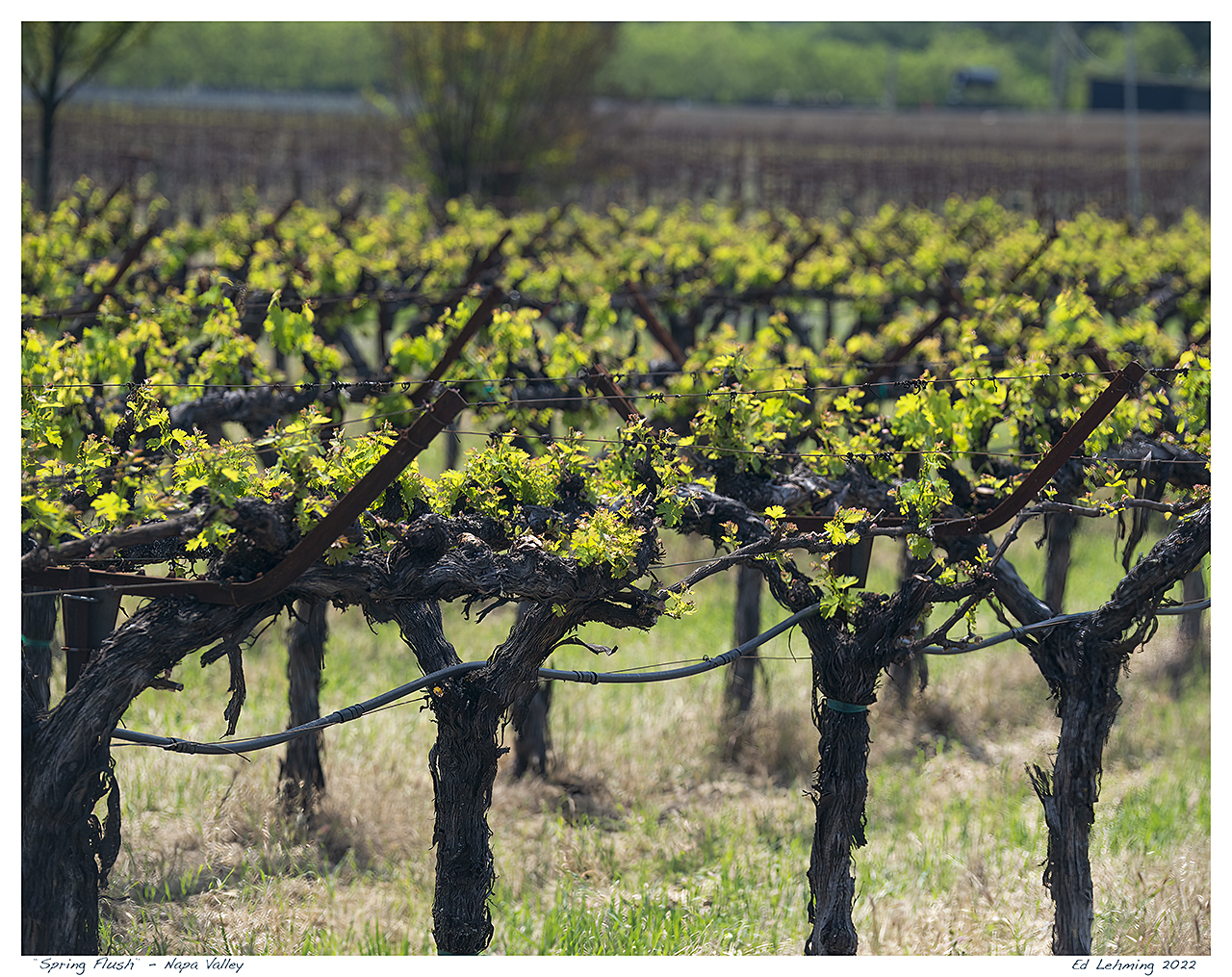
“It all starts with a faint green ‘flush’. As the gnarled old vines awaken once more, the first hint of future bounty appears in the form of delicate clusters of bright green.” – Ed Lehming
Spring in Napa is a glorious time. As the spring air and sunshine warm the valley, the entire valley floor fills with delicate greens as the countless vineyards stir with life.
I especially like the old vines, and the wines they produce. I this image, the vines are at Grgich Estates. I believe these may be Chardonnay vines, but I’m no expert and did not pay attention as I was making the photo.
We spend late morning at this iconic and established vineyard, enjoying a series of tastings of their renowned Chardonnays and Cabernet Sauvignons. It was Miljenko “Mike” Grgić who helped put California on the world wine map with his Chardonnay in the mid-seventies when his Chardonnay took top prize in the Paris Wine Tasting of 1976 . “Mike’ is now 99 years old and is still active in the operation the the winery. The story of the Paris tasting is depicted in the movie Bottle Shock. Grgich was the winemaker at Chateau Montelena at the time but is not in the movie, because he did not want to be part of it. It was not till my first visit here some ten years ago that I discovered that part of the story.
It’s a great piece of Napa’s history and the winery continues to make great wines. It’s always fun to visit wineries where much of the production come right from the immediate property, though Grgish owns some 366 acres of vineyards throughout the valley, which allows for many different taste profiles. It’s a great spot for fine wines and offered me the opportunity to enjoy the vines up close.
Nikon D800
Tamron SP 70-200mm f/2.8 Di VC USD @ 112 mm
1/1000 sec, f/4, ISO 400
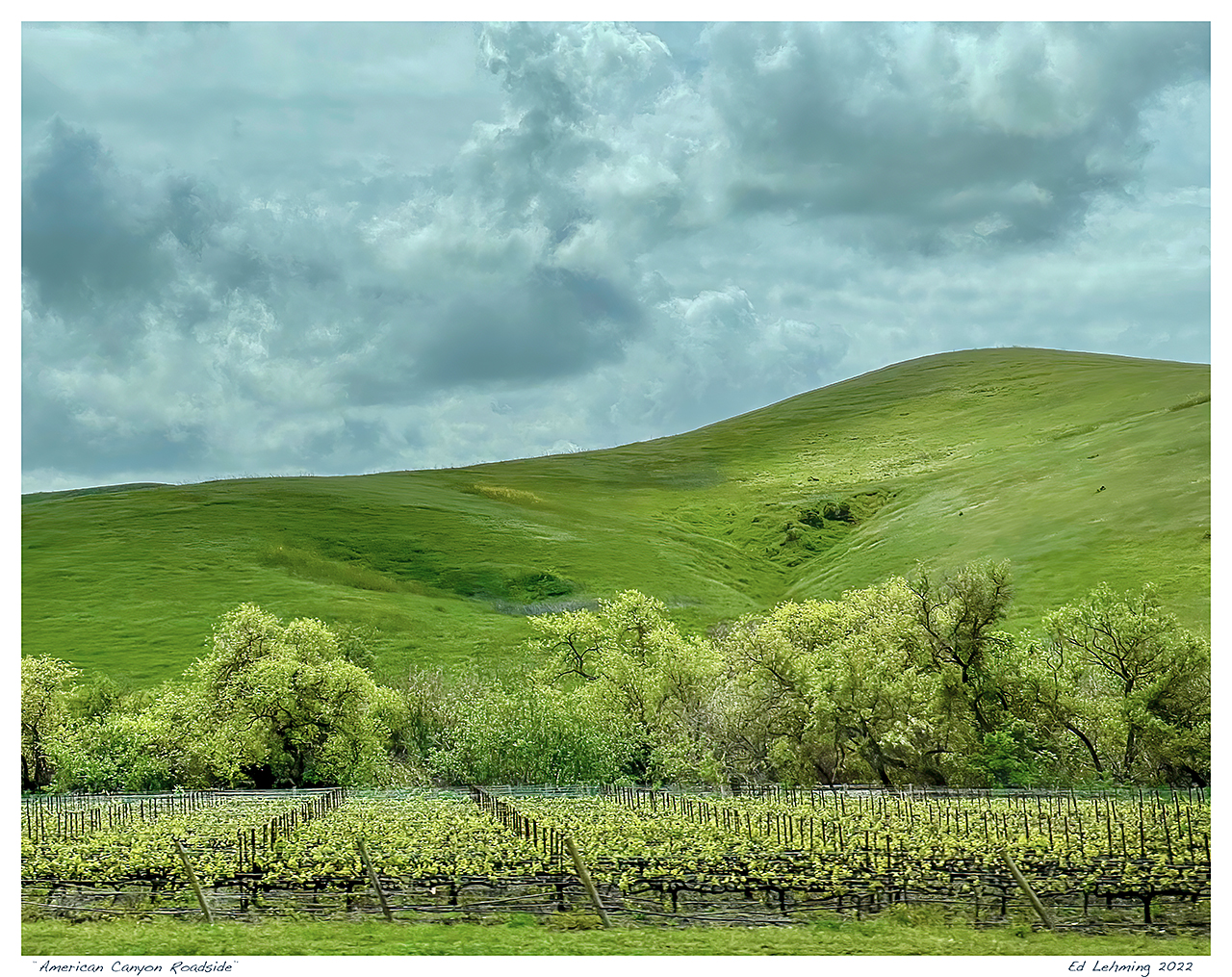
“Look around, isn’t the world simply amazing? Even from the window of a car, the passing world beckons us to partake.” – Ed Lehming
I experience this all the time, even when driving, or in this case, as a back seat passenger, there is so much beauty all around us, we just need the eyes, and mindset to see it. I, for one, can’t turn this off. Everywhere I look is an image waiting to be enjoyed.
Case in point, this roadside scene, enjoyed and photographed while exiting California’s Napa Valley on Highway 12, just outside of Creston, on our way back to Sacramento. It’s a scene etched into my memory; this scene of rolling hills, oak trees, vineyards, and sunshine. Oh, so California!
As I noted in earlier posts, we had experienced overcast and rainy days, but the clouds were thinning at this point, allowing some sunshine to spill through, lighting up the hillside. In my memory, this valley is the gateway to Napa and Sonoma and I wonder, how many millions of people have travelled this road and never give thought to just how lovely the journey is?
Perhaps it’s the Canadian in me, appreciating something uncommon in my southern Ontario countryside? We do have rolling hills, and vineyards, but it’s just not the same as this place.
What I have found interesting is how the landscape has changed over the years. It seems every flat space and many hillsides, which once sat bare, excepting local grasses and wildflowers, is filled with vineyards, a testament to the economic value of California wines. At least there is agriculture, rather than the blight of new housing developments I’m experiencing near my home. The ‘sprawl’ is green an lush, not brick, mortar, and concrete.
All the more reason to enjoy this pastoral scene, even in a photo, knowing it may change by the next time I visit.
iPhone 12 Pro @ 52 mm
1/657 sec, f/2.0, ISO 25

“Often, it’s not the grand vistas that catch my attention, rather, it’s the small curiosities, the things not common in my everyday, that make me pause and enjoy something joyfully different.” – Ed Lehming
Something that I have noticed about myself, as I’m out enjoying the outdoors is that my eye very quickly picks up on the out of the ordinary. I know many experience this as well. I think we are all drawn, at some level, to things that are different from our everyday. But I find myself spending more time than most spending time with those anomalies.
As I continue to review the many photos I made during my spring trip to California, I recall, very clearly, those moments really savouring all the little things that I saw and enjoyed. One of those was this fuzzy little flower that was blooming in the stoney flats of Sacramento’s Folsom Lake.
This little flower seemed somehow familiar, but quite different from the plants that I am familiar with. It resembled a fuzzy clover. I’ve started using an app on my phone called Halide, which enables me to take decent macro shot that I can review later or run through my PlantNet app if I want to quickly identify a plant in the field. This shot was made with my iPhone 12 Pro using Halide. It’s a ‘decent’ shot, though a bit noisy for my liking, but serves the purpose of a simple macro tool to capture moments like this.
Back to the plant; it turns out I was correct in thinking this was some kind of clover, specifically Stone Clover (Trifolium arvense), which grows in abundance in the rocky flood plane of Folsom Lake. It’s a lot different than the Red Clover that is native to my Ontario home. Due to its fuzzy flower, it is also known as Hare’s-Foot clover. As seems to be the case with many wildflowers that I encounter, it is not native, but came from Europe and had made a foothold across much of North America.
I did spend quite a bit of time, low to the ground, enjoying this delightful little plant before moving on to other interesting flora in the area.
iPhone 12 Pro @ 26 mm (Halide app)
1/4464 sec, f/1.6, ISO 25
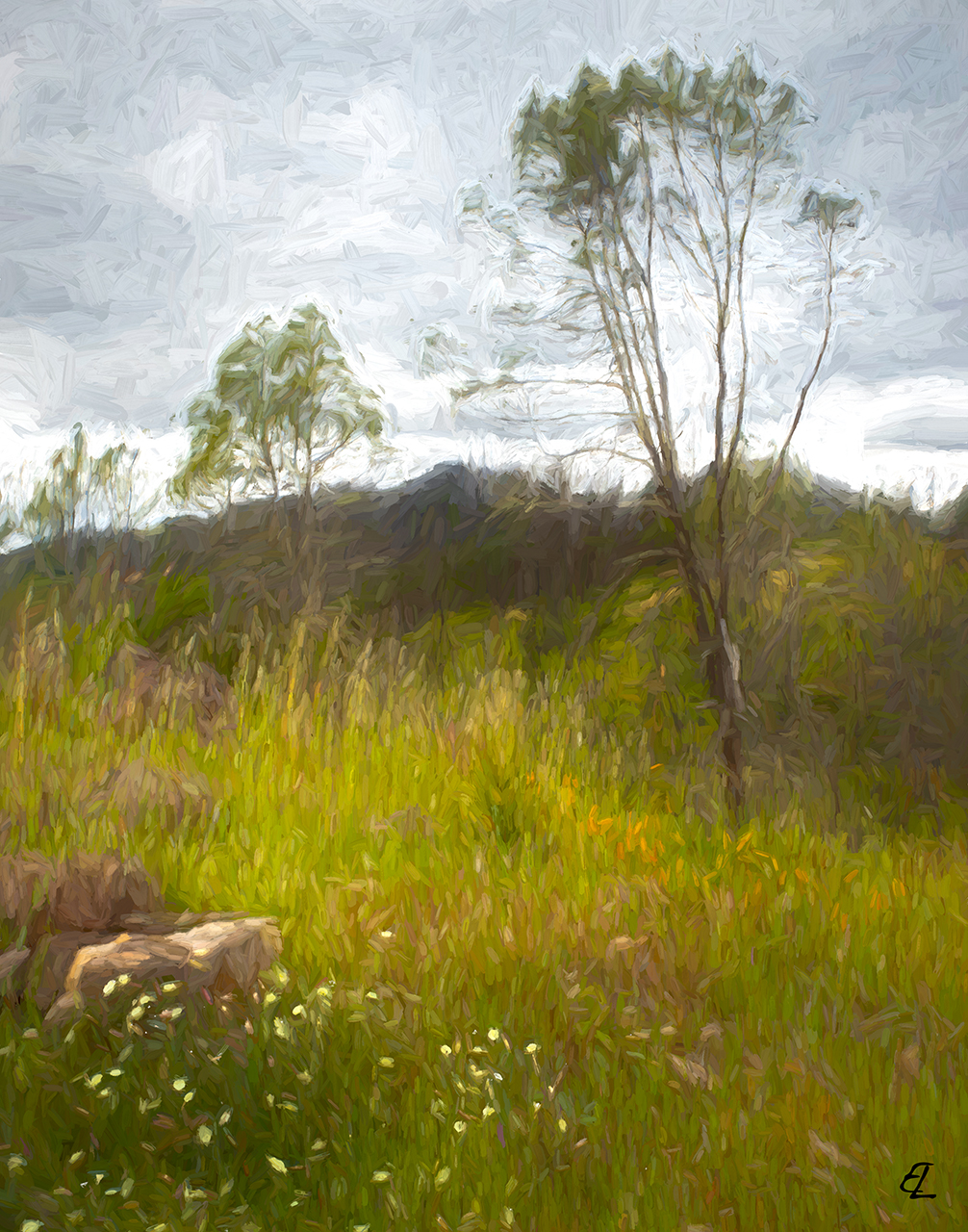
“Light, glorious light. It shapes my world and fills the dark places with joyous brightness” – Ed Lehming
I’m returning to my California series with this image, made on a mountainside overlooking northern Napa Valley. Despite the dull and rainy conditions, occasional splashes of light occasionally brightened the day. The contrast between the shadow and brightness was glorious!
In this peaceful scene, the wildflowers fill the foreground as the sun bathes the tall grasses with light. It’s one of those scenes that, despite its simplicity, makes me smile just to be have participated in it. Once more, I edited this in an impressionist style because it brings out more of the ‘feeling’ of what I witnessed.
I’m happy to have been in this particular place and time to witness the light’s effect. Looking back on the photo brings back great memories of this moment in time. It was unexpected but wonderful. It’s something I have discovered through my photography; just when I think that I may have seen the most wonderful scene, others continue to present themselves, competing for my attention, a progression of beauty.
Nikon D800
Tamron SP 24-70 mm f/2.8 Di VC USD @ 40 mm
1/4 sec, f/22, ISO 100


“Gentle waves, like a sheet of rich blue silk, touched the shore. With barely a breeze, only the gentle pulse of the water filled the air, and the sun lit the horizon, like a distant fire. All around me is peace. I drink it in, savouring every moment; the perfect ending to a wonderful summer day.” – Ed Lehming
Today, a brief pause in my California series for an image made yesterday evening at Sandbanks Provincial Park and an image that touches me very deeply.
We had just finished dinner and looked at the clock, realizing that the sun would soon be gone, we had a 20 minute drive to get to the beach for some sunset photography. My son, also a photographer, and his girlfriend were visiting us and I wanted him to experience the incredible sunsets this area, so close to home, has to offer. He’d never been to this spot on prior visits, so it was important to present him the opportunity before he had to head back home to Toronto.
We all hastily exited the house and drove to the beach to witness this scene. The sun had just set and most of the daily beachgoers had already left, offering us a fairly private time to enjoy this beautiful scene in peace.
As the others walked the beach and enjoyed the sunset my son and I set out to photograph it, each in our own style. Because the water already had a silky appearance, I decided to emphasize it even more by shooting a series of long exposure horizontal pans. The resulting series yielded some wonderful images, including the one above. After not too long, the gloom of evening set in and the colours faded, leaving us with lovely memories and images to take with us.
Nikon D800
Tamron SP 24-70 mm f/2.8 Di VC USD @ 70 mm
1/4 sec, f/18, ISO 2500
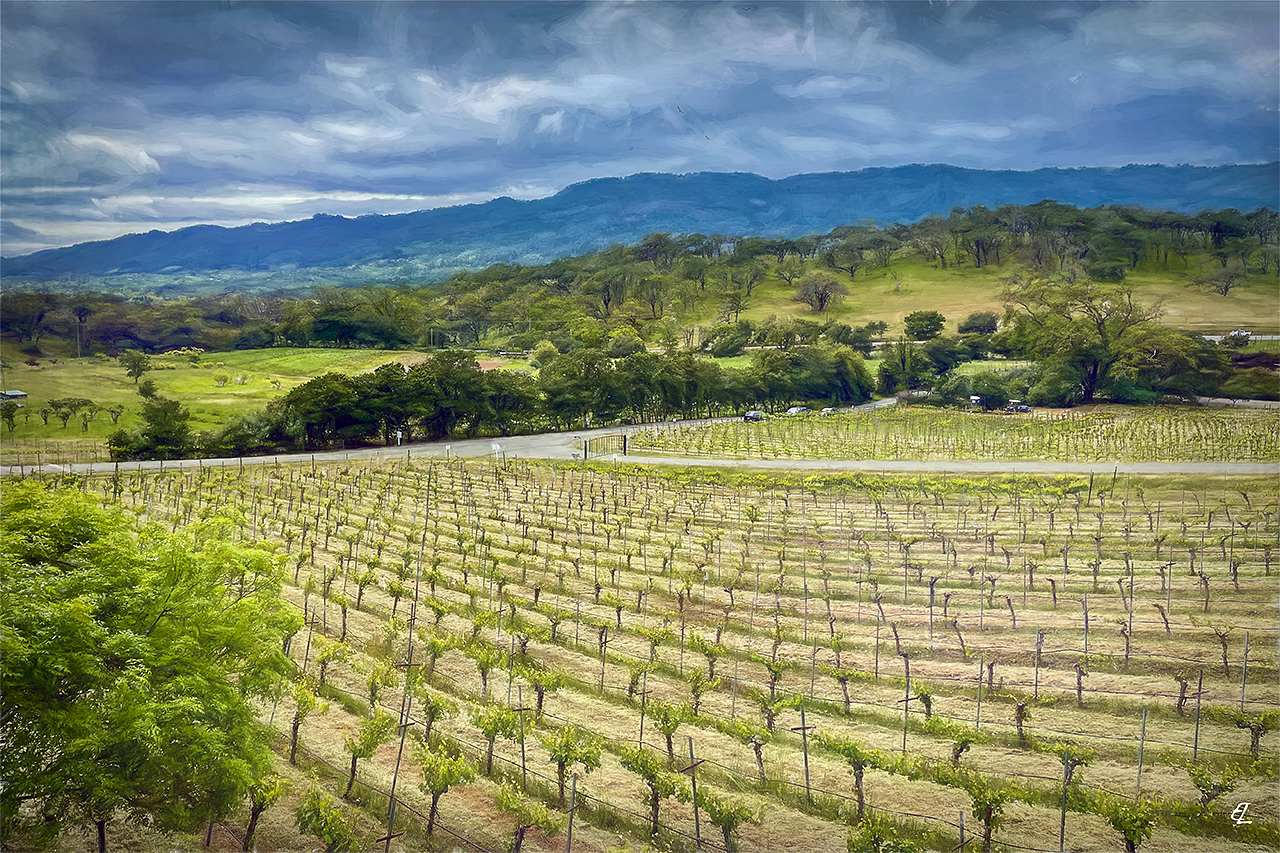
“Vineyards tucked among California’s Sonoma Valley in the springtime, offer the promise of future pleasures.” – Ed Lehming
The continuation of day one in California, and another winery, there may be a theme emerging here! On parting from Reverie II Wines, we proceeded via a step and winding road over the Mayacama Mountains, which separate the Napa and Sonoma Valleys. It was a road filled will steep grades and switchbacks, the roadside dominated by tall pines, vineyards, and beautiful private residences.
At the western base of this road lay our destination, Arrowood Estates, where we had another private tasting booked. I simply love the bold Cabernet Sauvignon produced in this region and Arrowood offers some of my favourites.
Sitting on the deck, overlooking the valley and rolling vineyards is such a pleasure. The scene is similar to our view from Reverie II but the Sonoma Valley, at this point, is a bit wider, yet the winery sits nestled on the eastern mountainside overlooking Sonoma.
For me, being from Canada, the California valleys with their rolling hills and oak trees interspersed with vineyards are so beautiful. As you can see from the image, the day remained overcast and a bit dull, but there were moments when the most beautiful light broke through the clouds and bathed the landscape with lovely light. I also like the natural layers of colour and texture that the composition offers. What a place to sit and drink it all in before parting for our next destination.
Nikon D800
Tamron SP 24-70 mm f/2.8 Di VC USD @ 24 mm
1/125 sec, f/5, ISO 100
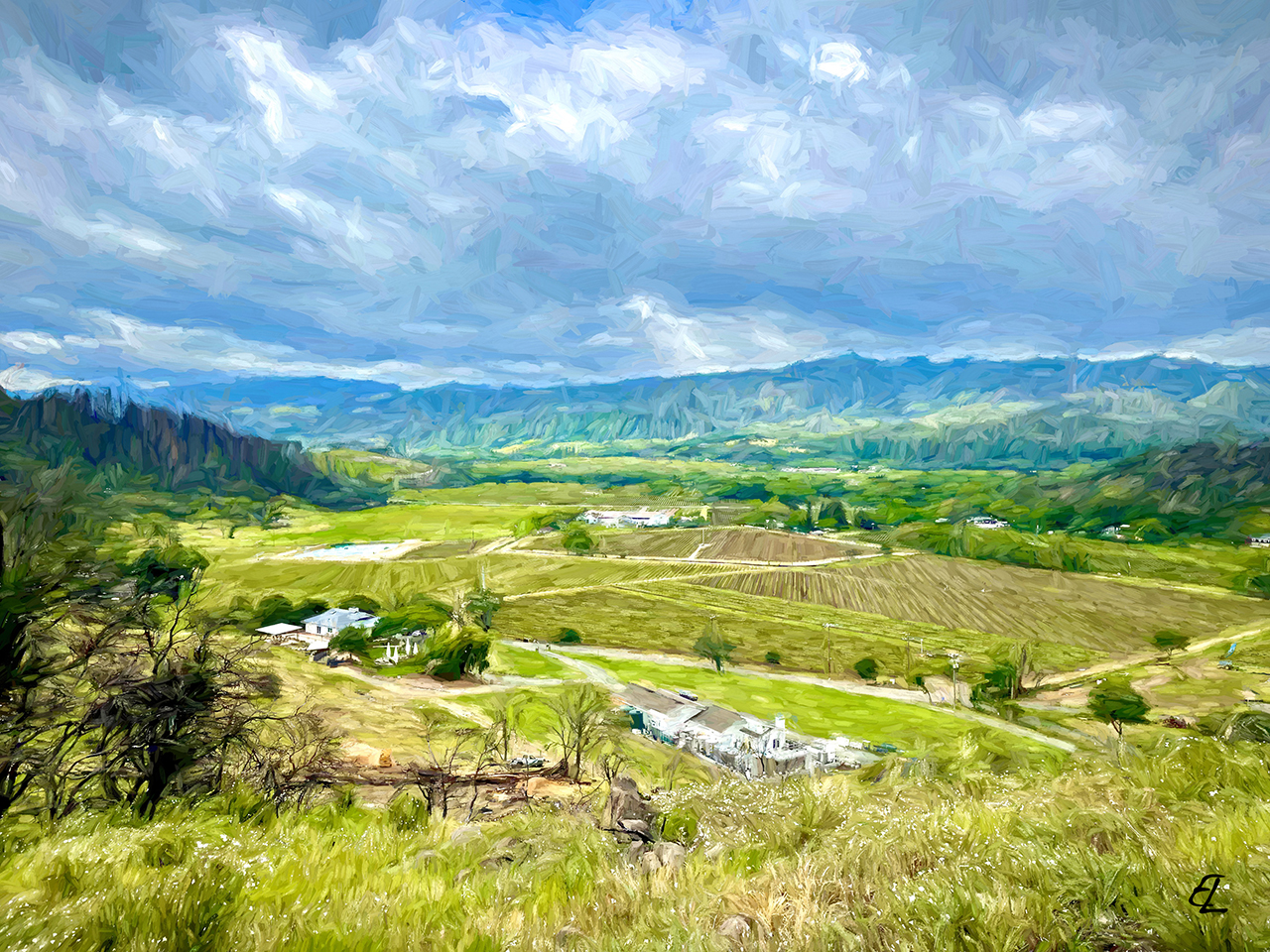
“There are times when the beauty and wonder of what lies before us brings an unspeakable joy and peace. Savour those moments so that they can sustain you in times of trial.” – Ed Lehming
The image I chose for today was made above Reverie II Winery in California’s Napa Vally. It was our first stop of a day of wine tasting and touring both Napa and Sonoma Valleys and our first full day of a two week vacation in California.
The day began with a private tasting of some absolutely beautiful Bordeaux-style mountain wines in the property’s tasting room on a bit of a drizzly overcast morning. Our host asked us if we would be interested in a quick ATV ride up the hillside of Howell Mountain that overlooks the vineyards. We, of course, said yes to this adventure and after a quick and bouncy ride up the dirt trail we ended up on the side of a ridge overlooking not just the vineyards but the entire north end of Napa Valley. The drizzle had stopped by then and the sun broke through the cloud deck, lighting the valley up with stunning light.
What had started out as a nice view of the valley turned into this stunning scene, which I further enhanced using some of my art plug-in ins to make it look more like an impressionist painting. The resulting image has become a favourite of mine and I find myself looking back to it frequently, whenever I get feeling down. It’s one of those special, unexpected scenes that resent themselves when least expected, which make it all the more special.
In the image, you can see the cottage that serves as the tasting room to the middle left and the production building near the bottom centre, the vineyards fill the centre of the image while the valley, brightly lit by mottled sunlight dominates the scene, framed behind by the Mayacama Mountains that separate Napa valley from Sonoma valley to the west. In the foreground are some rather dark looking shrubs, survivors of the recent Napa Valley fires which came over this ridge and threatened the valley below. Fortunately, the fire did not make it all the way to the valley floor and the buildings.
I love this scene and the unique perspective it offers of this oft too busy valley. Above the valley, there is peace, calm, and stunning beauty. Mind you, when we got back to the winery itself we were treated to some of the most wonderful wines I experienced during our stay, and a few bottles have found their way home to Canada, to be savoured on a special occasion.
I’m so grateful to have been given the opportunity to enjoy this vantage point and the memorable images it has offered me.
Nikon D800
Tamron SP 24-70 mm f/2.8 Di VC USD @ 24 mm
1/125 sec, f/5, ISO 100
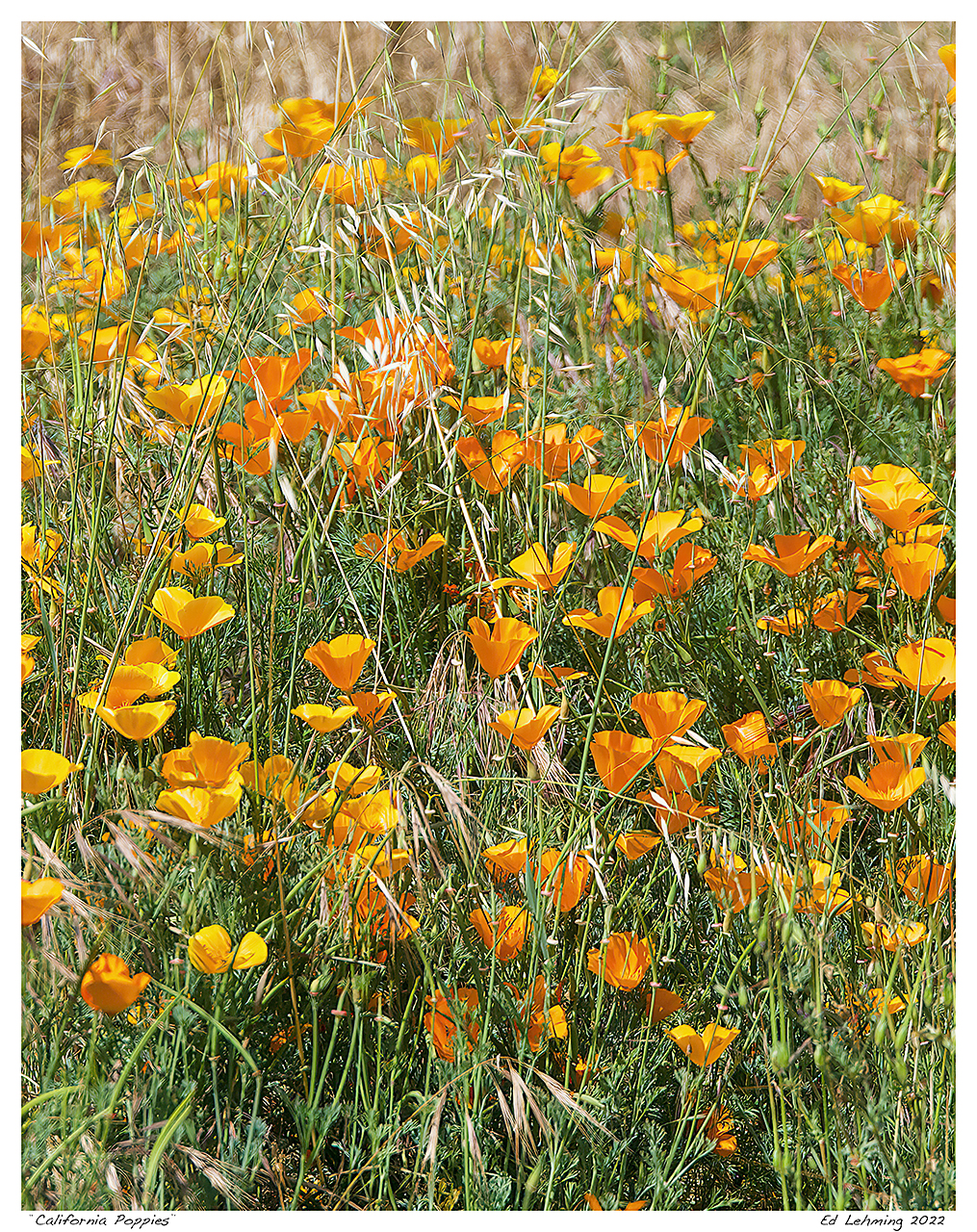
“It’s a pure joy to wander the woods and fields in the spring. Life and colour abounds with the the promise of more to come.” – Ed Lehming
Above is another image made in the Sacramento area. I went for a walk along one of Sacramento’s many small creeks. These urban oases offer so many surprises. In the river valley it’s pure natural bliss, but when you look up, office towers and houses fill the hilltops, so I keep my eyes focused on what’s ahead and pretend I’m out in the wilderness.
One of the things I love about California in the springtime is all the wildflowers, especially the clumps of bright orange California poppies. Sometimes there are only one or two in the group, while other times they fill entire hillsides.
I made many photos of them while visiting, trying to catch the essence of the flower effectively. While I did not have the opportunity to see the vast fields and hillsides filled with poppies that I have seen posted by local photographers, this little patch served me well and I photographed it from several angles and distances looking for just the right shot. I landed on this one which shows nice detail and also shows a bit of the dry wild oats that surrounded them. A simple but effective image that I enjoy reflecting back on.
Nikon D800
Tamron SP 70-200mm f/2.8 Di VC USD @ 165 mm
1/1250 sec, f/4, ISO 400

“Often, we find beauty in the most commonplace. The simple touching of water on a shoreline and a few trees can yield something refreshing to the weary soul.” – Ed Lehming
Today I’m going to start something a bit different. At least for me. This past May, after two years of travel restrictions and COVID protocols, my wife and I travelled to visit family in California. It felt like forever since we had been there and simply being in a different place and seeing different things was so refreshing.
Of course, when I travel, I takes lots of photos. Some photos are strictly personal, a way for me to remember and look back on my experiences, others are a bit more creative, seeking to capture the essence of a place or a moment. I will be sharing some of those images over the coming days and weeks.
I’ll begin the series with a simple image taken on the shores of Sacramento’s Folsom Lake, a massive reservoir built to provide water for the city of Sacramento and region. Along the shore of this lake are several State Park which offer access to the lake’s shore and provide a place to simply enjoy the beauty of a lake in an otherwise quite hot and dry region.
We arrived in Sacramento a few days after a few days of rain had refreshed the water levels and some of the areas you see in the image had been dry land only a few days prior. For me, coming from southern Ontario, the landscape was unique and I had to make a few photos. For someone used to this place, it may seem quote plane but I enjoyed seeing the water at the shore with mountains in the background. The rains had also brought many of the native grasses back to life from a period of dormancy, so the scene is quite green considering this is semi-desert most of the year.
It’s a simple image, but I still enjoy looking at the details and seeing how everything just flows together.
iPhone 12 Pro @ 6.0 mm
1/4000 sec, f/2.0, ISO 25
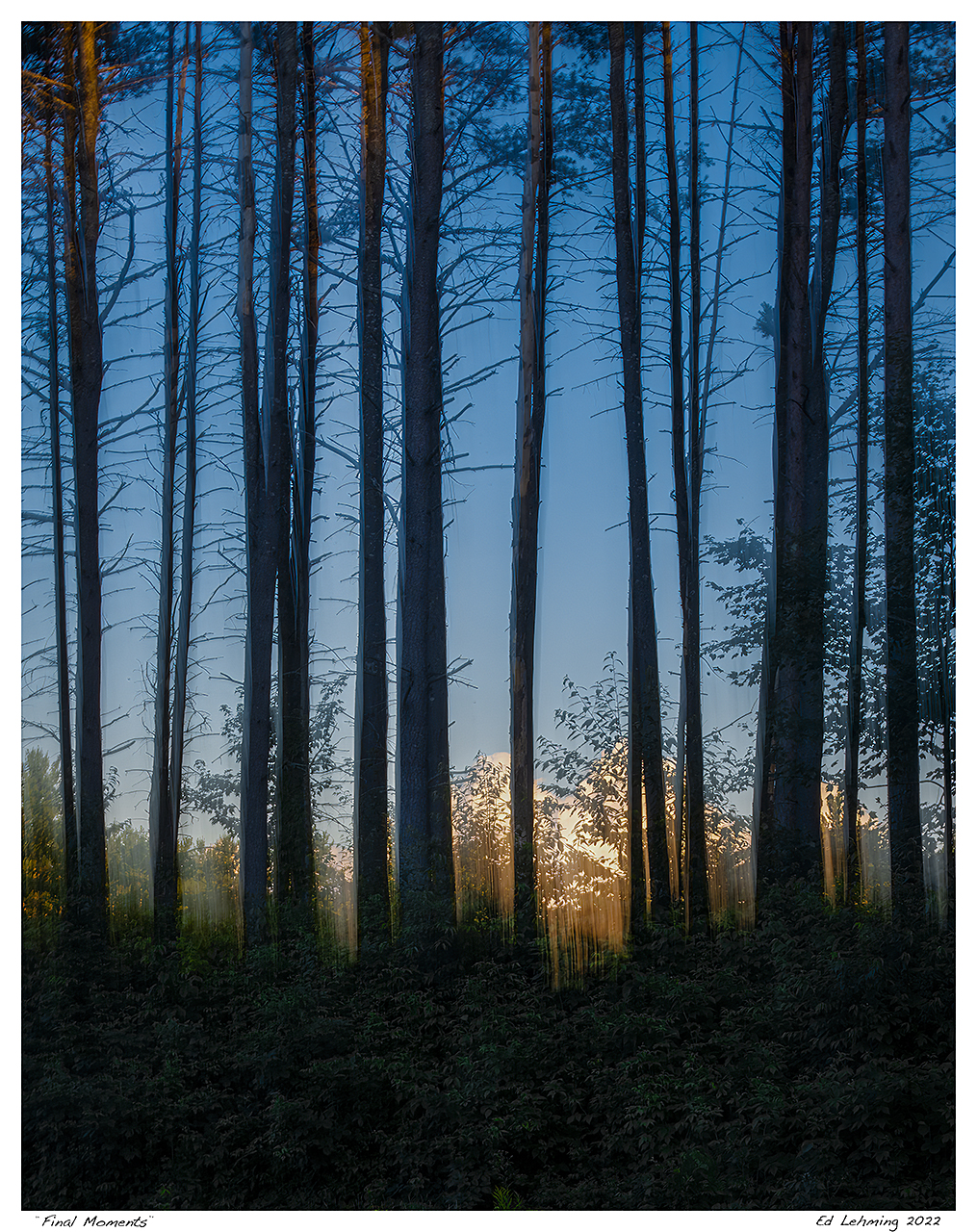
“As the day fades to memory, the final moments are often the most glorious. Light and dark intermingle and colours deepen before fading to blue and muted orange, and finally, darkness. Leaving only the memory of a glorious summer day.” – Ed Lehming
This will be my final image in this series. Fittingly, it is an image of the final moments of sunlight playing in the tall pines. It has been a joy recalling these moments in photos and appreciating the subtle elements that made it so wonderful and unique.
As I was editing this image I realized that the sun was, in fact, behind me, lighting up the trees. Yet, as the sunlight faded more and more, there was still a bright glow behind the trees. Then I recalled that there has a tall thunderhead in the distance that I had observed just as I was heading on the road. I really wanted to get a good shot of it, but the correct angle and composition never presented itself, so I reigned myself to the fact that I would not be able to photograph it effectively.
So, here I am looking at this image only to realize that the very cloud that had eluded me earlier was an integral part of this image, reflecting the sunlight from behind the trees. It was that reflected light that kept the scene bright for just a bit longer, finally fading as well as the sun dropped behind the hills, plunging the forest into darkness. I did not realize till I was reviewing this image, that the same cloud also created the bright orange light in my “Between” image, though you can’t see the cloud’s structure within the brightness.
This has been en enjoyable series of image to create and review and, as I mentioned in a previous post, it was also a return to more creative in-camera photography, something that I have not been inspired to do for a while, but hopefully, will take up again. The same can be said for my blogging, which I have done very infrequently lately. I hope you enjoyed this revival with me.
Nikon D800
Tamron SP 70-200mm f/2.8 Di VC USD @ 70 mm
1/4 sec, f/29, ISO 320

“We see so much, along the way. So much of our experience is casual observation. When we take the time to really see things, spend time with them, that is where true beauty is found. But, that requires us to pause in our journey and appreciate those moments that would just fade to faint memory” – Ed Lehming
This image is a continuation of my recent series, all photographed within a few minutes along Bancroft’s “Y” road. The road is named because it forms the shape of the letter “Y” as it is a bypass from Hwy 28 to South Baptiste Lake Road. We often take this road to shave a few minute off our drive to High Falls or when driving the backroads around Baptiste Lake.
As mentioned in my prior posts, we were returning from a friend’s home along this road when the setting sun on the pines caught my eye and I stopped to enjoy the details.
All too often, I see wonderful scenes along the road and make a deliberate mental note, wishing I had the time to stop and enjoy it more. But, we often have timelines to meet or traffic on the roads does not make it safe to pull over. More often than not, once I do pull over and walk back to where I observed something, the moment is is gone, the light has shifted, or the scene is not quite how I originally observed it.
In this case, we had the time and it was easy to pull off the road to really view the scene that I casually observed. The scene above is my first impression of the sunset light on the pines. It was stunning, with the towering pines catching the orange light , while the underbrush was already in shadow. The brightness was breathtaking and I wanted to capture the scene immediately, before it faded. Fortunately, I think I caught it just as it was starting and I enjoyed the few minutes while it lasted, dissecting the the scene into a series of images using intentional camera movement to create a more painterly look.
I discovered this technique a few years ago and continue to use and improve on it, always pleasantly surprised at the results and the way it naturally enhances the mood of what I am photographing. There’s always enough detail to remind me that it is a photograph, but the movement and subtle blur that it causes seems to imbue the image with an energy that I really enjoy.
It seems like a long time since I have had the pleasure of spending time with a subject and really extracting the essence of the scene. I’ve found myself all to often using my iPhone simply because it’s convenient, lightweight, and makes great stills. Yet, the artist in me loves the creative flexibility my DSLR provides me. I simply can’t do this with a phone. As well, the pro body and this technique cannot be rushed and I find myself spending more time enjoying the process, on the way.
Nikon D800
Tamron SP 70-200mm f/2.8 Di VC USD @ 92 mm
1/4 sec, f/20, ISO 320

“We live ‘between’. There is always before and after, but we are between when we are in the present. ” – Ed Lehming
In the present, we experience everything that the world has to offer. All that has passed fades to memory and all that lies ahead is an unknown.
This image was part of a series of shots I made two days ago as I was driving home from a friend’s house. The previous image “Y Road Dusk” was a ‘middle’ shot when the light was at its peak. This image was made a minute or so later, as the light shifted significantly.
Sunsets always fascinate me. They seem to take a long time to really develop the brilliant colours and then it quickly accelerates and it’s gone, yet each aspect of the event is unique. This between time offered me beautiful, soft orange tones, hints of blue shadow, and darker shadows, providing a wonderful contrast.
As I processed the image, I had considered increasing the show, but I would have lost too much of the subtle background detail and really wanted to stay true to what I was seeing. So, I have a fairly accurate representation of that moment, in the present, now past. The time between fiery orange light of sunset and the blue shadow of dusk.
Nikon D800
Tamron SP 70-200mm f/2.8 Di VC USD @ 92 mm
1/4 sec, f/18, ISO 320
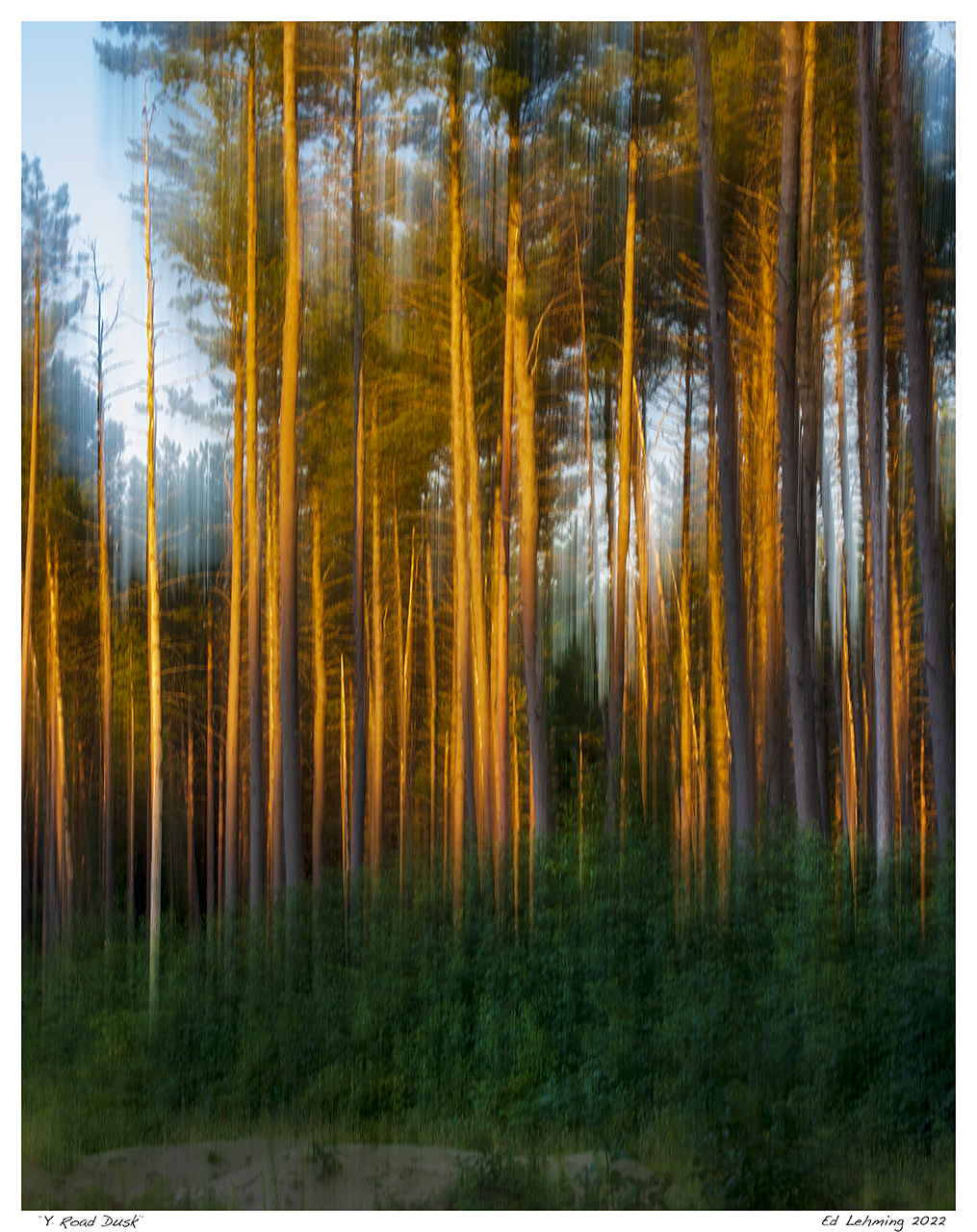
“Like pillars of fire, the pines on the roadside rose in blazing brilliance, beckoning, ‘Come watch, as we capture and play with the sun’s last kiss’ ” – Ed Lehming
As we drove home from an early evening visit to an artist friend’s home and some great music and conversation, a flash of brilliance caught my attention along the roadside. The sun was just setting, yet the tall pines where ablaze above the darkening underbrush. It seemed like a great moment to enjoy this light show and make a few photos along the way.
I had my D800 with me and quickly set about capturing this beautiful display before the sun dropped too much lower and the brilliance faded. I was able to capture a few different images before the light faded.
It’s moments like this that I realize that the many failed attempts I have made over the years have paid off. I knew right away how to set up my camera and how to frame the image for optimal effect. This one captures it at it’s peak, while subsequent images are a bit darker but still very appealing.
It was also the first time in a while that I shot with my pro body, rather than my iPhone. I simply can’t capture this scenery effectively without the flexibility my D800 offers.
As I turned back onto the road and headed home I was reminded that these moments we experience are often rare and fleeting and it’s such fun to be able to preserve the memory of those moments in my images.
Nikon D800
Tamron SP 70-200mm f/2.8 Di VC USD @ 92 mm
1/4 sec, f/18, ISO 320

“As the winter winds down with dull skies, I fondly reflect back on the memories of bright autumn days, filled with colour, cheer, and times spent among the trees.” – Ed Lehming
I believe I like this time of year (late winter) the least. There are hints of warmer days ahead, but between overcast skies, flurry filled mornings, icy trails, and the grimey looking banks of snow I find my thoughts drifting back to memories of autumn and the joy of taking in nature’s bright canvass.
As a photographer, I’m blessed to be able to carry those memories with me through my photos. There are days when I scroll back through photos of the recent and distant past, enjoying the images of those moments. As an artist, I brings me the greatest of joy to be able to reshape those images into something more than a snapshot. In allowing myself the freedom of re-interpreting my photos into digital art, I’m able to extract more of the essence of those experinces.
The image above was made in October of 2021, when my wife and I took a quick tip to Ontario’s Algonquin Park. This vast provincial park is only an hour north of our camper and we wanted to spend some time enjoying the fall weather. A highway cuts through the park from east to west and the autumn colour bring hordes of tourists from all over and most don’t venture too far off the road, usually taking in the trails and interpretive stations close to the road.
I really don’t like crowds, especially in nature, so we stopped along the roadside and climbed to the top of a rock to have our lunch and enjoy the view of a beaver pond tucked away behind the rock. It offered us a flat surface to sit and a view of the peaceful landscape around us. Near the top of the rock stood a gnarly, lichen covered pine tree, by no accounts ancient, but much bigger than the surrounding trees. This red pine and the interesting textures of its bark became the subject of the photo. I’ve edited it to a more painterly look, which I think enhances the ‘feel’ of that moment, more so than the original photo. Through the process, I left a lot of the fine details of the pine needles, leaves, and grasses at the base of the tree. For me, it just works and left me looking back to the exact moment that I snapped the shutter.
iPhone 12 Pro @ 26 mm
1/493 sec, f/1.6, ISO 32

“Into the woods I venture, always pleased when I encounter new and unexpected sights.” – Ed Lehming
I was pleased to be back on the forest trails again today. Last weekend was a tough hike, with melting snow and slush making ever step an adventure in balance, even with my cleats on. Today, the forest floor was coated with a fresh coat of snow and temperatures and re-frozen the slush of last week, providing a fresh and solid base to walk on. Conditions were perfect for cross-country skiing and I encountered many others enjoying just that.
Fresh snow also reveals the activity of the many forest dwelling animals, though I rarely encounter much more than squirrels and chipmunks in the area due to the many dog walkers and activity. However, today was an exception and I was pleased to see a pine marten crossing the trail just ahead of me. I was travelling light and had just my phone with me, so the opportunity for a good image of the martin was not to be today. However, it was a thrill just to see one in this area. I’m used to seeing them further north, so this sighting was particularly enjoyable. It’s also a testament to the health of this managed forest.
He did not hang around very long, but did take a moment to give me a look before venturing deeper into the forest, leaving only tracks to mark his passing. I snapped a photo of that moment and turned it into a digital painting which I felt communicated the forest scene with a bit more impact than just the photo. The image also, as happens frequently, inspired the title for today’s post. I hope you enjoy it.
Phone 12 Pro @ 26 mm
1/1208 sec, f/1.6, ISO 32

“As winter begins to yield and days lengthen, the tires forest still offers splashes of colour. The intensity and profusion varies by year, but there are always pockets of brightness, reminders of vibrant life past, and promises of life to come.” – Ed Lehming
This winter has felt exceptionally long. There have been some beautiful, bright days, but snow came in large storms and made travel to my favourite spots a bit more treacherous than in the past and we have had many days of extreme cold, so the thought of spending several hours on the trails was less than appealing.
Now that the worst of winters seems to be behind us, I ventured back out to familiar places to see what new treats nature had to offer me.
I noticed that this year, the number of beech trees that retained their leaves was drastically reduced. I think in part due to the extreme cold temperatures and the many days of strong winds and heavy snowfall. The groves that are normally bright orange sat still and bereft of leaves, leaving bare branches and silence. But, there were still a few trees along the trails, that for some reason, managed to retain their leaves very well. I could see no difference between them but I was happy to see at least some colour in the forest, which seemed particularly bare this year.
This particular tree is sheltered for the raw north wind by a grove of plantations pines, which can be sem in the background and is exposed to sunshine from the south, which may be why it still looks good when so many trees closeby are either bare of are hanging on to tattered and bleached remains of once beautiful copper leaves.
Phone 12 Pro @ 26 mm
1/1222 sec, f/1.6, ISO 32


 Ed Lehming Photography
Recent Comments