
“Fado” – Bairro Alto, Lisbon
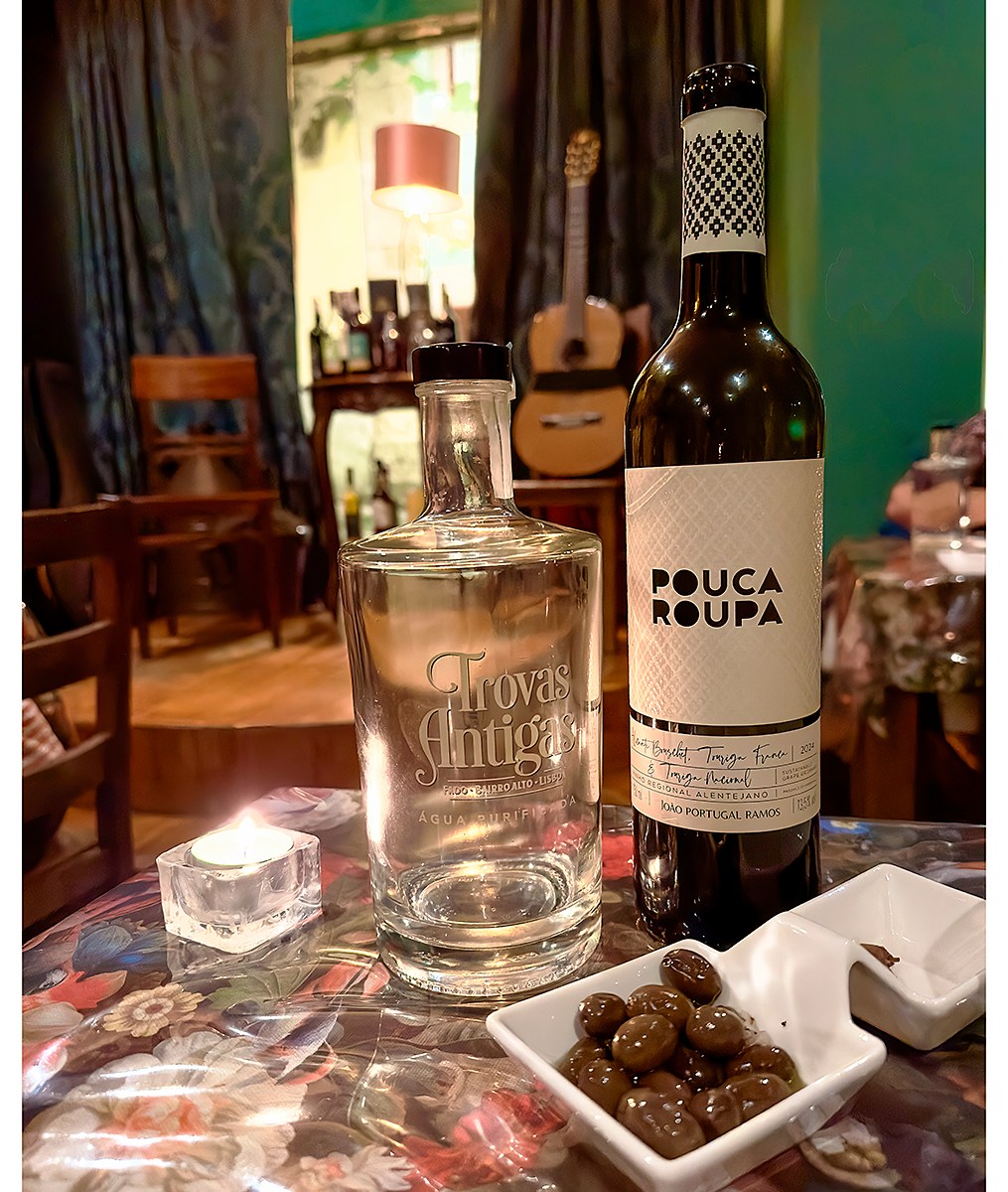
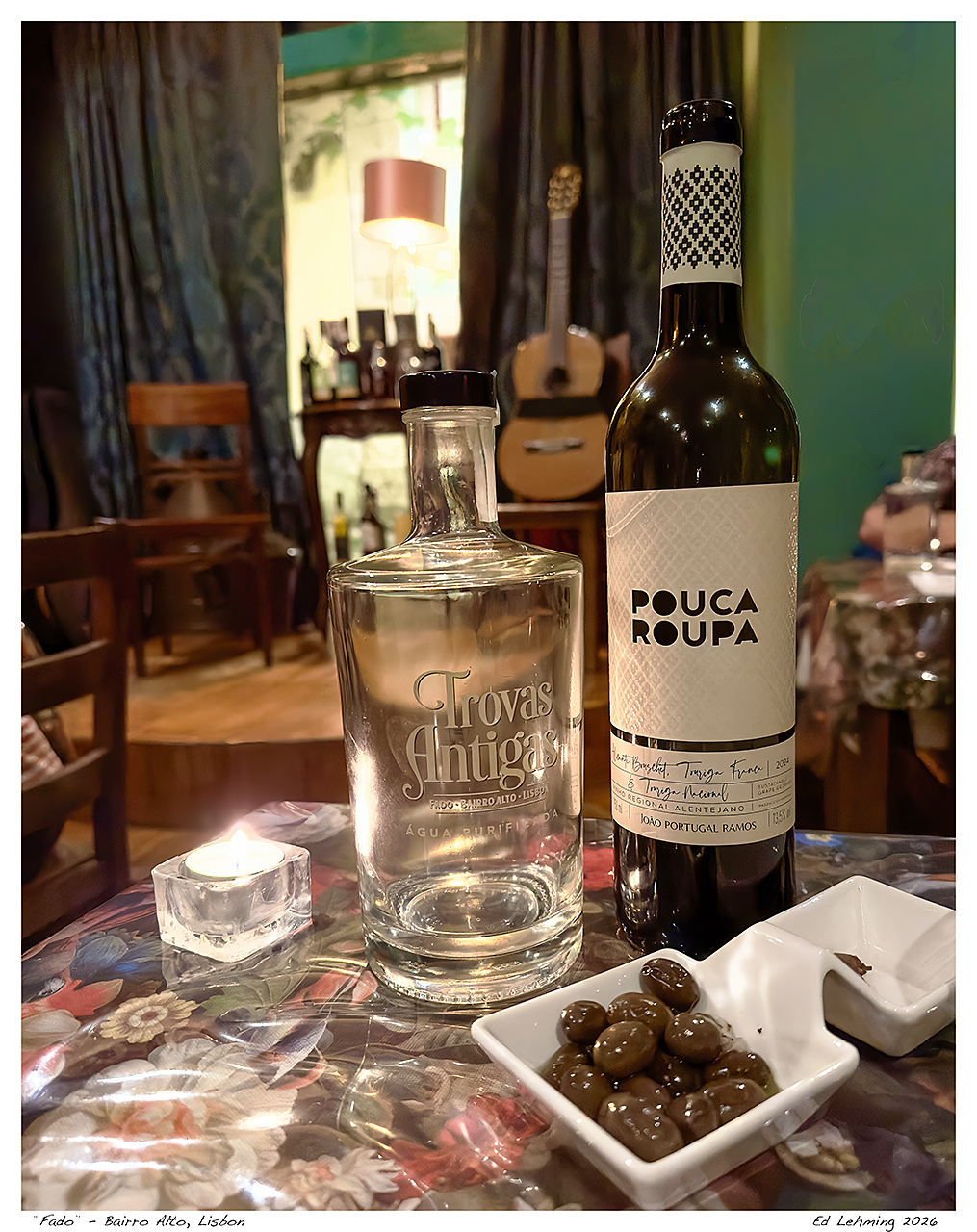
“In Lisbon, Fado doesn’t just echo through the night — it gathers around tables like this, where a candle flickers, a guitar waits, and every sip and every silence becomes part of the song.” – Ed Lehming
On warm summer evenings, within the narrow, winding streets of Lisbon’s Bairro Alto district, warm lamplight and voices drift from numerous taverns. Apart from the many commercial Fado venues, this area is intimate. It’s not grand or touristy; it’s close, human, and lived. This is the type of place we sought out to experience Fado, something genuine.
Fado, I found, represents Lisbon’s expression of saudade: longing, memory, tenderness, and resilience. It found its roots in working-class neighborhoods, where friends and neighbors gathered to tell their stories in song and music. Fado is honest and raw, and I think that is its attraction. It’s not polished and showy, and that, in my opinion, is one of the reasons it has evolved into a national symbol of the Portuguese people.
We found the Bairro Alto district through the advice of one of the people working at the property where we were staying. We told him we wanted something sincere and not put on. He directed us to this area, not far from our hotel in Baixa. The district is known for its Fado, and it has an interesting blend of old and classic taverns and modern bars, each catering to a different clientele. We really had no idea of what to expect, apart from a few YouTube videos we had seen of this place. We were given an address and not much else, and when we arrived, around seven thirty, we found a small unassuming establishment that felt “honest” for lack of a better word. People were milling around outside and gave us a friendly greeting, as we were pretty obviously tourists. They had to point out the entrance, as even that was not obvious.
The place was large but intimate; many tables lined the walls and filled the floor; intimate but not tight, and we were guided to our table. It was explained to us how this would unfold. Appetizers and wine would be served, and when the performers came to the stage, the audience was expected to be respectful and quiet until the set was completed. This routine would be followed as the various courses were served and the meal was complete. By the way, the meal was spectacular, featuring several course of traditional Portuguese cuisine and some really nice wine.
It all started with the two musicians coming to the front, taking some time to tune their instruments, and the singer rising quietly from a table near the back, taking the stage and singing. It’s all pretty spontaneous and feels very natural, as if it were members of the audience sharing their own stories of life. The mood was already set with dim lights, candlelight, wine, and attentive silence.
It’s hard to really describe Fado, except that it is raw, expressive, and fills the room with an emotional weight that I can’t fully articulate. There is a beautiful interplay between the musicians, one playing a Portuguese guitar and the singer. There are pauses and crescendos as the music weaves its spell.
Fado in Bairro Alto feels participatory; the audience becomes part of the emotional landscape, with locals and visitors sharing a moment of shared vulnerability and beauty. I found this to be more than just a performance; it was a lived experience that seems to preserve Fado’s soul in Bairro Alto. For me, it made Fado less of a genre and more of an expression of Lisbon itself.
For reference, here’s the website of the venue: https://xn--pequenaslembranas-osb.my.canva.site/trovas-antigas-restaurante-fado
iPhone 14 Pro Max
Main Camera — 24 mm
1/25 sec, ƒ/1.78 ISO 1000


Sounds like something a person has to experience for themselves.
An inviting photo to go with your inviting explanation. I’ve only read about Fado, never seen it in real life.
It’s hard to describe. I can’t say it’s “pleasant”. It just raw energy. Kind of like Flamenco in song.